
소개
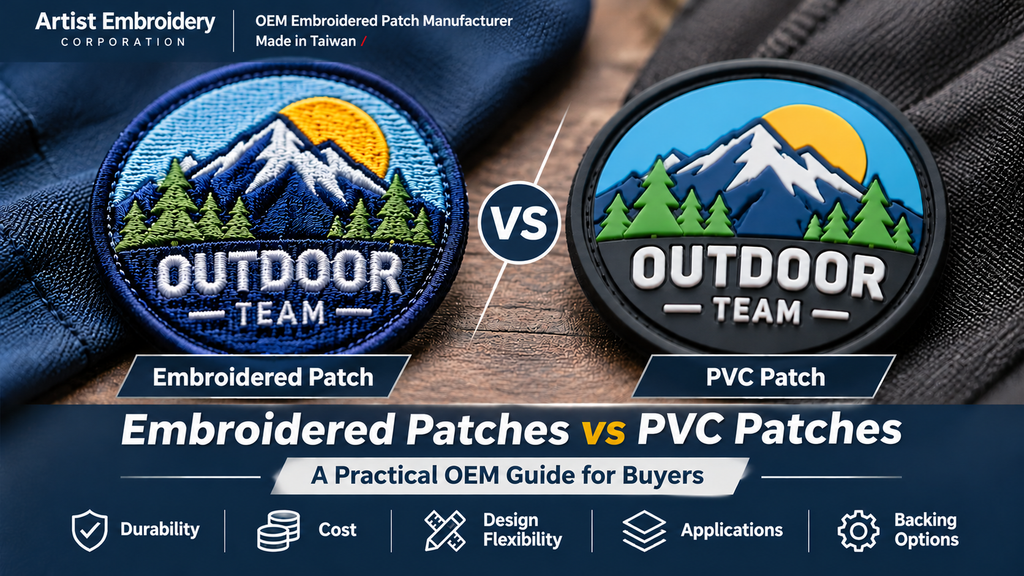
유니폼, 의류, 액세서리 또는 홍보용 상품에 사용할 맞춤형 패치를 선택할 때, 적절한 소재를 고르는 것은 브랜드와 구매 담당자에게 있어 가장 중요한 결정 중 하나입니다. 다양한 옵션 중에서, 자수 패치 vs PVC 패치 이는 외관, 내구성, 비용, 기능성 사이의 이상적인 균형을 추구하는 기업들이 흔히 하는 비교입니다.
두 가지 패치 유형 모두 로고, 엠블럼, 맞춤형 디자인을 표현할 수 있지만, 소재, 제조 공정, 표면 질감, 전반적인 시각적 매력 면에서 상당한 차이가 있습니다. 이러한 차이점을 이해하면 OEM 구매 담당자가 불필요한 생산 비용을 피하고 부적절한 소재 선택을 방지하면서 정보에 입각한 구매 결정을 내리는 데 도움이 됩니다.
자수 패치 이 제품은 일반적으로 트윌, 펠트 또는 기타 특수 소재로 된 원단 바탕 위에 색실들을 수놓아 제작됩니다. 독특한 돌출된 실 질감은 군 휘장, 경찰 제복, 기업 브랜딩, 스포츠 팀, 패션 액세서리 등과 널리 연관되는 전통적이면서도 전문적인 외관을 연출합니다. 디자인과 자수 적용 범위에 따라 제조업체는 다양한 실 색상, 스티치 방향, 마감 옵션을 활용하여 섬세한 디자인을 제작할 수 있습니다.
반대로, PVC 패치 일반적으로 유연한 폴리염화비닐(PVC) 소재를 사용하여 맞춤형 형태와 디자인으로 성형되어 제조됩니다. 표면은 매끄럽고 고무와 유사한 질감을 지니며, 돌출되거나 오목한 요소를 적용할 수 있어 특정 야외용 액세서리, 전술 장비, 가방 및 현대적인 브랜드 상품에 특히 적합합니다. 또한 이 소재의 특성 덕분에 내습성과 표면 세척 용이성이 중요한 용도에서도 장점을 발휘합니다.
그러나 자수 패치와 PVC 패치 중 하나를 선택하는 것은 단순히 외관을 비교하는 것 이상의 고려 사항이 필요합니다. 대량 주문을 하기 전에는 디자인의 복잡성, 최소 주문 수량, 생산 비용, 세탁 요건, 부착 방법, 장기적인 사용성 등의 요소를 모두 고려해야 합니다.
예를 들어, 브랜드가 의류와 자연스럽게 어우러지는 클래식한 직물 느낌을 원할 때는 자수 패치가 선호될 수 있습니다. 반면, 성형된 표면, 뚜렷한 입체적 디테일, 또는 방수 소재가 주요 요구 사항일 때는 PVC 패치가 더 적합할 수 있습니다. 어느 한 쪽이 절대적으로 우월하다고 할 수는 없으며, 올바른 선택은 용도와 구매 우선순위에 따라 달라집니다.
대만에 기반을 둔 경험 풍부한 OEM 자수 패치 제조업체로서, 아티스트 자수 주식회사 당사는 다양한 상업적 용도에 맞는 적절한 소재와 제조 사양을 선정하는 것이 얼마나 중요한지 잘 이해하고 있습니다. 자수 전문 지식과 전문적인 생산 장비, 품질 관리 절차를 결합하여, 전 세계 바이어들이 디자인 및 기능적 요구 사항을 충족하는 맞춤형 자수 패치를 제작할 수 있도록 지원합니다.
이 종합 가이드에서는 자수 패치와 PVC 패치를 소재, 내구성, 가격, 디자인 유연성, 맞춤 제작 옵션, 실용적인 용도 등 다양한 측면에서 비교합니다. 유니폼 패치를 조달하거나, 브랜드 상품을 개발하거나, 다음 OEM 프로젝트를 위한 소재를 평가하고 계신다면, 이 비교 내용을 통해 귀사의 비즈니스에 가장 적합한 패치 솔루션을 찾아보실 수 있을 것입니다.
자수 패치와 PVC 패치란 무엇인가요?
다음 사이의 근본적인 차이점을 이해하기 자수 패치 vs PVC 패치 이는 맞춤형 패치 제조 옵션을 검토하는 해외 구매자, 브랜드 소유자 및 구매 담당자에게 필수적입니다. 두 제품 모두 브랜딩 및 식별이라는 유사한 목적을 가지고 있지만, 소재, 생산 기술, 표면 특성 및 전반적인 외관 면에서 상당한 차이가 있습니다.
자수 패치는 기계 자수를 통해 제작된 직물 기반 제품인 반면, PVC 패치는 유연한 합성 소재로 성형된 제품입니다. 이러한 구조적 차이는 각 패치의 외관, 촉감, 성능 및 다양한 제품과의 결합 방식에 영향을 미칩니다.
가격, 내구성, 맞춤 제작 가능성을 비교하기 전에, 구매자는 각 패치 유형이 어떻게 제조되는지, 그리고 어떤 특성이 특정 용도에 적합한지 이해해야 합니다.
자수 패치의 구조 이해하기
자수 패치는 천 바탕에 색이 들어간 자수 실을 꿰매어 제작된 장식용 또는 식별용 엠블럼입니다. 자수 공정을 통해 표면에 입체감이 생기며, 개별 바늘땀이 로고, 글자, 기호 및 기타 시각적 요소를 형성합니다.
원단 바탕은 패치의 외관, 유연성 및 전반적인 구조를 결정하는 데 중요한 역할을 합니다. 일반적으로 사용되는 재료로는 다음과 같은 것들이 있습니다:
- 트윌 원단: 자수 패치에 가장 널리 사용되는 원단으로, 안정적인 표면, 전문적인 외관, 그리고 뛰어난 자수 성능을 제공합니다.
- 펠트 원단: 전통적인 엠블럼, 장식용 용도 및 특정 디자인 요구 사항에 흔히 사용되는 부드럽고 얇은 부직포 소재입니다.
- 반사 원단: 입사광을 반사하도록 설계된 특수 코팅으로, 특정 시인성 관련 용도에 유용합니다.
구매자분들은 당사의 [... ]에서 이러한 자료를 더 자세히 살펴보실 수 있습니다. 자수 패치 원단 가이드.
제조 과정에서 컴퓨터 자수 기계는 정교하게 프로그래밍된 스티치 패턴, 실 색상 및 자수 밀도를 활용하여 디지털화된 디자인을 재현합니다. 완성된 디자인은 원하는 시각적 효과에 따라 원단이 노출된 부분이 있거나 실로 촘촘하게 덮인 부분이 있을 수 있습니다.
예를 들어, 자수 커버리지가 50%인 패치는 밑에 있는 원단의 노출 면적이 더 넓은 반면, 전체가 자수로 채워진 디자인은 앞면 거의 전체를 실로 덮게 됩니다. 커버리지 수준에 따라 질감, 외관, 제작 시간 및 제조 비용에 차이가 생깁니다.
이러한 차이점에 대해 더 자세히 알아보시려면 당사의 자수 적용 범위 안내.
자수가 완료된 패치는 뒷면 접착 처리, 재단, 테두리 마감, 품질 검사 등의 후가공 과정을 거칩니다. 디자인과 용도에 따라 자수 패치는 메로우 마감 테두리, 열절단 가장자리, 꿰매어 부착 방식, 접착식 뒷면, 또는 벨크로 부착 방식 등을 적용할 수 있습니다.
자수는 물리적인 바느질에 의존하기 때문에, 매우 작은 글자나 극도로 얇은 선, 복잡한 그라데이션의 경우 만족스러운 재현 결과를 얻기 위해 원고 수정이 필요할 수 있습니다. 경험이 풍부한 OEM 제조업체들은 대량 주문 전반에 걸쳐 일관된 결과를 보장하기 위해 생산 전에 이러한 제한 사항을 평가합니다.
PVC 패치 소재 이해하기
PVC 패치는 주로 유연한 폴리염화비닐(PVC)로 제작된 맞춤형 엠블럼으로, 이 합성 고분자는 다양한 모양, 색상 및 표면 질감으로 성형될 수 있습니다.
자수 패치와 달리, PVC 패치는 주요 시각적 디자인을 표현하는 데 바느질된 실이나 직물 바탕을 사용하지 않습니다. 대신 제조업체들은 금형과 정밀한 소재 가공 공정을 통해 로고, 글자, 기호 및 장식 요소를 만들어 냅니다.
많은 맞춤형 PVC 패치에는 2차원 또는 3차원 성형 디자인이 적용되어 있습니다. 돌출된 부분과 오목한 부분을 통해 서로 다른 요소들 사이에 시각적인 구분을 줄 수 있어, 제조업체는 독특한 고무 같은 질감을 지닌 대담한 모양, 테두리 및 글자 스타일을 재현할 수 있습니다.
PVC 패치는 일반적으로 다음과 같은 용도로 사용됩니다:
- 전술 장비 및 아웃도어 용품
- 배낭, 여행 가방 및 장비 식별
- 홍보용 상품 및 브랜드 액세서리
- 스포츠 장비 및 일부 유니폼 적용 사례
- 유연하고 세척이 용이한 표면이 필요한 제품
PVC 소재의 주목할 만한 특징 중 하나는 수분 흡수 저항성입니다. 직물 자수와 달리, 성형된 PVC 표면은 직물이나 실과 같은 방식으로 수분을 흡수하지 않습니다. 그러나 완성된 PVC 패치의 전반적인 성능은 그 조성, 두께, 부착 방식, 그리고 제조 품질에 따라 달라집니다.
PVC 패치의 경우, 특히 맞춤형 모양이나 양각 디자인의 경우 전용 금형이 필요할 수 있습니다. 그 결과, 초기 금형 제작 비용이 프로젝트 총 비용에 영향을 미칠 수 있으며, 특히 소량 생산 시에는 더욱 그러합니다.
색상 선택, 입체 효과, 최소 선 두께, 금형의 복잡도 역시 제조 가능성과 가격 책정에 영향을 미칠 수 있습니다. PVC는 특정 성형 디자인에 있어 상당한 자유도를 제공하지만, 매우 세밀한 디자인이나 극히 작은 글자의 경우 여전히 단순화가 필요할 수 있습니다.
OEM 구매자의 경우, 성형된 합성 패치와 전통적인 자수 엠블럼 중 어느 것이 최종 제품에 더 적합한지 판단할 때 이러한 소재 특성을 이해하는 것이 중요합니다.
📊 표: 자수 패치와 PVC 패치의 기본적인 구조적 차이점
| 기능 | 자수 패치 | PVC 패치 |
|---|---|---|
| 주요 원료 | 자수 실과 천 | 연성 폴리염화비닐 |
| 제조 방법 | 컴퓨터 제어 자수 | 금형 기반 제조 |
| 표면 질감 | 돌출된 직물 스티치 | 평면 또는 양각 |
| 기본 구조 | 트윌, 펠트 또는 반사 원단 | 성형 합성 소재 |
| 시각적 외관 | 전통적, 질감이 살아있는, 전문적인 | 모던하고 입체적이며 고무 같은 |
| 디자인 세부 사항 | 스티치 크기와 밀도에 따라 결정됩니다. | 금형 및 재료의 제약에 따라 결정됩니다 |
| 방수 성능 | 원단, 실, 그리고 제작 방식에 따라 다릅니다 | PVC 소재는 수분 흡수율이 낮습니다. |
| 일반적인 애플리케이션 | 유니폼, 엠블럼, 의류, 액세서리 | 전술 장비, 가방, 아웃도어 액세서리 |
| 사용자 지정 | 실 색상, 덮임 정도, 테두리, 뒷면 원단 | 성형된 형태, 색상, 돌출된 디테일 |
| 초기 설정 | 자수 디지털화 | 금형 또는 공구 준비 |
💡 구매자 팁: 패치 재료를 선택하기 전에 제조 공정을 파악하세요
비교 시 자수 패치 vs PVC 패치, 구매자는 외관이나 단가에만 집중하기 전에 해당 제품의 용도를 먼저 검토해야 합니다.
제복, 기업 엠블럼, 전통 문양 및 섬유 액세서리의 경우, 자수 패치는 대개 자연스러운 원단 느낌을 주며 검증된 부착 방식을 제공합니다. 장비 브랜딩, 아웃도어 액세서리 또는 성형 고무와 유사한 마감 처리가 필요한 디자인의 경우, PVC 패치가 실용적인 이점을 제공할 수 있습니다.
견적 요청 전에, 적용할 패치의 크기, 디자인 파일, 주문 수량, 부착 요건 및 예상 사용 조건을 미리 준비해 두십시오. 이러한 사양 정보는 제조업체가 생산 가능성을 평가하고 보다 정확한 가격을 제시하는 데 도움이 됩니다.
프로젝트에 자수 패치가 필요한 경우, 경험이 풍부한 OEM 자수 제조업체를 선정하면 생산의 일관성, 원단 선정 및 마감 품질을 향상시키는 데 도움이 될 수 있습니다.
📖 확장된 읽기
자수 패치와 PVC 패치: 주요 차이점
비교 시 자수 패치 vs PVC 패치, 가장 눈에 띄는 차이점은 제조 소재를 넘어선 부분에 있습니다. 표면 질감, 외관, 유연성, 두께, 무게 등은 모두 완성된 패치가 의류, 액세서리 또는 장비에 부착되었을 때의 외관과 성능에 영향을 미칩니다.
해외 OEM 구매자의 경우, 선택한 패치 소재가 최종 제품의 외관과 다양한 용도에 대한 적합성 모두에 영향을 미치기 때문에 이러한 특성을 이해하는 것이 필수적입니다. 정장용 유니폼에 사용될 패치는 전술용 배낭이나 아웃도어 액세서리에 사용될 패치와는 다른 특성을 요구할 수 있습니다.
자수 패치와 PVC 패치 모두 맞춤형 로고와 엠블럼을 재현할 수 있지만, 제작 방식에 따라 시각적 및 물리적 특성이 뚜렷이 다릅니다.
질감, 외관 및 디자인 세부 사항
자수 패치와 PVC 패치의 가장 큰 차이점 중 하나는 표면 질감입니다.
자수 패치는 독특한 직물 질감을 자랑합니다 개별 자수 스티치로 만들어집니다. 이 스티치들은 천 바탕 위에 돌출된 문양을 형성하여, 실의 방향, 스티치 밀도, 자수 덮임 정도에 따라 빛을 다르게 반사하는 입체적인 표면을 만들어 냅니다.
이러한 특징 덕분에 자수 패치는 일반적으로 전문직 제복, 군 계급장, 기업 엠블럼, 브랜드 의류와 연관되는 전통적이고 고급스러운 직물 느낌을 자아냅니다.
자수 패치의 시각적 품질은 다음과 같은 여러 제조 요인에 따라 달라집니다:
- 스레드 품질: 일관된 자수 실은 색상의 균일성, 스티치의 선명도, 그리고 전반적인 외관에 기여합니다.
- 스티치 밀도: 적절한 스티치 밀도는 디자인의 선명도를 유지하는 동시에 원단의 불필요한 뒤틀림을 방지하는 데 도움이 됩니다.
- 자수 방향: 바늘 꿰매는 각도에 따라 질감과 빛의 반사 방식에 미묘한 차이가 생깁니다.
- 원단 선택: 트윌, 펠트, 반사성 원단은 각기 다른 배경 외관과 구조적 특성을 지닙니다.
- 자수 적용 범위: 자수 적용 범위가 부분적이거나 전체적인지에 따라 시각적 효과가 달라지며, 이는 생산 요건에도 영향을 미칩니다.
이러한 특성을 평가하는 구매자분들께, 당사의 자수 패치 품질 가이드 일관된 자수 결과물을 얻는 데 기여하는 제조 요인들을 설명합니다.
이에 비해, PVC 패치는 성형된 합성 소재 표면이 특징입니다. 눈에 띄는 자수 바느질 자국보다는. 그 외관은 주로 금형의 형상, 소재의 색상, 그리고 돌출되거나 오목하게 처리된 디자인 요소의 배열에 의해 결정됩니다.
PVC 패치는 특히 눈에 띄는 로고, 기하학적 도형, 고무 같은 질감이 필요한 디자인의 경우, 경계가 뚜렷한 입체적인 부분을 연출할 수 있습니다.
그러나 성형 방식이 있다고 해서 복잡한 디자인의 재현이 반드시 더 잘 보장되는 것은 아닙니다. 글자가 매우 작거나, 글자 간격이 좁거나, 모양이 복잡한 경우에는 금형 및 생산상의 제약을 고려하여 여전히 수정이 필요할 수 있습니다.
브랜딩 관점에서 볼 때, 자수 패치는 일반적으로 직물 공예의 정교함과 전통적인 정통성을 강조하는 반면, PVC 패치는 보다 현대적이고 성형된 느낌을 줍니다.
어떤 옵션을 선택하는 것이 가장 좋은지는 브랜드의 시각적 정체성, 제품 포지셔닝, 그리고 의도된 용도에 따라 달라집니다.
유연성, 두께, 무게
비교할 때 유연성, 두께, 무게도 추가로 고려해야 할 사항입니다. 자수 패치 vs PVC 패치, 특히 의류, 제복, 배낭 또는 장비용 패치를 조달하는 구매자들에게는 더욱 그렇습니다.
자수 패치는 원단, 실, 그리고 선택적으로 사용되는 뒷면 재질로 만들어집니다. 패치의 유연성은 선택한 원단, 자수 밀도, 뒷면 구조, 그리고 패치의 전체 크기에 따라 달라집니다.
예를 들어, 트윌 원단이 노출된 부분 자수 패치는 자수 범위가 넓고 뒷면이 뻣뻣한 촘촘하게 수놓은 패치보다 더 유연하게 느껴질 수 있습니다.
마찬가지로, 열접착제나 벨크로 방식과 같은 뒷면 부착 방식은 완성된 패치의 두께와 굽힘 특성에 영향을 미칠 수 있습니다.
자수 패치는 직물을 기반으로 하기 때문에 의류나 기타 직물 제품과 자연스럽게 어우러지는 경우가 많습니다. 따라서 전통적인 수선 느낌을 선호하는 용도에 특히 적합합니다.
그러나 자수 패치가 PVC 패치보다 무조건 더 얇거나 가벼운 것으로 간주해서는 안 됩니다. 실제 두께와 무게는 제작 사양, 패치 크기, 자수 적용 범위, 마감 요건에 따라 달라집니다.
PVC 패치는 유연한 합성 소재를 사용하여 제조되지만, 그 유연성은 소재의 배합, 두께 및 성형 설계 구조에 크게 좌우됩니다.
더 부드러운 재질로 만들어진 얇은 PVC 패치는 비교적 쉽게 구부러질 수 있는 반면, 돌출된 디테일이 뚜렷한 두꺼운 패치는 상당히 단단하게 느껴질 수 있습니다.
마찬가지로, PVC 패치의 무게는 재료의 밀도, 전체 치수 및 성형 두께에 따라 상당히 달라질 수 있습니다.
의류나 유연한 액세서리 등 반복적인 굽힘이 발생하는 용도의 경우, 구매자는 패치를 부착한 후 움직임에 어떻게 반응하는지 평가해야 합니다.
장비, 배낭 및 전술용 액세서리의 경우, 치수나 외관이 의도된 디자인의 일부인 경우에는 두께가 더 두꺼운 성형 패치를 사용하는 것이 허용될 뿐만 아니라 오히려 바람직할 수도 있습니다.
패치의 크기도 이러한 특성에 영향을 미칩니다. 패치가 클수록 유연성, 부착 안정성, 전반적인 착용감에 대해 더 세심한 고려가 필요할 수 있습니다.
저희 자수 패치 사이즈 가이드 다양한 자수 패치 용도에 적합한 크기를 선택하는 데 대한 실용적인 지침을 제공합니다.
결국 구매자는 자수 패치나 PVC 패치 중 어느 한 쪽이 무조건 더 가볍거나, 더 얇거나, 더 유연하다고 가정하기보다는 실제 생산 샘플을 직접 검토해야 합니다.
📊 표: 자수 패치와 PVC 패치의 주요 물리적 및 시각적 차이점
| 비교 요소 | 자수 패치 | PVC 패치 |
|---|---|---|
| 표면 질감 | 돌출 자수 스티치 | 매끄러운 또는 성형된 합성 표면 |
| 전체적인 외관 | 전통적인 직물 마감 | 현대적인 고무 같은 마감 |
| 시각적 깊이 | 바늘땀과 실의 방향을 통해 만들어졌다 | 돌출부와 오목한 부분을 성형하여 제작됨 |
| 재료 구조 | 원단, 자수실, 뒷면 원단 | 유연한 성형 PVC 소재 |
| 유연성 | 자수 덮임 정도와 뒷면 소재에 따라 다릅니다. | PVC의 조성 및 두께에 따라 다릅니다. |
| 두께 | 바느질 방식과 마감 처리에 따라 다릅니다. | 성형 구조에 따라 다름 |
| 무게 | 크기, 실의 밀도, 뒷면 소재에 따라 다릅니다. | 크기, 밀도, 두께에 따라 다릅니다. |
| 세부 정보 | 스티치 크기와 원단의 안정성에 제약을 받음 | 금형 형상 및 소재 가공의 제약으로 인해 |
| 색상 프레젠테이션 | 색상별 자수 실 | 유색 PVC 소재 |
| 패브릭 통합 | 천 소재의 자연스러운 느낌 | 독특한 합성 표면 |
| 일반적인 시각적 선호도 | 제복, 의류, 전통 문양 | 전술용 액세서리, 가방, 현대적인 브랜딩 |
| 생산 일관성 | 자수 공정 관리가 필요합니다 | 금형 및 소재 공정 관리가 필요합니다. |
💡 구매자 팁: 외관과 물리적 성능을 함께 평가하세요
자수 패치와 PVC 패치 중에서 선택할 때는 디지털 디자인 파일이나 제품 사진만 보고 결정하지 마십시오.
컴퓨터 화면에서는 매력적으로 보이는 디자인도 자수 스티치나 성형된 PVC 부품으로 구현되면 다르게 보일 수 있습니다.
자수 패치의 경우, 원하는 실 색상, 자수 밀도, 원단 바탕, 테두리 마감 및 뒷면 구조를 확인할 수 있는 제작 샘플을 요청하십시오.
PVC 패치의 경우, 성형된 세부 부분의 선명도, 소재의 유연성, 두께 및 부착 호환성을 평가하십시오.
구매자는 완성된 패치가 최종 제품과 어떻게 조화를 이룰지 고려해야 합니다. 특정 의류의 경우 유연한 직물 패치가 더 적합할 수 있는 반면, 특정 아웃도어 액세서리의 경우 성형 PVC 패치가 더 잘 어울릴 수 있습니다.
대규모 OEM 주문의 경우, 양산 전에 대표적인 실물 샘플을 검토하면 오해를 줄이고, 선정된 소재가 외관 및 기능 면에서 기대에 부응하는지 확인할 수 있습니다.
📖 확장된 읽기
어떤 패치 소재가 더 내구성이 좋을까요?
내구성은 비교할 때 가장 중요하게 고려해야 할 요소 중 하나입니다. 자수 패치 vs PVC 패치, 특히 유니폼, 아웃도어 장비, 작업복 및 브랜드 액세서리용 맞춤 패치를 구매하는 해외 구매자들에게는 더욱 그렇습니다. 두 소재 모두 신뢰할 수 있는 장기적인 성능을 제공하지만, 구조와 소재 특성의 차이로 인해 세탁, 마모, 습기, 햇빛 및 일상적인 사용에 대한 내구성은 서로 다릅니다.
자수 패치는 직물 바탕과 자수 실을 사용하는 반면, PVC 패치는 유연한 합성 소재로 제작됩니다. 이러한 차이점은 각 제품이 반복적인 취급, 환경적 노출 및 세척에 어떻게 반응하는지에 영향을 미칩니다.
그러나 어느 한 소재가 모든 상황에서 무조건 더 내구성이 뛰어난 것은 아닙니다. 실제 성능은 제조 품질, 소재 사양, 부착 방법, 사용 조건 및 유지 관리 방식에 따라 달라집니다.
이러한 요소를 이해하면 OEM 구매 담당자가 의도한 서비스 요구 사항을 충족하는 패치를 선택하는 데 도움이 됩니다.
세탁 및 일상적인 마모에 대한 내구성
유니폼, 기업용 의류, 스포츠웨어 및 기타 세탁 가능한 섬유 제품의 경우, 반복적인 세탁에 대한 내구성이 중요한 고려 사항입니다.
자수 패치 적합한 원단, 고품질의 자수 실, 적절한 스티치 밀도, 그리고 견고한 부착 방법을 사용하여 제작된 경우, 정기적인 세탁을 견딜 수 있습니다.
고품질의 자수 제작 기술은 일상적인 사용 중에도 로고, 글자, 장식 요소의 형태가 변형되지 않도록 유지해 줍니다. 또한 실 장력과 스티치 밀도를 적절히 조절하면 실이 풀리거나 주름이 생기는 현상, 자수 표면이 고르지 않게 되는 등의 문제를 줄일 수 있습니다.
그러나 자수 패치도 마모로부터 완전히 자유롭지는 않습니다. 과도한 마찰, 강한 세제, 높은 세탁 온도, 부적절한 건조 조건 등은 실의 외관, 원단의 안정성, 뒷면 접착 성능에 점차적인 영향을 미칠 수 있습니다.
자수 패치의 내구성에 영향을 미치는 여러 제조 요인은 다음과 같습니다:
- 스레드 품질: 적합한 자수 실을 사용하면 정상적인 사용 시 색상의 일관성을 유지하고 바느질 상태를 온전하게 보존할 수 있습니다.
- 원단의 안정성: 트윌 및 기타 적합한 뒷면 원단은 자수 디자인에 구조적 지지력을 제공합니다.
- 스티치 밀도: 자수 밀도를 적절히 조절하면 원단이 불필요하게 뒤틀리거나 스티치가 약해지는 것을 방지할 수 있습니다.
- 국경 시설 건설: 가장자리를 제대로 마감하면 패치의 가장자리가 풀리거나 손상되는 것을 방지할 수 있습니다.
- 부착 방법: 튼튼하게 재봉하거나 적절하게 지정된 뒷면 고정 시스템을 사용하면 사용 중 분리되는 것을 방지할 수 있습니다.
이러한 제조 관련 고려 사항에 대한 자세한 내용은 당사의 자수 패치 품질 가이드.
PVC 패치, 반면, 이 제품들은 겉으로 드러난 자수 실이 없기 때문에 실이 풀리거나 실이 끊어지는 일이 없습니다. 성형된 표면은 대체로 닦아내기가 쉬워, 먼지나 진흙이 묻거나 가끔 습기에 노출되는 환경에서 사용하기에 실용적입니다.
그럼에도 불구하고, PVC 패치는 다른 형태의 열화를 겪을 수 있습니다. 재료의 조성 및 제조 품질에 따라, 반복적인 굽힘, 마모, 화학 물질에의 노출 또는 부적절한 온도 조건은 표면 손상, 균열, 변형 또는 변색을 유발할 수 있습니다.
부착 방식 역시 마찬가지로 중요합니다. 내구성이 뛰어난 패치 소재라 하더라도, 봉제, 접착제 또는 벨크로 부착 방식이 용도에 적합하지 않으면 조기에 파손될 수 있습니다.
자주 세탁기를 이용해 세탁해야 하는 의류의 경우, 구매 담당자는 패치의 소재에만 집중하기보다는 패치의 구조와 전체적인 부착 시스템을 모두 평가해야 합니다.
습기, 실외 노출 및 수명
실외 환경에서는 비, 습도, 자외선 노출, 온도 변화, 장비나 다른 표면과의 반복적인 접촉 등 내구성과 관련된 추가적인 문제가 발생합니다.
평가할 때 자수 패치 vs PVC 패치 야외에서 사용할 경우, 구매자는 소재 자체의 방수 성능과 완제품의 전반적인 내구성을 구분하여 고려해야 합니다.
PVC 소재는 일반적으로 수분 흡수율이 매우 낮기 때문에, 패치 표면이 습기에 자주 노출되거나 손쉬운 세척이 필요한 경우 성형 PVC 패치가 유리합니다.
그러나 PVC 패치가 조립된 제품이라고 해서 무조건 방수라고 간주해서는 안 됩니다. 바느질 구멍, 부착 재료, 뒷면 구성 요소, 그리고 그 아래에 있는 의류나 장비로 인해 여전히 물이 스며들 수 있습니다.
PVC 배합물은 자외선 및 온도 변화에 대한 내성도 각기 다릅니다. 장시간 햇빛에 노출되면 특정 소재나 안료가 퇴색하거나 열화될 수 있으며, 극한의 추위나 더위는 유연성과 치수 안정성에 영향을 미칠 수 있습니다.
자수 패치 비에 젖거나 세탁한 후에도 원단의 기저층과 실 구조가 수분을 머금고 있을 수 있기 때문에 다른 특성을 보입니다.
그렇다고 해서 자수 패치가 야외 환경에 적합하지 않다는 뜻은 아닙니다. 제대로 제작된 자수 패치는 작업복, 아웃도어 의류, 밀리터리 스타일 의류, 배낭, 장비 액세서리 등에 널리 사용되고 있습니다.
이 제품의 장기적인 내구성은 원사 구성, 색상 견뢰도, 원단 선택, 자수 구조, 부착 품질 등 여러 요인에 따라 달라집니다.
예를 들어, 우수한 색상 견뢰도와 일반적인 환경 노출에 대한 내성이 요구되는 용도에는 일반적으로 폴리에스터 자수 실이 선택됩니다. 그럼에도 불구하고, 실제 성능은 예상되는 세탁 조건과 실외 사용 요건을 기준으로 검증해야 합니다.
패치의 가장자리 마감 방식도 내구성에 영향을 미칩니다. 적절하게 제작된 메로우 마감이나 열절단 마감은 자수 패치의 가장자리를 보호하는 데 도움이 될 수 있지만, 가장 적합한 마감 방법은 패치의 모양, 원단 종류 및 디자인 사양에 따라 달라집니다.
장기간 야외에 노출될 예정인 제품의 경우, 제조업체와 구매자는 색상 견뢰도, 내마모성, 세탁 성능 및 환경 노화에 대한 적절한 시험을 고려해야 합니다.
두 종류의 패치 모두 재료 분류만으로는 예상 수명을 판단할 수 없습니다. 제조 품질이 우수하고 적절한 조건에서 사용되는 자수 패치는 수년 동안 기능을 유지할 수 있는 반면, 사양이 부적절한 PVC 패치는 조기에 손상될 수 있습니다. 또한 환경 조건에 따라 그 반대의 경우도 발생할 수 있습니다.
결국, 가장 내구성이 뛰어난 패치를 선택하려면 재료 특성, 제조 품질 및 부착 사양을 용도에 맞게 고려해야 합니다.
📊 표: 자수 패치와 PVC 패치의 내구성 비교
| 내구성 계수 | 자수 패치 | PVC 패치 |
|---|---|---|
| 정기적인 세탁 | 적절한 시공과 관리를 통해 일반적으로 사용하기에 적합합니다. | 제형과 부착 방법에 따라 다릅니다. |
| 표면 마모 | 실의 마모나 걸림 현상이 발생할 수 있습니다 | 성형된 표면에는 흠집이나 긁힘이 생길 수 있습니다 |
| 수분 흡수 | 원단과 실에는 수분이 남아 있을 수 있습니다 | PVC 소재는 수분 흡수율이 낮습니다. |
| 비에 노출됨 | 다양한 용도로 사용할 수 있으며, 건조가 필요할 수 있습니다. | 일반적으로 표면 습기에 강함 |
| 자외선 노출 | 실과 원단의 색상 견뢰도에 따라 다릅니다. | PVC 배합 및 안료에 따라 다릅니다. |
| 반복적인 굽힘 | 바느질 밀도, 원단, 뒷면 소재에 따라 다릅니다. | 제형과 두께에 따라 다릅니다 |
| 고온 | 실, 원단, 뒷면 소재는 각각 허용 가능한 최고 온도가 다릅니다. | 과도한 열은 변형을 일으킬 수 있습니다 |
| 추운 기온 | 섬유 및 배면재의 특성에 따라 다릅니다. | 일부 제형의 유연성이 떨어질 수 있습니다 |
| 가장자리 내구성 | 가장자리 마감 품질에 따라 다릅니다 | 성형된 가장자리의 설계와 재질에 따라 다릅니다. |
| 청소 | 섬유 종류에 맞는 세탁이 필요합니다 | 대개 닦아내면 쉽게 깨끗해집니다 |
| 장기간 표시 | 바느질 상태, 색상 견뢰도, 관리 방법에 따라 다릅니다. | 표면의 마모 정도, 안료, 그리고経年 변화에 따라 달라집니다. |
| 애착의 지속성 | 바느질, 접착, 또는 벨크로 방식에 따라 다릅니다. | 바느질, 접착, 또는 벨크로 방식에 따라 다릅니다. |
참고: 실제 내구성은 재료 등급, 생산 사양, 부착 방법 및 작동 조건에 따라 달라집니다. 까다로운 용도의 경우 성능 테스트를 실시할 것을 권장합니다.
💡 구매자 팁: 내구성 요건을 실제 사용 용도에 맞춰 선택하세요
대량 생산용 맞춤 패치를 조달할 때, 구매자는 “방수”, “내후성”, “내구성”과 같은 일반적인 주장만을 근거로 원단을 선택하지 않도록 주의해야 합니다.”
대신, 완성된 패치가 실제로 사용될 상황을 구체적으로 정의하십시오.
예를 들어, 자주 세탁하는 제복에 부착할 자수 패치의 경우, 스티치 견고성, 원단 안정성, 색상 견뢰도, 테두리 마감 품질 및 부착 강도를 평가해야 합니다.
야외용 장비에 사용되는 PVC 패치는 유연성, 표면 내마모성, 자외선 저항성, 내열성 및 부착 신뢰성 측면에서 평가되어야 합니다.
까다로운 용도의 경우, 양산을 승인하기 전에 담당자에게 생산 샘플을 요청하고 적절한 시험 요건을 수립하십시오.
에서 아티스트 자수 주식회사, 당사의 OEM 자수 제조 방식은 일관된 자수 품질, 적절한 원단 선정, 체계적인 생산 공정, 그리고 세심한 마감 처리에 중점을 둡니다. 이러한 요소들은 해외 구매자들이 승인된 사양에 따라 제작된 자수 패치를 확보할 수 있도록 돕습니다.
명확하게 정의된 제품 사양과 신뢰할 수 있는 제조 품질이 결합된 것은, 외관이나 막연한 내구성 주장만을 근거로 패치 재료를 선택하는 것보다 종종 더 큰 가치를 지닙니다.
📖 추가 읽을거리
가격 비교: 자수 패치 대 PVC 패치
비교할 때 비용은 중요한 고려 사항입니다. 자수 패치 vs PVC 패치, 특히 해외 OEM 구매자, 도매업체, 유니폼 공급업체 및 대량 주문을 계획 중인 브랜드를 대상으로 합니다. 두 제품 모두 로고, 문구, 독특한 모양 등으로 맞춤 제작이 가능하지만, 제조 공정에는 서로 다른 설비 비용, 생산 요건 및 비용 구조가 수반됩니다.
자수 패치는 컴퓨터 자수 기계, 원단 바탕, 자수 실을 사용하여 제작되는 반면, PVC 패치는 일반적으로 맞춤형 금형과 특수한 소재 가공 공정이 필요합니다. 이러한 차이점은 초기 투자 비용, 단가, 그리고 주문 수량에 따른 경제적 이점에 영향을 미칩니다.
그러나 두 소재 중 어느 쪽이 더 저렴하다고 단정할 수는 없습니다. 최종 비용은 패치의 크기, 디자인의 복잡성, 생산 수량, 색상 수, 제조 사양, 마감 요구 사항 및 공급업체의 역량에 따라 달라집니다.
이러한 비용 요인을 이해하면 구매 담당자는 정확한 견적 요청서를 작성하고, 공급업체의 제안서를 평가하며, 제품 품질을 저하시키지 않으면서 제조 비용을 최적화할 수 있는 기회를 파악하는 데 도움이 됩니다.
생산 비용 및 금형 요구 사항
자수 패치와 PVC 패치의 주요 차이점 중 하나는 초기 생산 준비 과정입니다.
자수 패치 일반적으로 자수 디지털화 과정이 필요하며, 이는 승인된 원고를 기계가 인식할 수 있는 스티치 지침으로 변환하는 과정입니다. 디지털화된 파일은 스티치 유형, 스티치 방향, 실 색상 순서 및 제작에 필요한 기타 기술적 매개변수를 결정합니다.
작품의 복잡성은 디지털화 요건에 직접적인 영향을 미칩니다. 정교한 디테일, 작은 글자, 여러 색상의 구역, 또는 광범위한 자수 영역이 포함된 디자인의 경우, 추가적인 프로그래밍 및 제작 조정이 필요할 수 있습니다.
자수 프로그램이 준비되고 승인되면, 제조업체는 디자인 사양이 초기 생산 설정과 호환되는 한 이를 반복 주문에 활용할 수 있습니다.
자수 패치 제조와 관련된 주요 비용 요인은 다음과 같습니다:
- 자수 디지털화: 자수 프로그램 준비 및 필요한 생산 조정.
- 패치 크기: 크기가 큰 패치는 대개 더 많은 원단과 자수 실, 그리고 재봉틀 작업 시간이 필요합니다.
- 바늘 수: 일반적으로 스티치 수가 많을수록 자수 제작 시간과 실 소비량이 증가합니다.
- 자수 적용 범위: 전체 자수를 넣으려면 일반적으로 원단이 많이 드러나는 디자인보다 더 많은 스티치가 필요합니다.
- 실 색상: 색상이 추가되면 실 교체, 색상 순서 조정, 생산 효율 저하 등으로 인해 생산 비용이 증가할 수 있습니다.
- 원단 선택: 트윌, 펠트, 반사 원단은 각각 원자재 비용과 제조 시 고려해야 할 사항이 다릅니다.
- 가장자리 마감: 메로우 처리된 테두리, 열 절단된 가장자리 및 기타 마감 처리 방법에는 각기 다른 가공 요건이 필요합니다.
- 백업 옵션: 열접착제, 벨크로(후크 앤 루프) 패스너 및 기타 부착 시스템은 자재비와 인건비를 증가시킵니다.
특히 중요한 점은, 자수 실의 색상 수를 늘리면 일반적으로 제조 비용이 증가합니다..
현대식 컴퓨터 자수 기계는 여러 가지 실 색상을 사용할 수 있더라도, 추가 색상을 사용하려면 더 복잡한 프로그래밍, 실 준비, 기계 조정 및 색상 교체 작업이 필요할 수 있습니다.
다중 헤드가 장착된 자수 기계에서 효율적인 생산은 일관된 실 배열과 최적화된 제조 순서에 달려 있습니다. 색상이 많은 디자인은 특히 여러 디자인을 동시에 생산하거나 실을 자주 교체해야 하는 경우 작업의 유연성을 저해할 수 있습니다.
따라서 구매자는 12가지 실 색상을 사용한 패치가, 그 외 조건이 비슷한 3가지 색상을 사용한 디자인과 가격이 같을 것이라고 가정해서는 안 됩니다.
실제 가격 차이는 디자인, 사양, 생산량 및 제조사의 원가 구조에 따라 달라집니다.
자수 가격 책정에 대한 더 자세한 설명은 당사의 맞춤 자수 패치 가격 안내.
PVC 패치, 반면, 일반적으로 원하는 형상, 표면 요철 및 디자인 디테일을 구현하려면 전용 금형이 필요합니다.
금형 제작에는 특히 복잡한 형상, 다중 차원 구조 또는 정교한 디자인의 경우 추가적인 초기 비용이 발생할 수 있습니다.
적절한 금형이 완성되면, 금형의 상태와 설계의 일관성에 따라 일반적으로 후속 생산 공정에서 재사용할 수 있습니다.
PVC 제조 비용은 또한 원료 배합, 패치의 크기, 두께, 색상 요구 사항, 가공 방법 및 후가공 공정에 따라 달라집니다.
두 제조 방법 모두 초기 설비 비용이 발생하지만, 자수 디지털화 작업과 PVC 금형 개발은 근본적으로 다른 공정입니다. 구매자는 초기 설비 비용만을 따로 따져보기보다는 전체 견적을 종합적으로 비교해야 합니다.
수량과 설계 복잡도가 가격 책정에 미치는 영향
주문 수량은 총 비용에 영향을 미치는 또 다른 주요 요인입니다. 자수 패치 vs PVC 패치.
자수 패치의 경우, 생산량이 많을수록 제조업체는 특정 설비 준비 비용을 더 많은 수량에 분산할 수 있을 뿐만 아니라, 장비 가동률과 생산 효율성도 높일 수 있습니다.
예를 들어, 동일한 디자인의 자수 패치 1,000개를 생산하는 것이 같은 디자인의 패치 100개를 생산하는 것보다 단가가 더 낮을 수 있는데, 이는 준비 시간, 생산 일정 수립 및 특정 고정 비용을 더 많은 수량의 주문에 분배할 수 있기 때문입니다.
그러나 생산량을 늘린다고 해서 자수 실, 원단, 기계 가동, 후가공, 검사, 포장 등에 드는 비용이 사라지는 것은 아닙니다.
디자인의 복잡성도 가격 책정에 상당한 영향을 미칩니다.
심플한 로고가 새겨져 있고, 사용된 실의 색상이 제한적이며, 자수 범위가 적당한 자수 패치는, 정교한 디테일이 많고 색상이 다양하며 자수 범위가 전체에 걸쳐 있는 비슷한 크기의 패치에 비해 필요한 스티치 수와 기계 가공 시간이 더 적을 수 있습니다.
구매자는 다음 요소들에 특히 주의를 기울여야 합니다:
1. 실 색상 수
자수 색상이 많아지면 실 준비 작업과 색상 변경 작업이 추가되고 생산 효율에 영향을 미칠 수 있기 때문에, 일반적으로 생산 비용이 증가하게 됩니다.
2. 자수 적용 범위
100% 자수 커버리지를 가진 디자인은 일반적으로 50% 커버리지를 가진 유사한 디자인보다 더 많은 스티치와 실이 소요되지만, 실제 비용은 스티치 밀도와 디자인 도안에 따라 달라집니다.
저희 자수 적용 범위 안내 각기 다른 커버리지 수준이 자수 패치의 제작에 어떤 영향을 미치는지 설명합니다.
3. 패치 크기
패치의 크기가 클수록 더 많은 원단과 제작 시간이 소요되는 경우가 많습니다. 하지만 비용은 패치의 크기만으로 결정되는 것이 아니며, 스티치 수, 디자인의 밀도, 마감 처리 요건 등도 함께 고려해야 합니다.
4. 설계 복잡도
정교한 글자, 복잡한 모양, 여러 색상의 구역, 그리고 까다로운 스티치 패턴은 디지타이징 작업량과 자수 제작 시간을 늘릴 수 있습니다.
5. 마감 및 부착
열접착 백킹, 벨크로 부착, 특수 테두리 처리, 개별 포장 등과 같은 추가 공정은 총 제조 비용을 증가시킬 수 있습니다.
PVC 패치의 경우, 특히 맞춤형 금형이 필요한 경우에는 주문 수량이 매우 중요합니다.
소량 생산에 걸쳐 분산되는 금형 비용은 패치당 실질 비용에 상당한 비중을 차지할 수 있습니다. 생산량이 증가하면 초기 금형 비용이 더 많은 수량에 분산되기 때문입니다.
For example, if a hypothetical mold costs US$200, allocating that cost across 100 patches adds US$2.00 per unit, while allocating it across 1,000 patches adds only US$0.20 per unit.
This illustration excludes material, production, finishing, shipping, and other costs and does not represent an actual supplier quotation.
Design complexity also affects PVC pricing. Multiple colors, raised details, intricate mold structures, and greater material thickness may increase manufacturing requirements.
Therefore, the most economical option depends on the combination of setup expenses, production quantity, design specifications, and long-term purchasing plans.
For international buyers, obtaining detailed quotations based on identical project requirements is the most reliable way to compare manufacturing costs.
📊 Table: Cost Factors for Embroidered vs PVC Patches
| 비용 요소 | 자수 패치 | PVC 패치 |
|---|---|---|
| 초기 설정 | 자수 디지털화 | Mold development |
| Main Material | Fabric and embroidery threads | Flexible PVC compound |
| 설계의 복잡성 | Influences digitizing and stitch count | Influences mold and processing requirements |
| 색상 수 | More colors generally increase production costs | Additional colors may increase processing complexity and costs |
| 패치 크기 | Affects fabric, stitching, and finishing | Affects material usage and mold dimensions |
| 제작 시간 | Influenced by stitch count and machine efficiency | Influenced by molding and processing requirements |
| Small Orders | Setup and minimum production costs affect unit pricing | Mold expenses may significantly affect unit pricing |
| Large Orders | Potential savings from efficient bulk embroidery | Potential savings from spreading tooling costs |
| 재주문 | Existing digitizing files may be reusable | Existing molds may be reusable |
| 백업 옵션 | Additional material and processing costs | Additional attachment and processing costs |
| 테두리 마감 | Merrowed or heat-cut finishing costs | Molded edge and finishing requirements |
| Overall Pricing | Depends on complete embroidery specifications | Depends on complete molding specifications |
Note: This table compares general manufacturing cost structures. Actual pricing must be confirmed through supplier quotations based on specific artwork, quantities, materials, and production requirements.
💡 Buyer Tip: Optimize Embroidery Costs Without Sacrificing Quality
For OEM buyers sourcing custom embroidered patches, cost optimization should focus on production efficiency rather than simply requesting the lowest possible unit price.
One effective approach is to evaluate whether the original artwork requires every specified thread color.
Because additional embroidery colors generally increase manufacturing costs, reducing unnecessary color variations may improve production efficiency while preserving the essential appearance of a logo or emblem.
Buyers can also evaluate embroidery coverage, patch dimensions, border construction, and backing options to identify practical opportunities for cost reduction.
For example, selecting a suitable twill background instead of requiring full embroidery coverage may reduce stitch count and machine time when the design allows exposed fabric.
However, reducing stitch density excessively or simplifying important artwork details may negatively affect appearance and quality. Any proposed changes should be evaluated against the buyer’s approved specifications.
Before requesting a quotation, prepare the following information:
- Final artwork and required dimensions
- 예상 주문 수량
- Number of embroidery thread colors
- Preferred fabric and embroidery coverage
- Border and backing requirements
- Packaging instructions
- Expected delivery schedule
에서 아티스트 자수 주식회사, we specialize in OEM embroidered patch manufacturing based on customer-provided artwork and production specifications. Our manufacturing experience helps international buyers evaluate practical embroidery requirements, production feasibility, and cost-related considerations.
By providing complete specifications and reviewing appropriate manufacturing options, buyers can obtain more accurate quotations and make informed purchasing decisions.
📖 확장된 읽기
Design Flexibility and Customization Options
Design flexibility is an important factor when comparing 자수 패치 vs PVC 패치, especially for international OEM buyers who need to reproduce logos, lettering, symbols, and branded artwork accurately across large production quantities. Although both materials offer extensive customization possibilities, their manufacturing methods create different limitations in detail reproduction, color presentation, dimensional effects, and overall design appearance.
Embroidered patches transform digital artwork into physical stitches using embroidery threads and fabric foundations. PVC patches, in contrast, reproduce artwork through molded synthetic materials with raised, recessed, or flat surface elements.
These manufacturing differences influence which design features can be reproduced effectively and which may require technical adjustments before production.
For brands, uniform suppliers, promotional merchandise distributors, and other commercial buyers, understanding these limitations helps reduce production errors, improve consistency, and establish realistic expectations for finished products.
Fine Details, Gradients, and Color Limitations
One of the most important considerations in custom patch manufacturing is the ability to reproduce small lettering, intricate lines, and complex artwork.
자수 패치 create designs through individual stitches, meaning that the resolution of the finished artwork depends on stitch dimensions, thread thickness, fabric stability, and embroidery density.
Unlike digital printing, embroidery cannot reproduce unlimited detail at extremely small dimensions. Very thin lines, tightly spaced letters, and miniature design elements may become difficult to distinguish when converted into stitches.
For example, a logo containing extremely small lettering may appear perfectly clear on a computer screen but lose definition when embroidered onto a compact patch.
The minimum practical size of lettering depends on the font style, stitch direction, thread type, fabric, and embroidery equipment. Consequently, there is no single minimum lettering size that applies to every embroidered patch design.
Buyers should evaluate the actual production dimensions rather than relying exclusively on enlarged digital artwork.
저희 자수 패치 사이즈 가이드 explains how patch dimensions influence design readability and manufacturing feasibility.
Color reproduction is another important consideration.
Embroidered patches use physical embroidery threads selected from available thread color ranges. Although professional embroidery threads provide numerous color options, they cannot reproduce every digital color value with absolute precision.
Thread appearance may also vary depending on lighting, surface texture, and stitch direction.
Furthermore, increasing the number of embroidery thread colors generally increases production costs because additional colors can require more thread preparation, color changes, and production management.
For this reason, buyers should avoid adding unnecessary colors when a simpler thread palette can preserve the intended brand identity.
Gradients and photographic effects present additional challenges.
Traditional embroidery does not reproduce smooth digital gradients in the same way as full-color printing. However, experienced embroidery manufacturers can use stitch direction, thread selection, and controlled color transitions to create approximate shading effects.
The success of these techniques depends on design complexity, patch size, and acceptable visual tolerances.
PVC 패치 offer different customization possibilities.
Molded PVC designs can feature distinct color sections, raised outlines, recessed areas, and relatively smooth surfaces. These characteristics are useful for bold logos, geometric artwork, and designs emphasizing clearly separated visual elements.
However, PVC molding also has limitations.
Extremely narrow lines, tiny lettering, complicated color boundaries, and intricate recessed details may be difficult to manufacture consistently.
Standard molded PVC patches are also not equivalent to full-color printed products. Smooth photographic gradients generally require specialized production methods rather than conventional solid-color molding.
For both embroidered and PVC patches, buyers should provide accurate artwork and confirm manufacturing feasibility before approving bulk production.
2D and 3D Effects
Dimensional appearance is another major difference between 자수 패치 vs PVC 패치.
Both manufacturing methods can create raised visual elements, but they achieve these effects through fundamentally different techniques.
자수 패치 develop texture and dimensional variation through thread placement, stitch density, stitch direction, and specialized embroidery methods.
Standard flat embroidery already produces a slightly raised surface because threads sit above the fabric foundation.
By adjusting stitch directions and combining different stitch structures, manufacturers can create visual depth, highlights, and textured patterns.
Certain specialized embroidery techniques, such as 3D puff embroidery, use foam beneath selected stitches to produce more pronounced raised effects.
However, 3D puff embroidery is not suitable for every design. Extremely small details, narrow lettering, and intricate shapes may be difficult to reproduce using this method.
The feasibility of specialized embroidery effects depends on the manufacturer’s equipment, production capabilities, artwork, and approved specifications.
Traditional embroidered patches also offer various customization options beyond dimensional effects, including:
- 자수 적용 범위: Partial or full thread coverage depending on the desired appearance.
- Fabric Foundations: Twill, felt, or reflective materials selected according to product requirements.
- 실 색상: Multiple embroidery colors based on approved artwork and manufacturing feasibility.
- 가장자리 마감: Merrowed borders or heat-cut edges depending on patch shape and construction.
- 백업 옵션: Sew-on, heat-seal, or hook-and-loop attachment systems.
- Patch Shapes: Standard geometric shapes or custom outlines within production limitations.
Buyers can learn more about thread coverage and surface appearance in our Embroidery Coverage Guide.
이에 비해, PVC 패치 create dimensional effects through mold geometry.
A 2D PVC patch generally uses relatively flat design elements with defined color sections and limited height variation.
A 3D PVC patch incorporates more pronounced raised and recessed features, creating a sculpted appearance.
These molded effects are particularly suitable for designs requiring strong dimensional separation, bold outlines, or a rubber-like surface.
However, the term “3D” does not automatically indicate superior quality or greater detail. Actual results depend on mold precision, material formulation, design specifications, and production control.
From a branding perspective, embroidered patches emphasize textile texture and traditional craftsmanship, while PVC patches emphasize molded contours and dimensional definition.
For OEM buyers, the most suitable customization method depends on the intended product, artwork characteristics, brand identity, and manufacturing budget.
📊 Table: Design and Customization Comparison Between Embroidered and PVC Patches
| 디자인 요소 | 자수 패치 | PVC 패치 |
|---|---|---|
| 설계 및 시공 | Embroidery stitches on fabric | 성형 합성 소재 |
| Fine Lettering | Limited by stitch size and fabric stability | Limited by mold geometry and processing |
| 가느다란 선들 | May require thicker embroidery strokes | May require minimum molded line widths |
| Color Options | Available embroidery thread colors | Available PVC material colors |
| 기타 색상 | Generally increase production costs | May increase molding and processing costs |
| Smooth Gradients | Limited; approximated through thread techniques | Limited in standard solid-color molding |
| Photographic Details | Not suitable for exact photographic reproduction | Not suitable for exact reproduction using standard molding |
| 표면 질감 | Raised threads and stitch patterns | Smooth or molded surface |
| 2D Appearance | Flat embroidery with natural thread relief | Relatively flat molded elements |
| 3D Appearance | Specialized raised embroidery techniques | Raised and recessed molded structures |
| Background Materials | Twill, felt, reflective fabric | PVC material |
| Border Options | Merrowed or heat-cut edges | Molded edges |
| 백업 옵션 | Sew-on, heat-seal, hook-and-loop | Attachment methods depend on construction |
| 사용자 지정 도형 | Subject to embroidery and finishing limitations | Subject to mold design limitations |
| 생산 일관성 | Depends on digitizing and embroidery control | Depends on mold and material processing control |
Note: The feasibility of specific customization features depends on the artwork, dimensions, equipment, materials, and individual manufacturer’s production capabilities.
💡 Buyer Tip: Prepare Production-Ready Artwork Before Requesting a Quotation
When sourcing custom embroidered patches or PVC patches, buyers should provide artwork that accurately represents the intended finished product.
For embroidered patches, vector artwork or sufficiently clear high-resolution files can help manufacturers evaluate stitch placement, lettering dimensions, thread colors, and embroidery coverage.
However, supplying a vector file does not automatically guarantee that every detail can be embroidered successfully. The design must still be evaluated against actual patch dimensions and embroidery limitations.
To improve manufacturing efficiency, buyers should confirm the following specifications before submitting an OEM inquiry:
- Final patch dimensions and shape
- Approved logo or artwork files
- Required thread or material colors
- Minimum acceptable lettering size
- Desired embroidery coverage or molded relief
- Fabric, border, and backing requirements
- 예상 주문 수량
- Intended product application
For embroidered patches, reducing unnecessary thread colors, avoiding extremely small lettering, and selecting appropriate embroidery coverage can help improve production feasibility and cost efficiency.
에서 아티스트 자수 주식회사, we specialize in OEM embroidered patch manufacturing based on customer-supplied artwork and specifications.
Our manufacturing process focuses on embroidery digitizing for production, material preparation, computerized embroidery, finishing, and quality inspection. We evaluate submitted artwork for manufacturing feasibility and communicate relevant production limitations before proceeding with approved orders.
We do not provide original artwork design services. Customers remain responsible for supplying and approving their designs and required specifications.
By preparing accurate artwork and understanding the capabilities of different manufacturing methods, international buyers can improve production consistency and obtain custom embroidered patches that meet their intended quality requirements.
📖 확장된 읽기
Best Applications for Embroidered and PVC Patches
Choosing the right patch material is essential for ensuring that custom emblems meet the visual, functional, and practical requirements of their intended applications. When comparing 자수 패치 vs PVC 패치, international OEM buyers should consider more than appearance or manufacturing cost. The type of garment, equipment, environment, attachment method, and expected usage conditions all influence which material is most suitable.
Embroidered patches are widely used for professional uniforms, corporate branding, sports teams, fashion accessories, and traditional insignia because of their distinctive textile texture and versatile finishing options. PVC patches, on the other hand, are commonly selected for tactical equipment, outdoor accessories, backpacks, and promotional merchandise requiring a molded, rubber-like appearance.
However, these applications are not exclusive to either material. Both embroidered and PVC patches can be used across multiple industries, provided their construction and attachment systems meet the intended product requirements.
Understanding the strengths and limitations of each option helps buyers select suitable materials and prepare accurate specifications for OEM manufacturing.
Uniforms, Fashion, and Corporate Branding
Uniforms and branded apparel represent some of the most established applications for custom embroidered patches.
자수 패치 are particularly popular for police uniforms, military-style insignia, security personnel, corporate workwear, school uniforms, and organizational emblems. Their stitched surfaces provide a traditional textile appearance that integrates naturally with woven and knitted garments.
For professional uniforms, embroidery offers several practical advantages.
First, the combination of colored threads and fabric foundations creates a recognizable emblem style associated with official identification, departmental insignia, and organizational branding.
Second, embroidered patches can be manufactured in different shapes, dimensions, and embroidery coverage levels to accommodate specific uniform requirements.
Third, suitable backing and attachment systems allow patches to be sewn directly onto garments or attached using hook-and-loop fasteners when removable identification is required.
For police and security applications, custom embroidered patches may include department names, identification numbers, official emblems, and specialized unit markings. Buyers must ensure that artwork and insignia specifications are authorized and appropriate for the intended organization.
저희 경찰 패치 명칭 안내 provides additional information about embroidered identification patches used for professional uniforms.
기업 브랜딩 is another important application.
Companies frequently use embroidered patches on employee uniforms, jackets, work shirts, caps, and promotional apparel to reinforce brand identity.
Compared with direct embroidery on finished garments, separately manufactured patches can offer flexibility when the same logo must be applied to different apparel products.
For example, a company may order identical embroidered logo patches for work jackets, uniforms, and merchandise, then attach them according to the requirements of each garment.
This approach can support consistent branding across multiple product categories, although attachment labor and material compatibility should be considered.
Fashion brands and apparel manufacturers also use embroidered patches as decorative elements.
Common applications include denim jackets, streetwear, backpacks, hats, and limited-edition clothing collections. The visible thread texture adds a textile detail that may complement traditional, vintage, collegiate, or heritage-inspired designs.
Sports teams, clubs, and educational organizations similarly use embroidered patches for team logos, membership emblems, achievements, and commemorative merchandise.
PVC 패치 can also be used on uniforms and apparel, especially when a contemporary molded appearance is desired.
However, buyers should consider the flexibility, thickness, weight, attachment method, and laundering requirements of the finished garment.
For applications involving frequent washing or direct contact with the body, the compatibility of the complete PVC patch assembly should be evaluated before bulk production.
Ultimately, embroidered patches are often a strong choice when textile appearance, traditional insignia styling, and integration with fabric garments are primary considerations.
Tactical Gear, Outdoor Products, and Accessories
Tactical equipment, outdoor accessories, and branded gear represent another major application category for custom patches.
Products such as backpacks, equipment bags, outdoor jackets, camping accessories, and tactical-style gear frequently incorporate patches for identification, decoration, or branding.
In these applications, PVC 패치 are often selected because their molded surfaces are relatively easy to wipe clean and their base material absorbs very little water.
Their raised and recessed design elements can also provide a distinctive appearance that complements modern outdoor equipment and tactical accessories.
For example, a backpack manufacturer may select a molded PVC logo patch to create a bold dimensional branding element on an equipment bag.
However, material-level water resistance should not be confused with waterproof performance of the entire finished product. Stitching holes, backing systems, and attachment components can still influence moisture penetration and long-term durability.
자수 패치 are also widely used on tactical gear and outdoor products.
Their textile construction makes them suitable for backpacks, field uniforms, jackets, equipment organizers, and other fabric-based accessories where a stitched emblem appearance is preferred.
Depending on the application, embroidered patches may be manufactured with hook-and-loop backing for convenient attachment to compatible equipment panels.
This attachment method is particularly useful when patches must be removed, replaced, or repositioned without permanently altering the underlying product.
For buyers considering removable embroidered emblems, proper hook-and-loop specifications are important. The dimensions, fastening strength, backing construction, and compatibility with the receiving surface can all influence performance.
Outdoor apparel manufacturers may also prefer embroidered patches when they want their branding to match the textile character of jackets, vests, and other garments.
For example, a heritage outdoor brand may choose embroidered logo patches to reinforce a traditional appearance, while a contemporary equipment brand may prefer molded PVC emblems for a more technical visual style.
Neither choice automatically guarantees greater durability. Exposure to sunlight, moisture, abrasion, washing, and temperature changes should be considered when specifying either material.
Promotional accessories provide additional opportunities for both patch types.
Embroidered patches can be incorporated into fabric keychains, luggage tags, branded apparel, and other textile-based merchandise.
PVC patches may be suitable for molded decorative labels, bag accessories, and merchandise emphasizing raised shapes or rubber-like surfaces.
Buyers interested in textile-based promotional products can explore our Embroidered Flight Keychain Guide for an example of embroidery applications beyond traditional uniform patches.
For OEM sourcing, the best material depends on the final product’s intended use, appearance requirements, production quantity, and attachment specifications.
📊 Table: Best Applications for Embroidered and PVC Patches
| 애플리케이션 | 자수 패치 | PVC 패치 |
|---|---|---|
| Police Uniforms | Traditional textile insignia and identification | Alternative molded appearance when permitted |
| Military-Style Uniforms | Classic embroidered emblems and unit patches | Molded identification and decorative patches |
| Corporate Workwear | Professional logo patches for fabric garments | Modern branding where garment compatibility allows |
| School Uniforms | Traditional school crests and emblems | Alternative decorative branding |
| 스포츠 팀 | Team logos, achievements, and club emblems | Molded logos and merchandise applications |
| 패션 의류 | Denim, streetwear, jackets, and textile accessories | Contemporary decorative accents |
| 백팩 | Textile branding and removable emblems | Molded logos and easy-to-clean surfaces |
| 전술 장비 | Hook-and-loop identification patches | Dimensional tactical-style patches |
| 아웃도어 재킷 | Traditional fabric-based branding | Molded branding with suitable attachment |
| Camping Accessories | Embroidered identification and logos | Molded labels and decorative elements |
| 홍보용 상품 | Fabric keychains, apparel, and textile accessories | Molded branded accessories |
| Luggage and Travel Gear | Embroidered labels and luggage tags | Molded identification and decorative patches |
Note: These are general application examples. Actual suitability depends on material specifications, attachment construction, product requirements, and applicable organizational standards.
💡 Buyer Tip: Choose Patch Materials Based on the Final Product
When selecting between 자수 패치 vs PVC 패치, buyers should begin by identifying the intended product rather than choosing a material based only on appearance.
For uniforms, corporate apparel, school emblems, and traditional organizational insignia, embroidered patches often provide a suitable combination of textile appearance, customization flexibility, and established attachment methods.
For backpacks, tactical accessories, and equipment requiring a molded surface, PVC patches may be worth considering.
Before submitting an OEM quotation request, buyers should confirm:
- 적용 분야: Uniform, apparel, backpack, equipment, or promotional merchandise.
- Material Preference: Textile embroidery or molded synthetic construction.
- 치수: Finished patch width, height, and shape.
- 삽화: Approved logo, lettering, and color specifications.
- Attachment: Sew-on, heat-seal, hook-and-loop, or another compatible method.
- Usage Conditions: Washing frequency, outdoor exposure, abrasion, and handling.
- 주문 수량: Estimated initial production and repeat-order requirements.
- Quality Requirements: Appearance, durability, and any applicable testing standards.
For embroidered patches, selecting appropriate fabric, embroidery coverage, border finishing, and backing construction is essential for achieving consistent manufacturing results.
에서 아티스트 자수 주식회사, we specialize in OEM embroidered patch manufacturing for international buyers who provide their own artwork and production specifications.
Our manufacturing capabilities support custom embroidered emblems for uniforms, corporate branding, sports organizations, apparel accessories, and other suitable textile applications.
We focus exclusively on OEM manufacturing rather than original artwork design services, helping buyers transform approved specifications into professionally manufactured embroidered products.
By matching the patch construction to the intended application, buyers can improve product suitability, reduce avoidable manufacturing issues, and achieve more consistent results across bulk orders.
📖 확장된 읽기
배경 옵션 및 부착 방법
Selecting the appropriate backing and attachment method is an essential part of custom patch manufacturing. When comparing 자수 패치 vs PVC 패치, international OEM buyers should evaluate not only the patch material and visual appearance but also how the finished emblem will be attached to garments, uniforms, bags, and equipment.
Backing construction directly influences attachment strength, flexibility, thickness, maintenance requirements, and long-term performance. Even a professionally manufactured patch may fail prematurely if its attachment system is incompatible with the intended product or operating conditions.
Common attachment methods include sew-on construction, heat-seal adhesive backing, and hook-and-loop fasteners. However, these options are not equally suitable for every patch material.
Because embroidered patches are constructed from fabric and thread, they offer established textile attachment solutions. PVC patches, in contrast, require attachment systems compatible with their molded synthetic structure and specific material formulation.
Understanding these differences helps buyers select practical backing specifications and avoid unnecessary production or installation problems.
Sew-On, Iron-On, and Hook-and-Loop Backings
재봉식 뒷면 is one of the most established attachment methods for embroidered patches.
With this construction, the finished patch is secured directly to the garment or accessory using stitching around its perimeter or through designated attachment areas.
Sew-on embroidered patches are commonly used for police uniforms, military-style insignia, corporate workwear, school uniforms, jackets, and fabric accessories.
When properly attached, sewing provides a secure mechanical connection that does not depend on heat-activated adhesives.
This makes sew-on construction particularly suitable for applications requiring reliable attachment during repeated handling or laundering.
However, sewing performance depends on the patch border, garment fabric, stitch specifications, and installation quality. Poorly positioned stitches or unsuitable sewing techniques may damage the garment or reduce attachment reliability.
아이언온 백킹, also known as heat-seal backing, uses a heat-activated adhesive layer applied to the reverse side of an embroidered patch.
During installation, controlled heat, pressure, and dwell time activate the adhesive and bond the patch to a compatible fabric surface.
Heat-seal backing can be convenient for apparel production and certain promotional applications because it may reduce the need for additional sewing operations.
Nevertheless, successful bonding depends on several factors:
- Fabric Compatibility: The receiving material must be suitable for heat-seal attachment.
- Application Temperature: Excessive heat may damage sensitive fabrics or adhesive systems.
- Pressure: Adequate and consistent pressure is necessary for proper bonding.
- Dwell Time: Insufficient or excessive heating may affect adhesive performance.
- Washing Requirements: Repeated laundering can influence long-term bond strength.
- Surface Conditions: Coatings, finishes, and fabric treatments may interfere with adhesion.
Buyers should follow the specified application conditions and conduct attachment testing before approving large production runs.
후크 앤 루프 백킹 provides a removable attachment solution.
This system typically consists of a hook component attached to the patch and a compatible loop component installed on the garment or equipment.
Hook-and-loop embroidered patches are widely used for tactical-style uniforms, identification emblems, backpacks, equipment organizers, and applications requiring interchangeable patches.
The main advantage is convenience: users can remove, replace, or reposition patches without repeatedly sewing them onto the product.
However, fastening performance depends on the hook-and-loop material, attachment construction, patch dimensions, and condition of the receiving surface.
For OEM buyers, hook-and-loop backing may involve additional manufacturing processes, including cutting, alignment, bonding, or sewing.
The backing should be securely integrated with the embroidered patch to reduce the risk of separation during repeated use.
For more information about different attachment systems, explore our Embroidered Patch Backing Options Guide.
Choosing the Right Attachment for Each Material
Although embroidered patches and PVC patches can serve similar identification and branding purposes, their attachment requirements may differ considerably.
자수 패치 are textile-based products, making them compatible with several conventional garment attachment methods.
Sew-on construction is often appropriate for uniforms, workwear, and apparel requiring a durable mechanical attachment.
Heat-seal backing may be suitable for compatible fabrics when installation efficiency is important and the finished product does not exceed the adhesive system’s performance limitations.
Hook-and-loop backing is particularly useful for removable emblems, tactical accessories, and interchangeable identification patches.
However, the correct option depends on the final product’s intended use rather than the patch material alone.
For example, an embroidered patch intended for a frequently washed work uniform may benefit from perimeter sewing, while a removable identification emblem may require hook-and-loop backing.
PVC 패치 require additional consideration because their molded synthetic structure behaves differently under heat and mechanical stress.
Certain PVC patches can be manufactured with sew-on channels, peripheral sewing areas, or other attachment features designed to accommodate stitching.
Other PVC products may use compatible adhesive systems or hook-and-loop components integrated into the finished construction.
However, conventional heat-seal backing designed for embroidered textile patches should not automatically be applied to PVC patches.
PVC materials can soften, deform, or experience changes in physical properties when exposed to unsuitable temperatures.
Additionally, adhesive bonding performance depends on the PVC formulation, surface characteristics, and compatibility with the selected adhesive system.
For this reason, buyers should confirm the attachment method directly with the relevant PVC manufacturer and follow validated processing specifications.
Patch size and shape also influence attachment performance.
Larger patches may require stronger attachment systems or additional securing points to prevent lifting, curling, or detachment.
Irregularly shaped patches can present further challenges because narrow extensions, sharp corners, or complicated outlines may be more difficult to secure consistently.
Buyers can review these considerations in our 자수 패치 사이즈 가이드.
The intended receiving material is equally important.
Cotton uniforms, polyester jackets, nylon backpacks, coated fabrics, and synthetic equipment surfaces may respond differently to sewing, adhesive bonding, or heat application.
Therefore, OEM buyers should evaluate the complete assembly, including the patch, backing, attachment process, and receiving product.
Whenever possible, representative samples should be tested under conditions that reflect the final application.
📊 Table: Backing and Attachment Comparison for Embroidered vs PVC Patches
| Attachment Factor | 자수 패치 | PVC 패치 |
|---|---|---|
| Sew-On Attachment | Common and widely used | Possible with suitable construction |
| 히트-씰 백킹 | Common for compatible fabrics | Requires material-specific validation |
| 후크 앤 루프 | Common for removable patches | Available with compatible construction |
| Adhesive Bonding | Depends on adhesive and fabric | Depends on PVC formulation and adhesive |
| Direct Garment Sewing | Generally suitable | Requires appropriate sewing features |
| Removable Identification | Suitable with hook-and-loop | Suitable with compatible hook-and-loop |
| 자주 세탁하기 | Depends on attachment construction | Depends on material and attachment system |
| Heat Sensitivity | Fabric, thread, and backing limits apply | PVC formulation may be heat-sensitive |
| Attachment Flexibility | Depends on backing and embroidery density | Depends on molded thickness and backing |
| Large Patch Attachment | May require additional securing | May require additional securing |
| Installation Equipment | Sewing machine or compatible heat press | Depends on attachment system |
| Best Selection Criteria | Fabric, usage, laundering, and backing | PVC formulation, usage, and attachment compatibility |
Note: Attachment suitability depends on the specific patch construction, receiving material, processing conditions, and supplier specifications. Testing is recommended before bulk production.
💡 Buyer Tip: Confirm Backing Specifications Before Mass Production
비교 시 자수 패치 vs PVC 패치, buyers should confirm the attachment method during the quotation stage rather than treating backing as a minor finishing detail.
For embroidered patches, specify whether the order requires sew-on construction, heat-seal adhesive, hook-and-loop backing, or another approved attachment method.
If heat-seal backing is required, provide information about the receiving fabric and expected washing conditions so that suitable application parameters can be evaluated.
For hook-and-loop patches, confirm the required fastening components, dimensions, alignment, and whether the corresponding loop material must be supplied.
Buyers should also clarify whether the backing must be integrated into the patch border or applied during a separate finishing process.
For PVC patches, request manufacturer-confirmed attachment specifications, particularly when heat or adhesive bonding is involved. Do not assume that textile heat-seal procedures are suitable for molded PVC products.
에서 아티스트 자수 주식회사, we specialize in OEM embroidered patch manufacturing based on customer-provided artwork and production requirements.
Our manufacturing process includes embroidery production and appropriate finishing operations according to approved specifications. Backing requirements are evaluated in relation to patch construction, material compatibility, and intended use.
We do not provide original artwork design services or claim PVC patch manufacturing capabilities.
By specifying the correct backing and attachment method before production, international buyers can improve product consistency, reduce installation problems, and ensure that finished embroidered patches are suitable for their intended applications.
📖 확장된 읽기
How to Choose the Right Patch for Your Project
Selecting the right patch material requires balancing appearance, functionality, manufacturing cost, and long-term product requirements. When comparing 자수 패치 vs PVC 패치, international OEM buyers should evaluate the specific needs of their project rather than assuming that one material is universally superior.
Both patch types offer customization possibilities, but their differences in manufacturing methods, surface textures, durability characteristics, and attachment systems can influence the final purchasing decision.
For example, embroidered patches are often preferred for professional uniforms, corporate apparel, traditional insignia, and textile-based accessories because of their distinctive stitched appearance. PVC patches may be suitable for outdoor equipment, tactical-style accessories, and branded products requiring a molded, rubber-like surface.
However, material selection should also account for order quantity, production setup expenses, design complexity, maintenance requirements, and the intended product’s expected service conditions.
A structured evaluation process helps buyers identify suitable manufacturing options, reduce unnecessary costs, and prepare more accurate OEM quotation requests.
Evaluating Budget, Quantity, and Usage
Budget is one of the first considerations when choosing between embroidered patches and PVC patches.
그러나 구매자들은 다음 사항을 평가해야 합니다. total project cost rather than comparing unit prices alone.
For embroidered patches, manufacturing expenses are influenced by embroidery digitizing, stitch count, thread colors, fabric selection, patch dimensions, embroidery coverage, border finishing, and backing requirements.
A relatively simple embroidered logo with limited thread colors and moderate stitch coverage may be more economical to manufacture than a complex design requiring extensive stitching and numerous color changes.
특히 중요한 점은, increasing the number of embroidery thread colors generally increases production costs, even when computerized embroidery machines support automatic color changes.
Additional colors can increase thread preparation, color sequencing, production adjustments, and overall manufacturing complexity.
Similarly, larger patch dimensions and higher embroidery coverage typically require additional thread consumption and machine time.
For buyers seeking to optimize embroidery expenses, evaluating the design’s actual production requirements can be more effective than focusing exclusively on the lowest quoted price.
저희 맞춤 자수 패치 가격 안내 explains the manufacturing factors that influence embroidered patch pricing.
PVC patches involve a different cost structure.
Custom molds may be required to reproduce specific shapes, raised elements, and recessed details. These initial tooling expenses can influence the effective unit cost, particularly for smaller orders.
For larger quantities, mold expenses can be distributed across more units, potentially improving overall cost efficiency.
Nevertheless, the actual price depends on material formulation, mold complexity, color requirements, thickness, production methods, and finishing specifications.
주문 수량 should therefore be considered together with setup costs.
For embroidered patches, larger production runs can improve machine utilization and distribute certain preparation expenses across more pieces.
For PVC patches, larger orders may reduce the relative impact of initial mold development costs.
However, neither manufacturing method guarantees a lower price at a particular quantity. Buyers should request comparable quotations based on the same design dimensions, quantities, and functional requirements.
저희 Custom Embroidered Patches MOQ Guide provides additional information about minimum order quantities and bulk embroidery production considerations.
Product usage is equally important.
For frequently washed uniforms, buyers should consider stitch integrity, colorfastness, fabric stability, and attachment durability.
For outdoor equipment, factors such as moisture exposure, abrasion, sunlight, temperature changes, and cleaning requirements may influence material selection.
Embroidered patches can perform well in many outdoor applications when appropriate materials and construction methods are used.
PVC patches generally offer low water absorption at the material level, but their performance still depends on formulation, attachment construction, and environmental conditions.
The best choice is the one that meets the intended application requirements at an acceptable total manufacturing cost.
Matching Patch Materials to Brand Identity
Beyond budget and functionality, patch material selection plays an important role in communicating brand identity.
A patch is often more than a decorative accessory. It can represent an organization’s professionalism, heritage, product positioning, or visual character.
자수 패치 provide a distinctive textile appearance created through colored threads, stitch patterns, and fabric foundations.
This traditional construction is commonly associated with military-style insignia, police uniforms, sports organizations, corporate branding, educational institutions, and heritage-inspired apparel.
For brands emphasizing craftsmanship, tradition, or textile authenticity, embroidered patches can reinforce the intended visual identity.
For example, a workwear brand may prefer an embroidered logo patch because its stitched texture complements durable jackets and uniforms.
Similarly, a sports organization may select embroidered emblems for team apparel, membership identification, or commemorative merchandise.
The combination of thread colors, embroidery coverage, and fabric selection allows buyers to achieve different visual effects while maintaining the recognizable characteristics of traditional embroidery.
For additional information about textile foundations, see our 자수 패치 원단 가이드.
PVC 패치, by comparison, provide a molded synthetic appearance that can communicate a more contemporary, technical, or equipment-oriented brand identity.
Their raised and recessed surfaces can emphasize bold logos, geometric shapes, and dimensional design elements.
For example, a manufacturer of outdoor accessories may prefer PVC branding when the product design incorporates synthetic materials, molded components, or technical styling.
However, brand identity should not be determined by material appearance alone.
Buyers should also consider how the patch interacts with the final product.
A thick molded patch may look appropriate on a structured equipment bag but may not provide the desired flexibility or comfort on lightweight apparel.
Likewise, an embroidered patch may complement a textile garment but require additional consideration when attached to certain coated or non-textile surfaces.
Consistency across production batches is another important factor.
For embroidered patches, manufacturers must control thread colors, embroidery density, stitch alignment, fabric selection, and finishing quality to achieve consistent results.
For PVC patches, consistent molding, color formulation, dimensional accuracy, and finishing are important.
Before approving mass production, buyers should review representative samples and confirm that the finished appearance meets their approved specifications.
Ultimately, choosing between embroidered and PVC patches involves aligning material characteristics with the brand’s intended appearance, product requirements, and commercial objectives.
📊 Table: How to Choose Between Embroidered and PVC Patches
| 구매 시 고려 사항 | 자수 패치 | PVC 패치 |
|---|---|---|
| Traditional Brand Identity | Strong textile appearance | Less traditional, molded appearance |
| Modern Technical Branding | Suitable for selected applications | Often suitable for molded technical styling |
| 기업 유니폼 | Commonly preferred | Possible with compatible construction |
| 아웃도어 장비 | 적절한 사양에 부합함 | Often practical for easy-clean surfaces |
| Small Production Runs | Setup and production costs must be evaluated | Mold costs may significantly affect pricing |
| Large Production Runs | Efficient bulk embroidery may reduce unit costs | Tooling costs can be distributed across more units |
| Complex Color Designs | More thread colors generally increase costs | Multiple colors may increase processing costs |
| Fine Lettering | Limited by stitch dimensions | Limited by mold geometry |
| Textile Appearance | Natural embroidered texture | Molded synthetic texture |
| Water Exposure | 원단과 실에는 수분이 남아 있을 수 있습니다 | PVC 소재는 수분 흡수율이 낮습니다. |
| Flexible Garments | Depends on embroidery density and backing | Depends on material formulation and thickness |
| Removable Attachment | Hook-and-loop options available | Compatible attachment options may be available |
| 재주문 | Approved digitizing files may be reused | Existing molds may be reused |
| 브랜드 일관성 | Requires embroidery and finishing control | Requires molding and material process control |
Note: These recommendations are general guidelines. Final material selection should be based on actual artwork, production specifications, intended usage, and supplier-confirmed capabilities.
💡 Buyer Tip: Prepare a Complete OEM Specification Before Comparing Quotations
평가할 때 자수 패치 vs PVC 패치, buyers should avoid requesting prices based only on a logo image and estimated quantity.
Incomplete specifications can lead to inconsistent quotations because different suppliers may assume different materials, dimensions, finishing methods, or production requirements.
Before contacting a manufacturer, prepare a clear purchasing specification that includes:
- Approved Artwork: Final logo or emblem design supplied by the buyer.
- 패치 크기: Exact width, height, and required shape.
- 주문 수량: Initial purchase volume and estimated repeat orders.
- Color Requirements: Required thread or material colors.
- Material Preference: Embroidered textile construction or molded PVC.
- 자수 적용 범위: Partial or full coverage when applicable.
- Border Requirements: Merrowed, heat-cut, or another suitable finishing method.
- Backing Requirements: Sew-on, heat-seal, hook-and-loop, or another approved system.
- 적용 분야: Uniform, apparel, backpack, equipment, or promotional merchandise.
- Performance Requirements: Washing, abrasion, environmental exposure, and attachment durability.
- Packaging and Delivery: Packing instructions, destination, and requested schedule.
For embroidered patches, providing complete specifications helps manufacturers evaluate stitch count, thread colors, material consumption, production efficiency, and finishing requirements.
Buyers should also confirm whether production samples are required before bulk manufacturing.
에서 아티스트 자수 주식회사, we specialize in OEM embroidered patch manufacturing based on customer-supplied artwork and approved production specifications.
Our focus is on manufacturing feasibility, embroidery quality, material selection, production consistency, and appropriate finishing processes.
We do not provide original artwork design services or manufacture PVC patches.
By preparing accurate specifications and selecting a manufacturing partner whose capabilities match the project requirements, international buyers can improve quotation accuracy, reduce production misunderstandings, and achieve more consistent results.
📖 확장된 읽기
자주 묻는 질문
평가할 때 자수 패치 vs PVC 패치, international buyers often have questions about durability, manufacturing costs, customization, and suitability for different applications. Although both materials can be used for branding and identification, their manufacturing processes and physical characteristics influence their performance in different environments.
The following frequently asked questions address common purchasing considerations to help OEM buyers select appropriate patch materials, establish realistic expectations, and prepare more accurate production specifications.
Q1. Are PVC Patches Better Than Embroidered Patches?
PVC patches are not necessarily better than embroidered patches. The most suitable option depends on the intended application, desired appearance, manufacturing budget, and performance requirements.
자수 패치 offer a traditional textile appearance created through embroidery threads and fabric foundations. They are commonly selected for professional uniforms, corporate apparel, sports teams, organizational emblems, and fashion accessories.
Their distinctive stitched texture makes them particularly attractive for brands seeking a classic or heritage-inspired appearance.
PVC 패치, in contrast, feature molded synthetic surfaces that can incorporate raised and recessed details. They are often used for tactical-style equipment, outdoor accessories, backpacks, and contemporary branded merchandise.
PVC material generally absorbs very little water and can be easy to wipe clean, making it practical for certain environments.
However, neither material is universally superior in durability, flexibility, or cost. Buyers should evaluate the complete patch construction, attachment method, and expected usage conditions before making a decision.
For brands prioritizing textile craftsmanship and traditional emblem styling, embroidered patches may be preferable. For projects requiring a molded rubber-like appearance, PVC patches may be more suitable.
Q2. Which Patch Type Lasts Longer?
The lifespan of embroidered patches and PVC patches depends on material quality, manufacturing specifications, attachment construction, environmental exposure, and maintenance.
High-quality embroidered patches can provide long-term performance when manufactured with suitable embroidery threads, stable fabric foundations, appropriate stitch density, and secure border finishing.
However, repeated abrasion, harsh washing conditions, and improper maintenance may gradually affect embroidery threads, fabric stability, and attachment strength.
PVC patches do not contain exposed embroidery stitches, eliminating certain risks associated with thread snagging or fraying.
Nevertheless, PVC materials may experience surface wear, discoloration, cracking, or deformation depending on formulation, temperature exposure, ultraviolet radiation, and repeated bending.
For frequently washed uniforms, embroidered patches with appropriate construction and secure attachment can be a practical choice.
For equipment exposed to moisture or requiring frequent surface cleaning, PVC patches may offer advantages.
Neither patch type has a universally guaranteed lifespan. Buyers should request suitable production samples and establish testing requirements based on actual operating conditions.
저희 자수 패치 품질 가이드 explains the manufacturing factors that contribute to consistent embroidered patch performance.
Q3. Are Embroidered Patches More Affordable Than PVC Patches?
Embroidered patches can be more economical than PVC patches for certain designs and quantities, but this is not always the case.
The manufacturing cost of embroidered patches depends on patch dimensions, stitch count, embroidery coverage, number of thread colors, fabric selection, border finishing, backing requirements, and order quantity.
Increasing the number of embroidery thread colors generally increases production costs, because additional colors may require more thread preparation, color changes, and production management.
Similarly, complex artwork and high embroidery coverage can increase stitch count and machine time.
PVC patches commonly require custom molds, creating initial tooling expenses that can influence the total project cost.
For small production quantities, mold development may represent a significant portion of the effective unit price. For larger orders, these costs can be distributed across more pieces.
However, PVC pricing also depends on material formulation, thickness, color requirements, mold complexity, and finishing processes.
Therefore, buyers should compare complete quotations based on identical artwork dimensions, quantities, attachment specifications, and delivery requirements.
For additional information about embroidery pricing, explore our 맞춤 자수 패치 가격 안내.
Q4. Can Embroidered Patches Be Used Outdoors?
Yes. Embroidered patches can be used outdoors when their materials, construction, and attachment systems are appropriate for the intended environment.
They are commonly used on outdoor jackets, backpacks, work uniforms, tactical-style apparel, and other textile accessories.
However, embroidered patches are not automatically waterproof. Fabric foundations and embroidery threads may retain moisture after exposure to rain or washing.
Their long-term outdoor performance depends on thread colorfastness, fabric stability, stitch quality, border finishing, and attachment construction.
For example, suitable polyester embroidery threads can provide good resistance to normal environmental exposure, although actual performance depends on material specifications and usage conditions.
PVC patches generally have low material-level water absorption, but the complete patch assembly may still be affected by attachment methods, sunlight exposure, temperature changes, and physical abrasion.
For demanding outdoor applications, buyers should evaluate appropriate testing requirements rather than relying on generalized waterproof or weather-resistant claims.
Q5. Which Patch Is Better for Uniforms?
Embroidered patches are often preferred for professional uniforms because their textile construction provides a traditional appearance that integrates naturally with fabric garments.
Police departments, security organizations, schools, sports teams, and corporate uniform suppliers commonly use embroidered emblems for identification and branding.
Embroidered patches can also be manufactured with different attachment options, including sew-on construction, heat-seal backing, and hook-and-loop fasteners.
The most suitable attachment method depends on garment material, washing requirements, and whether the patch needs to be permanently attached or removable.
PVC patches can also be used on uniforms, particularly when a molded appearance is desired. However, buyers should evaluate thickness, flexibility, garment compatibility, and laundering performance.
For traditional uniform insignia, embroidered patches are frequently a suitable choice because of their established manufacturing methods and recognizable stitched appearance.
Buyers should confirm authorized artwork, patch dimensions, thread colors, border construction, and backing specifications before approving production.
📊 Table: Frequently Asked Questions Summary
| 구매자 질문 | 자수 패치 | PVC 패치 |
|---|---|---|
| Which looks more traditional? | Distinctive textile appearance | Modern molded appearance |
| 어느 쪽이 더 내구성이 좋을까요? | Depends on construction and usage | Depends on formulation and usage |
| Which costs less? | Depends on stitches, colors, and quantity | Depends on molds, materials, and quantity |
| Can it be used outdoors? | 네, 적절한 사양이라면 가능합니다. | 네, 적절한 사양이라면 가능합니다. |
| 교복으로는 어느 쪽이 더 좋을까요? | Often preferred for traditional insignia | Suitable for selected applications |
| Which is easier to clean? | Requires textile-appropriate care | Molded surface is generally easy to wipe |
| Which offers removable attachment? | Hook-and-loop options available | Compatible hook-and-loop options available |
Note: Actual performance and pricing depend on the approved specifications, production quality, and intended application.
💡 Buyer Tip: Compare Manufacturing Specifications, Not Just Materials
비교 시 자수 패치 vs PVC 패치, buyers should focus on the complete product specifications rather than choosing a material based only on photographs, advertised durability, or estimated unit prices.
For embroidered patches, confirm the required dimensions, artwork, embroidery coverage, thread colors, fabric foundation, border finishing, and backing construction.
For PVC patches, evaluate mold requirements, material formulation, thickness, color details, and attachment compatibility with the intended product.
If the order involves professional uniforms, outdoor equipment, or repeated washing, consider requesting representative samples and defining appropriate performance requirements before mass production.
에서 아티스트 자수 주식회사, we specialize in OEM embroidered patch manufacturing based on customer-provided artwork and approved specifications.
Our focus is on embroidery manufacturing quality, production consistency, appropriate material selection, and finishing processes. We do not provide original artwork design services or manufacture PVC patches.
Clear purchasing specifications and reliable manufacturing communication help international buyers reduce misunderstandings and achieve more consistent production results.
📖 확장된 읽기
CTA: Partner With an Experienced OEM Embroidered Patch Manufacturer
After comparing 자수 패치 vs PVC 패치, choosing the appropriate material is only the first step toward successful custom patch production. For international buyers, working with a reliable manufacturing partner is equally important to achieving consistent quality, accurate specifications, competitive production costs, and dependable order fulfillment.
Although both embroidered and PVC patches serve valuable purposes, embroidered patches remain a popular choice for professional uniforms, corporate branding, sports organizations, fashion accessories, and traditional textile emblems.
However, the quality of a finished embroidered patch depends on much more than its appearance. Embroidery digitizing, thread selection, fabric stability, stitch density, equipment performance, border finishing, and quality control all contribute to manufacturing consistency.
For brands, importers, distributors, and uniform suppliers, selecting an experienced OEM embroidered patch manufacturer helps reduce production uncertainties and supports long-term sourcing relationships.
에서 아티스트 자수 주식회사, we specialize in Taiwan-based OEM embroidered patch manufacturing, producing custom embroidery products according to customer-provided artwork and approved production specifications.
Why Manufacturing Experience Matters
Manufacturing experience plays a critical role in producing consistent embroidered patches, especially when buyers require large quantities, detailed artwork, multiple thread colors, or specialized finishing specifications.
Professional embroidery manufacturing requires a combination of appropriate equipment, technical knowledge, material control, and efficient production management.
에서 아티스트 자수 주식회사, our manufacturing operations utilize professional Tajima computerized embroidery machines to produce custom embroidered patches for international OEM customers.
Tajima embroidery equipment supports controlled stitch execution, multiple thread colors, and repeatable production processes. However, machine capabilities alone do not guarantee high-quality results.
Effective production also requires careful embroidery programming, appropriate thread selection, suitable fabric foundations, and consistent inspection procedures.
Our manufacturing approach emphasizes several important factors:
1. Professional Embroidery Equipment
Computerized multi-head embroidery machines support efficient bulk production while maintaining consistent embroidery programs across multiple production positions.
Our manufacturing operations utilize equipment from 타지마, a recognized manufacturer of professional embroidery machinery.
2. Quality Embroidery Threads
Thread selection affects color appearance, stitch definition, and finished product consistency.
We use professional embroidery threads, including products from 푸푸의 스레드, according to applicable production requirements.
3. Appropriate Fabric Selection
Twill, felt, and reflective fabrics provide different surface characteristics and manufacturing properties.
Twill is our most commonly used fabric foundation because of its stability, versatility, and suitability for a wide range of embroidered patch applications.
4. Controlled Embroidery Production
Stitch density, thread tension, embroidery direction, and color sequencing must be appropriately managed to achieve consistent results.
Designs with additional thread colors may also require more preparation and production management, which can influence manufacturing costs.
5. Professional Finishing Processes
Border finishing, backing application, cutting, and inspection contribute to the final appearance and functionality of embroidered patches.
Depending on approved specifications, finishing options may include merrowed borders, heat-cut edges, heat-seal backing, and hook-and-loop attachment.
6. 품질 검사
Consistent inspection helps identify visible manufacturing issues, including loose threads, embroidery defects, incorrect dimensions, color inconsistencies, and finishing irregularities.
For international OEM buyers, these manufacturing considerations are especially important when sourcing patches for repeat orders or consistent branding across multiple product lines.
Learn more about evaluating manufacturing standards in our Embroidered Patch Quality Guide.
Request a Custom Embroidered Patch Quotation
When requesting a quotation for custom embroidered patches, providing accurate production specifications is essential for obtaining reliable pricing and evaluating manufacturing feasibility.
Unlike PVC patches, which commonly involve mold development, embroidered patches require embroidery digitizing, thread preparation, fabric selection, and computerized stitching.
The manufacturing cost depends on several interconnected factors, including patch dimensions, embroidery coverage, stitch count, number of thread colors, order quantity, and finishing requirements.
For example, a simple embroidered logo with limited colors and moderate embroidery coverage may require less machine time than a complex design featuring extensive stitching and numerous color changes.
Additional embroidery thread colors generally increase production costs, even when automated embroidery equipment supports multiple color changes.
Similarly, full embroidery coverage typically requires more stitching than designs with substantial exposed fabric areas, although actual costs depend on the approved artwork and embroidery specifications.
For a detailed explanation of pricing considerations, review our 맞춤 자수 패치 가격 안내.
To receive an accurate OEM quotation, buyers should provide the following information:
- Approved Artwork: Customer-supplied logo, emblem, or design file.
- 패치 크기: Exact finished width and height.
- 주문 수량: Required production volume and potential repeat-order quantities.
- 실 색상: Number of colors and any specific color requirements.
- Fabric Material: Twill, felt, or reflective fabric.
- 자수 적용 범위: Partial or full embroidery coverage.
- 가장자리 마감: Merrowed border, heat-cut edge, or another applicable finishing specification.
- Backing Requirements: Sew-on, heat-seal, hook-and-loop, or another approved attachment method.
- Packaging Requirements: Bulk packaging or other specified packing arrangements.
- 배송 요건: Requested production schedule and shipping destination.
Complete specifications allow manufacturers to assess embroidery feasibility, estimate material consumption, evaluate machine time, and calculate finishing requirements more accurately.
For buyers comparing suppliers, it is also important to confirm whether quotations include embroidery digitizing, backing materials, packaging, and other applicable charges.
Minimum order quantities and production lead times should be evaluated according to the actual design and order requirements rather than assumed to be identical for every project.
에서 아티스트 자수 주식회사, we focus exclusively on OEM embroidery manufacturing based on customer-provided artwork and approved specifications.
We do not provide original artwork design services or manufacture PVC patches.
Our objective is to support international buyers seeking reliable Taiwan-based embroidered patch production, consistent manufacturing standards, and clear communication throughout the OEM sourcing process.
Whether your project involves corporate logo patches, uniform emblems, organizational insignia, sports team patches, or branded textile accessories, our team welcomes inquiries for custom embroidered patch manufacturing.
📊 Table: Why Choose an Experienced OEM Embroidered Patch Manufacturer?
| 제조 요인 | Why It Matters for OEM Buyers | Artist Embroidery Approach |
|---|---|---|
| 제조 분야 경력 | Supports production feasibility and consistency | Specialized OEM embroidery manufacturing |
| Production Equipment | Influences efficiency and repeatability | Professional Tajima embroidery machines |
| 스레드 선택 | Affects appearance and stitch quality | Professional embroidery threads |
| Fabric Options | Determines texture and construction | Twill, felt, and reflective fabric |
| 자수 디지털화 | Converts artwork into production instructions | Production digitizing based on supplied artwork |
| 색상 관리 | Influences appearance and production costs | Thread color and production sequence planning |
| 대량 생산 | Supports larger order quantities | Computerized multi-head embroidery production |
| 테두리 마감 | Affects appearance and edge construction | Suitable finishing based on specifications |
| 백업 옵션 | Determines attachment compatibility | Application-specific backing requirements |
| 품질 검사 | Helps identify manufacturing defects | Embroidery and finishing quality checks |
| 재주문 | Requires consistent approved specifications | Production based on established order requirements |
| OEM Specialization | Supports buyer-supplied designs | Manufacturing only; no original design service |
💡 Buyer Tip: Choose a Manufacturer Based on Production Capability, Not Price Alone
When evaluating OEM embroidered patch suppliers, the lowest quoted unit price should not be the only purchasing consideration.
Buyers should also evaluate embroidery quality, equipment capabilities, material selection, finishing consistency, communication, and the manufacturer’s ability to meet approved specifications.
Before confirming a bulk order, compare quotations based on identical artwork, dimensions, thread colors, embroidery coverage, border finishing, and backing requirements.
A quotation that excludes certain finishing operations or uses different material specifications may appear less expensive without representing an equivalent product.
For long-term sourcing relationships, production consistency and reliable communication can be just as important as initial pricing.
에서 아티스트 자수 주식회사, our focus is on manufacturing custom embroidered patches according to customer-provided designs and production requirements.
By combining professional embroidery equipment, practical manufacturing experience, and appropriate quality control procedures, we aim to support international OEM buyers seeking dependable embroidered patch production in Taiwan.
📖 추가 읽을거리
문의하기
아티스트 자수 주식회사
Your Taiwan-based OEM manufacturing partner for custom embroidered patches, uniform emblems, corporate logo patches, and branded embroidery products.
We specialize in manufacturing based on customer-supplied artwork and approved specifications, helping international buyers source custom embroidered patches with consistent production quality and professional finishing.
📞 전화: +886-2-8245-8989
🌐 웹사이트: artistembroidery.com
📧 이메일: service@artistembroidery.com
🏢 Office: 대만 신베이시 235026, 중허구 차오안 세인트 21번지 7F, 21호
🏭 Factory: 12호, 즈와 2루, 셰터우향 셰터우진, 창화현 511006, 대만
대만 제조 | 글로벌 B2B 구매자를 위한 OEM 자수 제조
Looking for a reliable OEM embroidered patch manufacturer in Taiwan? Send us your artwork, dimensions, quantity, and production requirements to request a customized quotation.
🔗 시작하기
저자 소개
아티스트 자수 엔지니어링 팀
이 안내서는 다음 기관의 엔지니어링 및 영업 전문가들이 작성했습니다. 아티스트 자수, 대만에 본사를 둔 OEM 자수 패치 제조업체로, 전 세계 군대, 법 집행 기관, 기업, 패션, 판촉 및 산업 분야 고객들에게 폭넓은 경험을 바탕으로 서비스를 제공하고 있습니다.
저희 팀은 맞춤형 자수 패치 제조, 자수 디지털화, 품질 관리, 소재 선정 및 해외 OEM 생산을 전문으로 합니다. 이 가이드에 수록된 모든 권장 사항은 글로벌 브랜드 및 기관을 대상으로 맞춤형 자수 패치를 제작하며 쌓아온 실제 제조 경험과 실무 지식을 바탕으로 합니다.
최종 업데이트: November 2026
 English
 Japanese
 Chinese
 Korean
 Spanish
 French
 Russian
 Portuguese
 German