
소개
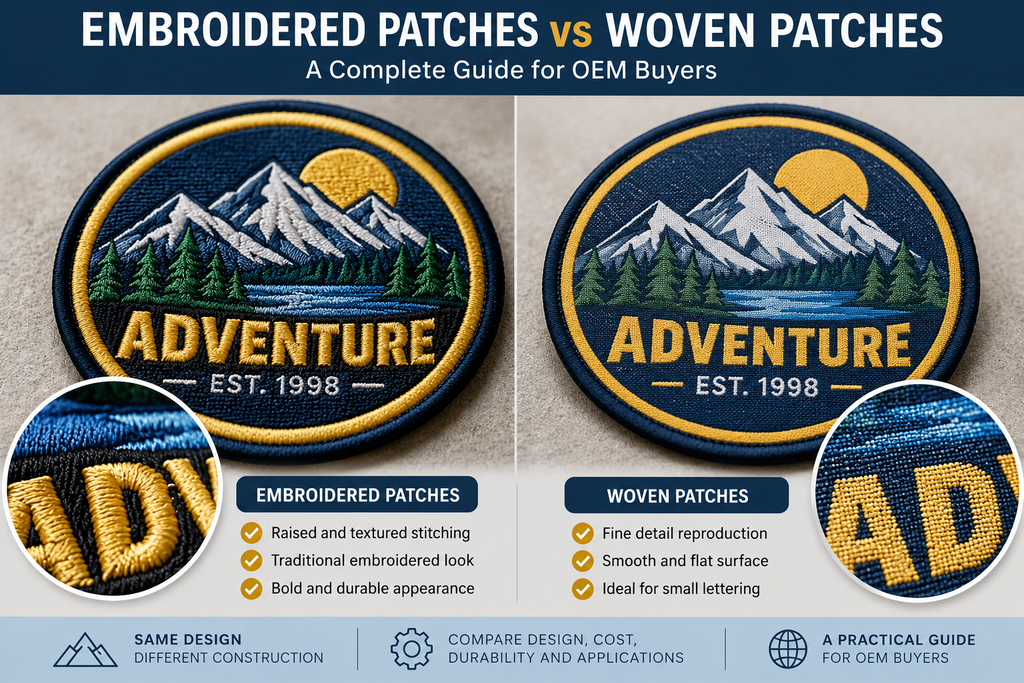
유니폼, 의류, 군용 장비, 스포츠 팀 또는 홍보용 제품에 사용할 맞춤형 패치를 조달할 때, 다음 중 하나를 선택해야 할 때는 자수 패치 vs 직조 패치 이는 OEM 구매자에게 있어 가장 중요한 결정 사항 중 하나입니다. 두 옵션 모두 브랜딩, 식별 및 장식 목적으로 널리 사용되지만, 제조 방식, 실 구조, 표면 질감, 디자인 해상도 및 전반적인 외관 면에서 상당한 차이를 보입니다.
자수 패치 이 제품은 자수 실을 원단 바탕에 꿰매어 제작되며, 이를 통해 독특한 돌출된 질감과 입체적인 외관을 연출합니다. 전통적인 장인 정신, 눈에 띄는 스티치, 그리고 고급스러운 자수 마감 덕분에 군 휘장, 경찰 제복, 스카우트 배지, 스포츠 엠블럼, 브랜드 의류 등에 널리 사용됩니다. 반면, 우븐 패치 미세한 실을 엮어 직조 구조 자체에 직접 디자인을 구현하는 방식으로 제작됩니다. 이러한 제조 공정을 통해 표면이 더 매끄러워지고, 디테일이 더욱 정교해지며, 작은 글자나 복잡한 삽화를 더 정확하게 재현할 수 있습니다.
글로벌 브랜드, 도매업체, 유니폼 공급업체 및 조달 담당자들에게 있어, 다음을 이해하는 것은 짠 패치와 자수 패치의 차이점 이는 정보에 입각한 구매 결정을 내리는 데 필수적입니다. 로고의 복잡성, 패치 크기, 실 색상, 내구성 요구 사항, 주문 수량, 생산 비용, 용도 등의 요소들은 모두 어떤 제조 방식이 가장 적합한지에 영향을 미칠 수 있습니다.
그러나 적합한 패치 유형을 선택하려면 단순히 외관만 비교해서는 안 됩니다. OEM 구매 담당자는 생산 일관성, 소재 사양, 마감 옵션, 품질 관리 절차, 그리고 제조업체의 재주문 지원 능력 등도 고려해야 합니다. 부적절한 제작 방식을 선택하면 디자인의 명확성이 떨어지거나, 제조 비용이 증가하거나, 의도된 성능 요건을 충족하지 못하는 제품이 생산될 수 있습니다.
에서 아티스트 자수 주식회사, 당사는 다음 분야를 전문으로 하고 있습니다. 대만 내 OEM 자수 패치 자체 생산, 해외 B2B 고객을 대상으로 맞춤형 자수 솔루션을 제공하고 있습니다. 당사의 핵심 자수 생산 역량 외에도, 신뢰할 수 있는 생산 파트너사를 통해 직조 패치 제조를 조율할 수 있어, 구매자는 프로젝트 요구 사항에 따라 다양한 패치 제작 옵션을 검토할 수 있습니다.
이 포괄적인 자수 패치 vs 직조 패치 가이드, 제조 공정, 디자인 역량, 질감, 내구성, 가격 고려 사항 및 실제 적용 사례를 비교해 보겠습니다. 군용 패치, 기업 엠블럼, 패션 라벨 또는 맞춤형 제복 휘장을 개발하고 계시든, 이 가이드는 귀하의 디자인 사양, 예산 및 장기적인 OEM 조달 요구 사항에 가장 적합한 패치 유형을 결정하는 데 도움이 될 것입니다.
자수 패치와 직조 패치란 무엇인가요?
비교 시 자수 패치 vs 직조 패치, 맞춤형 OEM 제조에 가장 적합한 옵션을 선택하기 위해서는 두 제품의 기본적인 제작 방식을 이해하는 것이 필수적입니다. 두 제품 모두 브랜딩, 식별, 장식 측면에서 유사한 용도로 사용되지만, 각각 다른 섬유 제조 기술을 통해 생산되며, 이는 제품의 외관, 질감, 디자인 가능성 및 생산 요건에 직접적인 영향을 미칩니다.
자수 패치는 바탕 천 위에 장식용 스티치를 수놓은 반면, 직조 패치는 디자인을 직물의 구조에 직접 녹여낸 것입니다. 이러한 차이는 제조업체가 복잡한 로고, 작은 글자, 섬세한 일러스트레이션, 그리고 독특한 시각적 효과를 얼마나 정확하게 재현할 수 있는지에 영향을 미칩니다.
OEM 구매자의 경우, 이러한 제조 특성을 파악하면 현실적인 설계 기대치를 설정하고, 생산 사양을 평가하며, 각 용도에 적합한 패치 구조를 선정하는 데 도움이 됩니다.
자수 패치의 구조 이해하기
자수 패치 이 제품은 컴퓨터 자수 기계를 사용하여 자수 실을 바탕 원단에 수놓아 제작됩니다. 디자인은 자수 방향, 자수 밀도, 실 색상 및 자수 작업 순서를 결정하는 디지털 자수 파일로 변환됩니다.
일반적인 기본 소재로는 용도와 제품 사양에 따라 트윌 원단, 펠트, 반사 원단 등이 있습니다.
제작 과정에서 자수 실을 선택한 원단에 꿰매어 원하는 로고, 엠블럼, 글자 또는 장식적인 디자인을 재현합니다. 이렇게 수놓은 부분은 돌출된 표면을 형성하여 자수 패치 특유의 입체적인 질감을 만들어 냅니다.
제조 과정에서 고려해야 할 중요한 사항 중 하나는 자수 적용 범위, 이는 자수 스티치로 덮인 패치 표면의 비율을 의미합니다. 커버리지 수준에 따라 밑에 있는 원단의 노출 정도, 전체적인 질감, 제작 시간, 실 소비량 및 제조 비용에 영향을 미칩니다.
자수 패치는 눈에 띄는 스티치, 강렬한 형태, 독특한 실의 질감, 그리고 전통적인 자수 느낌을 살리는 디자인에 특히 적합합니다.
이것들은 주로 군복 휘장, 경찰 및 보안 요원 배지, 스카우트 배지, 스포츠 팀 엠블럼, 기업 유니폼, 홍보용 상품 등에 사용됩니다.
짠 패치 구조 이해하기
자수 패치와는 달리, 우븐 패치 가는 실을 엮어 직물 구조 내부에 직접 문양을 형성함으로써 제작됩니다.
별도의 바탕 천에 자수 스티치를 수놓는 대신, 직조 제조 공정을 통해 디자인이 직물 자체에 통합됩니다. 이를 통해 비교적 평평하고 매끄러우며 가벼운 패치 표면이 만들어집니다.
직조 패치는 일반적으로 기존 자수보다 더 가는 실을 사용하기 때문에, 적절한 제작 조건 하에서는 더 작은 글자, 가느다란 선, 섬세한 일러스트레이션, 그리고 복잡한 로고 요소를 더 정밀하게 재현할 수 있습니다.
따라서 직조 패치는 제한된 크기 내에서 높은 수준의 디테일이 필요한 디자인에 특히 유용합니다.
예를 들어, 정교한 타이포그래피나 복잡한 기업 로고가 포함된 소규모 패션 브랜드의 경우, 일반적인 자수 기법으로는 요청된 크기로 디자인을 선명하게 재현할 수 없을 때 직조 기법이 더 적합할 수 있습니다.
그러나 직조 패치는 전통적인 자수 패치에서 볼 수 있는ような 돌출된 스티치 질감을 제공하지 않습니다. 직조 패치의 외관은 일반적으로 더 평평하고 균일한 편인데, 이는 특정 의류 브랜딩 용도에서는 선호될 수 있지만, 뚜렷한 자수 질감이 중요한 디자인 요건인 경우에는 덜 바람직할 수 있습니다.
따라서 OEM 구매 담당자는 직조 패치 생산을 결정하기 전에 시각적 기대치와 기술적 설계상의 제약 사항을 모두 평가해야 합니다.
제조 방식의 주요 차이점
자수 패치와 직조 패치의 가장 큰 차이점은 실들이 어떻게 사용되어 디자인을 구성하는지.
자수 패치 제조 과정에서 컴퓨터 제어 자수 기계가 지지 원단에 장식용 스티치를 수놓습니다. 제조업체는 스티치 밀도, 스티치 방향, 실 선택 및 자수 적용 범위를 조절하여 다양한 시각적 효과를 낼 수 있습니다.
직조 패치 제조 과정에서는 실을 정교하게 엮어 디자인을 완성합니다. 이렇게 만들어진 직물 구조 덕분에, 자수에서 흔히 볼 수 있는 돌출된 스티치 패턴에 의존하지 않고도 섬세한 디자인을 재현할 수 있습니다.
이러한 제조상의 차이는 생산 계획, 설비 요구 사항, 원고 준비, 후가공 공정 및 품질 검사 기준에도 영향을 미칩니다.
자수 패치의 경우, 제조업체는 스티치 정렬, 실 장력, 원단 안정성 및 자수 일관성을 세심하게 관리해야 합니다. 직조 패치 생산에는 직조 매개변수, 실 선택, 디자인 해상도 및 원단 구조에 대한 적절한 제어가 필요합니다.
두 가지 패치 유형 모두 다양한 마감 및 부착 방식을 지원할 수 있지만, 이용 가능한 옵션은 구체적인 제조 공정과 공급업체의 역량에 따라 달라집니다.
해외 OEM 구매자의 경우, 특정 방식이 보편적으로 더 우수하다고 단정 짓기보다는 설계의 복잡성, 용도, 요구되는 외관, 생산 사양에 따라 패치 구조를 평가하는 것이 가장 효과적인 접근 방식입니다.
📊 표: 자수 패치 대 직조 패치 – 기본 제조 공정 비교
| 비교 요소 | 자수 패치 | 직조 패치 |
|---|---|---|
| 제조 방법 | 기지에 꿰매어진 실 | 무늬를 이루도록 엮인 실들 |
| 기본 구조 | 자수가 들어간 뒷감 | 일체형 직조 섬유 구조 |
| 나사산 특성 | 비교적 굵은 자수 실 | 일반적으로 더 가느다란 직조 실 |
| 표면 질감 | 돌출형 및 입체형 | 평평하고 매끄러운 |
| 정밀한 디테일 재현 | 바늘땀 크기와 디자인에 따라 다릅니다 | 일반적으로 미세한 디테일을 표현하는 데 더 적합합니다 |
| 작은 글씨 | 자수 해상도의 한계로 인해 | 대개 작은 글씨에 적합합니다 |
| 시각적 외관 | 전통적인 자수 질감 | 세련되고 정교한 직조 마감 |
| 두께 | 일반적으로 더 두껍다 | 일반적으로 더 얇은 |
| 일반적인 애플리케이션 | 군대, 경찰, 스포츠, 스카우트, 제복 | 패션 브랜드, 정교한 로고, 브랜딩 |
| OEM 생산 시 고려 사항 | 바느질 밀도, 커버리지, 원단, 실 색상 | 직조 밀도, 실 색상, 직물 구조 |
💡 구매자 팁: 적합한 패치 구조 선택하기
OEM 생산을 위해 원고를 제출하기 전에, 구매자는 다음 사항을 확인해야 합니다. 표면 질감 또는 미세한 디테일의 재현 이것이 가장 중요한 설계 요구사항입니다.
프로젝트에 굵은 글씨체, 눈에 띄는 스티치, 그리고 전통적인 자수 느낌이 필요하다면, 자수 패치가 더 적합한 선택일 수 있습니다.
패치의 크기가 제한적인데도 작품에 아주 작은 글자, 가느다란 선 또는 정교한 디테일이 포함되어 있다면, 직조 패치를 사용하는 것이 재현 효과를 더 잘 낼 수 있습니다.
이러한 요구 사항에 해당하지 않는 설계의 경우, 대량 생산에 착수하기 전에 제조 타당성 검토나 실물 샘플을 요청하면 가장 적합한 제작 방법을 결정하는 데 도움이 될 수 있습니다.
📖 확장된 읽기
자수 패치와 직조 패치: 주요 차이점
평가할 때 자수 패치 vs 직조 패치, OEM 구매 담당자들은 기본적인 제조 공법 그 이상을 살펴보고, 각 제작 방식이 완제품에 어떤 영향을 미치는지 고려해야 합니다. 두 가지 패치 유형 모두 맞춤형 로고, 엠블럼, 글자, 장식용 아트워크를 재현할 수 있지만, 각각의 물리적 특성에 따라 질감, 선명도, 유연성, 전반적인 외관 등에서 눈에 띄게 다른 결과가 나타날 수 있습니다.
자수 패치는 입체적인 스티치와 전통적인 자수 마감으로 널리 알려져 있는 반면, 직조 패치는 섬세한 디테일, 매끄러운 표면, 가벼운 무게가 중요한 경우 일반적으로 선호됩니다. 그러나 어느 한 쪽이 무조건 더 낫다고 단정할 수는 없습니다. 적절한 선택은 디자인, 사용 목적, 요구되는 외관, 그리고 생산 사양에 따라 달라집니다.
이러한 차이점을 이해하면 해외 구매자들이 요구 사항을 보다 정확하게 전달하고, 생산 샘플을 평가하며, 기대와 맞지 않는 패치 구조를 선택하는 것을 피할 수 있습니다.
나사산 두께 및 표면 질감
자수 패치와 직조 패치 사이의 가장 눈에 띄는 차이점 중 하나는 실의 굵기와 그로 인해 생기는 표면 질감입니다.
자수 패치 자수 실을 사용하여 지지 천 위에 수를 놓아 제작됩니다. 이 실들은 눈에 띄는 스티치 패턴을 형성하여 입체적이고 질감 있는 표면을 만들어 냅니다. 자수의 덮임 정도, 스티치 방향, 밀도에 따라 완성된 패치는 각기 다른 수준의 입체감을 나타낼 수 있습니다.
이 독특한 자수 질감은 특히 군 계급장, 경찰 패치, 스카우트 배지, 스포츠 팀 엠블럼, 그리고 전통적인 제복 식별 표시에 적합합니다. 눈에 띄는 바느질 자국은 많은 구매자들이 장인 정신과 확고한 조직 정체성과 연관 짓는, 한눈에 알아볼 수 있는 자수 특유의 외관을 연출합니다.
자수 실의 방향도 시각적 효과에 영향을 미칩니다. 예를 들어, 새틴 스티치는 매끄럽고 약간 돌출된 글자와 윤곽을 만들어낼 수 있는 반면, 필 스티치는 방향성이 있는 패턴을 가진 넓고 질감이 살아있는 영역을 연출할 수 있습니다.
반대로, 우븐 패치 더 가느다란 실을 엮어 직물 구조로 제작됩니다. 디자인이 표면에 수놓아진 것이 아니라 직물 자체에 통합되어 있기 때문에, 직조 패치는 일반적으로 더 평평하고 매끄러우며 얇은 외관을 띱니다.
이러한 구조 덕분에 직조 패치는 세련된 표면 마감과 얇은 두께가 요구되는 용도, 예를 들어 패션 라벨, 정교한 브랜드 로고, 특정 의류 액세서리 등에 적합합니다.
OEM 구매자의 경우, 돌출 자수와 평면 직조 중 어느 것을 선택할지는 특정 질감이 더 높은 품질을 나타낸다고 가정하기보다는, 원하는 시각적 정체성에 따라 결정해야 합니다.
세부 묘사 및 작은 글자
이 분야에서 또 다른 중요한 차이점은 자수 패치 vs 직조 패치 비교 대상은 미세한 디테일과 작은 글씨를 재현하는 능력입니다.
자수는 특정 실 굵기, 스티치 길이 및 간격 요건을 갖춘 물리적 스티치를 사용합니다. 아트웍에 매우 작은 텍스트, 얇은 윤곽선 또는 복잡한 내부 요소가 포함되어 있는 경우, 이러한 물리적 제약으로 인해 완성된 디자인의 선명도에 영향을 미칠 수 있습니다.
예를 들어, 몇 줄의 아주 작은 글자가 새겨진 작은 자수 패치의 경우, 가독성을 유지하기 위해 서체를 단순화하거나 글자 간격을 넓히거나 전체 크기를 더 크게 해야 할 수도 있습니다.
자수 디지털화의 품질 또한 중요합니다. 적절한 스티치 방향, 밀도, 밑그림 및 디자인 조정은 제조업체가 자수 제작의 한계 내에서 아트워크를 가능한 한 정확하게 재현하는 데 도움이 됩니다.
그러나 스티치 밀도를 높인다고 해서 세부 표현이 자동으로 개선되는 것은 아닙니다. 특히 촘촘한 디자인의 경우, 스티치가 지나치게 밀집되면 원치 않는 두께감, 왜곡, 또는 실이 겹치는 부분이 생길 수 있습니다.
직조 패치는 일반적으로 더 가는 실을 사용하기 때문에 더 작은 디자인 요소를 직조 구조에 포함시킬 수 있어, 더 높은 디테일 표현력을 제공합니다.
이는 기존의 자수 기법으로는 재현하기 어려울 수 있는 복잡한 기업 로고, 섬세한 일러스트레이션, 가느다란 선, 작은 글씨 등에 특히 유용할 수 있습니다.
그럼에도 불구하고, 직조 패치에는 기술적인 한계도 있습니다. 매우 미세한 디테일, 간격이 좁은 요소, 복잡한 색상 전환의 경우, 직조 해상도와 생산 사양에 따라 아트웍 조정이 필요할 수 있습니다.
두 가지 패치 유형 모두에 대해, OEM 구매자는 의도된 완성 크기로 아트웍을 검토해야 하며, 디자인의 정확성이 특히 중요한 경우에는 생산 샘플을 요청해야 합니다.
외관, 유연성 및 내구성
자수 패치와 직조 패치의 차이점은 완성된 제품의 외관, 촉감, 그리고 일상적인 사용 시의 성능에도 영향을 미칩니다.
자수 패치는 일반적으로 바탕 원단 위에 자수 실을 꿰매어 만들기 때문에 구조가 더 견고합니다. 스티치 밀도, 뒷면 처리, 마감 방법에 따라 완성된 패치는 비슷한 크기의 직조 패치에 비해 두께감이 있고 유연성이 떨어질 수 있습니다.
이러한 제작 방식은 제복 휘장, 전술 패치, 조직 엠블럼, 그리고 자수 무늬가 두드러지게 드러나는 것이 선호되는 용도에 종종 적합합니다.
직조 패치는 일반적으로 구조가 더 얇고 유연하기 때문에, 눈에 띄지 않는 마감이 중요한 의류나 액세서리에 적합합니다.
그러나 유연성을 내구성과 혼동해서는 안 됩니다.
자수 패치와 직조 패치 모두 적절한 소재를 사용하여 제작하고 올바르게 부착할 경우, 신뢰할 수 있는 장기적인 성능을 발휘할 수 있습니다.
이 제품의 내구성은 원사 구성, 직물 구조, 뒷면 소재, 가장자리 마감, 부착 방식, 세탁 조건, 마모 노출 정도 등 여러 요인에 따라 달라집니다.
예를 들어, 고품질 실을 사용하고 가장자리가 제대로 마감된 자수 패치는 반복적으로 사용해도 내구성이 뛰어나며, 적절한 소재와 마감 처리가 된 직조 패치 역시 일반적인 의류 관리 조건에서도 외관을 잘 유지할 수 있습니다.
실제 제품 사양과 사용 환경을 평가하지 않고서는 어느 쪽 구조도 무조건 더 내구성이 뛰어나다고 간주해서는 안 됩니다.
따라서 OEM 구매 담당자는 내구성을 단순히 두께나 표면 질감만으로 판단하기보다는 패치의 전체적인 구조를 종합적으로 고려해야 합니다.
📊 표: 자수 패치와 직조 패치의 주요 물리적 및 시각적 차이점
| 비교 요소 | 자수 패치 | 직조 패치 |
|---|---|---|
| 나사산 두께 | 일반적으로 더 굵은 자수 실 | 일반적으로 더 가느다란 직조 실 |
| 표면 질감 | 돌출 및 질감 처리 | 평평하고 매끄러운 |
| 차원적 외관 | 더 뚜렷한 스티칭 깊이 | 더 절제된 외관 |
| 정밀한 디테일 표현력 | 스티치 구조에 따른 제한 | 일반적으로 정교한 디테일을 표현하는 데 더 적합합니다 |
| 작은 글씨 | 글자 크기를 키우거나 삽화를 단순화해야 할 수도 있습니다. | 대개 더 작은 글자 크기를 지원합니다 |
| 스티치 가시성 | 개별 자수 스티치가 눈에 띕니다 | 미세하게 짜인 구조는 더 균일합니다 |
| 전체 두께 | 일반적으로 더 두껍다 | 일반적으로 더 얇은 |
| 유연성 | 커버 범위, 원단, 뒷면 소재에 따라 다릅니다. | 일반적으로 더 유연하다 |
| 시각적 스타일 | 전통적이고 질감이 살아있는 자수 | 세련되고 정교한 직조 질감 |
| 내구성 | 재료와 구조에 따라 다릅니다 | 재료와 구조에 따라 다릅니다 |
| 최고의 디자인 우선 | 질감, 대담한 형태, 눈에 띄는 스티칭 | 섬세한 디테일, 작은 글씨, 매끄러운 마감 |
참고: 이러한 비교 내용은 보편적인 성능 기준이라기보다는 일반적인 제조 특성을 설명한 것입니다. 실제 결과는 실 사양, 디자인의 복잡도, 패치 크기, 뒷면 소재, 마감 방법 및 생산 품질에 따라 달라집니다.
💡 구매자 팁: 패치 유형보다 디자인 요구 사항을 우선시하세요
자수 패치와 직조 패치 중에서 선택할 때, 구매자는 먼저 완제품의 가장 중요한 특성을 파악해야 합니다.
디자인에 굵은 글씨체, 눈에 띄는 스티치, 입체적인 질감 또는 전통적인 자수 느낌이 필요한 경우, 자수 패치 가장 적합한 결과를 얻을 수 있을 것입니다.
작품에 정교한 삽화, 작은 글자, 가느다란 선, 또는 제한된 크기 내에서 표현된 세밀한 요소가 포함되어 있는 경우, 우븐 패치 디자인의 명확성을 더욱 높여줄 수 있습니다.
세탁이 잦거나 마모가 심하거나 장기간 균일하게 사용되는 용도의 경우, 구매자는 두꺼운 패치가 무조건 내구성이 더 뛰어나다고 단정 짓기보다는 나사산 재질, 가장자리 마감, 뒷면 처리 및 부착 요건도 함께 검토해야 합니다.
외관이나 성능 요건이 매우 중요한 경우, 두 가지 구조의 실물 샘플을 요청하면 구매자가 대량 OEM 주문을 하기 전에 더 신중한 결정을 내리는 데 도움이 될 수 있습니다.
📖 확장된 읽기
디자인의 복잡성과 아트웍 요구 사항
비교 시 자수 패치 vs 직조 패치, 디자인의 복잡성과 도안 준비는 제조의 타당성, 시각적 정확도, 그리고 전반적인 생산 비용에 영향을 미치는 결정적인 요소입니다. 두 개의 패치가 동일한 도안과 치수를 사용하더라도, 자수와 직조는 서로 다른 직물 제작 방식을 통해 그래픽 요소를 재현하기 때문에 최종 결과물은 상당히 달라질 수 있습니다.
OEM 구매자의 경우, 원고를 제출하기 전에 이러한 제한 사항을 파악해 두면 불필요한 수정 작업을 줄이고, 생산 효율을 높일 수 있으며, 제조업체가 보다 일관된 결과를 얻을 수 있도록 도울 수 있습니다.
디자인 시 고려해야 할 주요 사항으로는 최소 선 두께, 글자 크기, 색상 분리, 요소 간의 간격, 그리고 디자인의 복잡성과 완성된 패치의 크기 간의 관계 등이 있습니다.
현대적인 제조 장비는 다양한 디자인을 재현할 수 있지만, 모든 디지털 일러스트레이션이 수정 없이 그대로 섬유 생산에 적용될 수 있는 것은 아닙니다. 아트워크는 선택한 제조 방식의 물리적 특성과 기술적 한계를 고려하여 평가되어야 합니다.
세부 로고나 작은 글씨의 적절한 크기를 선택하는 데 대한 추가 지침이 필요하시면, 당사의 자수 패치 크기 안내.
어떤 패치 유형이 미세한 디테일을 더 잘 표현할까요?
자수 패치와 직조 패치 중 하나를 선택할 때 가장 중요하게 고려해야 할 사항 중 하나는 각 제조 방식이 정교한 디자인 요소를 얼마나 정확하게 재현할 수 있는지입니다.
자수 패치 각종 자수 바느질 기법을 활용하여 도형, 윤곽선, 글자, 장식 문양을 만들어 냅니다. 각 바느질은 물리적인 공간을 차지하기 때문에, 패치 크기가 작을수록 매우 얇은 선, 밀집된 요소, 미세한 디테일을 선명하게 재현하기 어려울 수 있습니다.
예를 들어, 정교한 항공기 삽화, 얇은 테두리, 작은 글씨가 포함된 복잡한 군용 휘장의 경우, 자수 제작에 앞서 원본 디자인에 수정이 필요할 수 있습니다.
제조업체는 시각적 명확성을 유지하기 위해 특정 요소를 단순화하거나, 간격을 넓히거나, 특정 세부 사항을 확대하거나, 스티치 방향을 수정해야 할 수도 있습니다.
그러나 자수는 독특한 디자인상의 장점도 제공합니다. 다양한 스티치 방향, 새틴 스티치, 필 스티치를 활용하면 기존의 직조 방식으로는 재현하기 어려운 독특한 질감과 입체감을 연출할 수 있습니다.
우븐 패치, 반면, 이 제품은 비교적 가느다란 실을 교차시켜 짜여진 구조 덕분에 미세한 디테일을 일반적으로 더 잘 재현해 줍니다.
이를 통해 직조 패치는 적절한 직조 조건 하에서 가는 선, 작은 심볼, 정교한 삽화를 더욱 정밀하게 재현할 수 있습니다.
그럼에도 불구하고, 직조 방식의 해상도에는 한계가 있습니다. 특히 원고에 복잡한 색상 전환이나 간격이 좁은 디테일이 포함된 경우, 극히 작은 디자인 요소는 여전히 단순화해야 할 수 있습니다.
OEM 구매자의 경우, 확대된 디지털 이미지를 통해 디자인의 선명도를 판단하기보다는 실제 생산 크기로 아트웍을 평가하는 것이 가장 신뢰할 수 있는 방법입니다.
로고 디자인 및 작은 글씨의 제한 사항
로고의 재현성과 글자의 가독성은 기업 브랜딩, 군대 식별표식, 경찰 휘장, 스카우트 엠블럼, 홍보용 패치 등에서 특히 중요합니다.
[삽화]를 준비할 때 맞춤형 자수 패치, 구매자는 글자 높이, 글꼴 스타일, 획의 굵기, 그리고 사용 가능한 자수 공간 간의 관계를 고려해야 합니다.
자수 실로는 인쇄된 그래픽만큼 정밀하게 매우 가느다란 선이나 미세한 간격을 재현할 수 없기 때문에, 글자가 너무 작으면 읽기 어려울 수 있습니다.
예를 들어, 얇은 세리프 서체, 글자 간격이 좁은 글자, 복잡한 장식용 타이포그래피의 경우 자수 디지털화 전에 수정이 필요할 수 있습니다.
글자 크기를 약간 키우거나, 글자 간격을 넓히거나, 더 선명한 글꼴을 선택하거나, 패치 전체를 크게 만드는 것만으로도 자수의 가독성을 높일 수 있는 경우가 많습니다.
실용적인 최소 글자 크기는 실의 굵기, 스티치 유형, 원단의 견고성, 장비, 그리고 특정 글꼴 디자인에 따라 달라집니다. 따라서 제조업체는 일률적인 최소 텍스트 크기를 보장하기보다는 각 아트워크를 개별적으로 평가해야 합니다.
로고에 작은 글자나 정교한 그래픽 요소가 포함된 경우, 직조 패치는 일반적으로 더 높은 디테일 표현력을 갖기 때문에 유리한 점이 될 수 있습니다.
그러나 직조된 글자는 여전히 선택한 직조 공정의 생산 능력 범위 내에 있어야 합니다.
해외 OEM 구매자의 경우, AI, EPS 또는 PDF와 같은 형식의 원본 벡터 아트웍을 제공하면 제조업체가 디자인 비율을 검토하고 적절한 생산 파일을 준비하는 데 도움이 될 수 있습니다.
초기 평가 단계에서는 고해상도 래스터 파일도 허용될 수 있으나, 추가적인 도면 준비 작업이 필요할 수 있습니다.
명확한 아트웍 사양은 오해를 줄이고, 완성된 패치가 의도한 브랜드 정체성과 일치하도록 하는 데 도움이 됩니다.
색상 선택 및 디자인 재현
색상 선택은 또한 다음에서 고려해야 할 또 다른 중요한 요소입니다. 자수 패치 vs 직조 패치, 특히 기업 브랜딩, 통일된 사양 관리 또는 반복 생산 주문을 담당하는 OEM 구매 담당자들에게는 더욱 그렇습니다.
두 제조 방법 모두 색실를 사용하여 원작을 재현하지만, 사용 가능한 색상 조합과 생산 요건은 장비, 실의 사양 및 제조 공정에 따라 달라집니다.
자수 패치의 경우, 자수 디지털화 과정에서 각 실의 색상을 지정하고 이를 기계의 생산 순서에 반영해야 합니다.
실 색상 수를 늘리면 실 준비, 색상 교체, 기계 설정 및 생산 관리에 추가적인 작업이 필요할 수 있습니다.
그 결과, 사용되는 실의 색상이 더 많은 디자인은 제조 비용을 증가시킬 수 있습니다, 특히 잦은 색상 변경이나 추가적인 생산 조정이 필요한 경우에는 더욱 그렇습니다.
실제 비용에 미치는 영향은 자수 기계의 구성, 주문 수량, 생산 순서 및 색상 변경 횟수에 따라 달라집니다.
직조 패치의 경우 색상 계획도 신중하게 세워야 합니다. 사용 가능한 색상의 수와 색상 전환의 복잡성은 직조 장비와 생산 사양에 따라 달라집니다.
다양한 색상, 그라데이션, 사진 효과 또는 매우 세밀한 음영 처리가 포함된 디자인의 경우, 단순화하거나 다른 제작 기법을 적용해야 할 수 있습니다.
두 가지 패치 유형 모두에 대해, 구매자분들은 실의 색상이 디지털 화면에 표시되는 색상과 항상 정확히 일치하지는 않는다는 점을 이해하셔야 합니다.
색상 일치는 사용 가능한 실 색상 기준, 승인된 견본 또는 합의된 색상 사양을 바탕으로 평가해야 합니다.
브랜드 일관성이 필수적인 경우, OEM 구매 담당자는 생산에 들어가기 전에 색상 요구 사항을 전달하고, 요청한 색상을 사용 가능한 실 소재로 구현할 수 있는지 확인해야 합니다.
재주문의 경우, 승인된 디자인 파일, 실 색상 참조 정보 및 생산 사양을 체계적으로 관리하면 제조 배치 간 일관성을 높이는 데 도움이 됩니다.
📊 표: 자수 패치와 직조 패치의 제작 요건 비교
| 디자인 요소 | 자수 패치 | 직조 패치 |
|---|---|---|
| 미세한 선의 재현 | 스티치 두께와 간격에 따른 제한 | 일반적으로 얇은 선을 그릴 때 더 적합합니다 |
| 작은 글씨 | 글자 크기를 키우거나 문장을 간결하게 다듬어야 할 수도 있습니다. | 대개 작은 글자 크기를 지원합니다 |
| 복잡한 로고 | 일러스트를 단순화해야 할 수도 있습니다 | 일반적으로 섬세한 디테일에 적합합니다 |
| 돌출 디자인 효과 | 자수 바느질 기법을 통해 구현 가능 | 일반적으로 제한됨 |
| 바느질 방향이 미치는 영향 | 눈에 띄는 질감과 입체감을 연출할 수 있습니다 | 같은 방식으로 적용되지 않음 |
| 색 재현 | 자수 실 선택에 기초하여 | 직조용 실 선택에 기초하여 |
| 기타 색상 | 설치 및 생산 비용이 증가할 수 있습니다 | 직조 공정의 복잡성과 비용이 증가할 수 있음 |
| 그라데이션과 음영 | 대개 스티치 기반의 해석이 필요합니다 | 직조 해상도와 실 색상의 제한으로 인해 |
| 선호하는 작품 | 벡터 파일 또는 선명한 고해상도 이미지 | 벡터 파일 또는 선명한 고해상도 이미지 |
| 제작 준비 | 자수 디지털화 및 스티치 계획 | 직조 무늬 개발 |
| 샘플 평가 | 복잡한 자수 디자인에 추천합니다 | 세밀한 직조 디자인에 추천합니다 |
참고: 디자인 적용에 대한 제한 사항은 패치의 크기, 실 사양, 기계 성능 및 제조 요건에 따라 달라집니다. 두 가지 유형의 패치 모두 대량 생산에 앞서 기술적 타당성 검토를 거쳐야 합니다.
💡 구매자 팁: 주문하기 전에 인쇄용 원고를 준비하세요
OEM 견적을 요청하기 전에, 구매자는 원본 디자인 파일과 함께 원하는 패치 크기, 필요한 실 색상, 뒷면 재질 선호 사항, 예상 주문 수량을 제공해야 합니다.
자수 패치의 경우, 극히 작은 글자나 복잡한 일러스트레이션이 수정 없이 그대로 재현될 수 있다고 가정하지 마십시오. 제조업체에서는 더 나은 자수 결과를 얻기 위해 디자인을 확대하거나, 세부 사항을 단순화하거나, 글자 모양을 조정할 것을 권장할 수 있습니다.
직조 패치의 경우, 선택한 직조 공정이 요구되는 미세한 디테일과 색상 조합을 재현할 수 있는지 확인하십시오.
제조 비용을 비교할 때는 추가적인 실 색상, 복잡한 디자인, 그리고 특별한 생산 요건 등이 최종 견적에 영향을 미칠 수 있다는 점을 유념하시기 바랍니다.
무엇보다 중요한 것은, 대량 주문을 진행하기 전에 아트워크 사양과 제작 샘플을 승인해야 합니다., 특히 로고를 일관되게 재현하고 브랜드 색상을 정확히 반영해야 할 때 더욱 그렇습니다.
📖 확장된 읽기
제조 공정 및 품질 관리
평가할 때 자수 패치 vs 직조 패치, 제조 공정과 품질 관리 요건을 이해하는 것은 해외 OEM 구매자에게 필수적입니다. 두 제품 모두 맞춤형 로고, 휘장 및 장식용 아트워크를 재현하도록 설계되었지만, 생산 워크플로우에는 서로 다른 장비, 기술적 매개변수 및 검사 고려 사항이 수반됩니다.
제조 품질은 개별 샘플의 외관뿐만 아니라, 대량 생산 전반에 걸쳐 일관된 사양을 유지할 수 있는 공급업체의 능력에도 좌우됩니다. 나사산 선정, 기계 설정, 설계 준비, 마감 정밀도, 생산 모니터링과 같은 요소들이 최종 결과에 영향을 미칠 수 있습니다.
도매업체, 유니폼 공급업체, 의류 브랜드 및 유통업체의 경우, 신뢰할 수 있는 제조 공정은 제품 편차를 최소화하고 잠재적인 결함을 줄이며, 꾸준한 재주문을 뒷받침하는 데 도움이 됩니다.
각 패치 유형이 어떻게 제조되는지 이해하면, 구매 담당자는 공급업체와 더 효과적으로 소통하고, 현실적인 품질 기대치를 설정하며, 대량 OEM 주문을 발주하기 전에 생산 역량을 평가할 수 있습니다.
자수 생산 및 스티치 밀도
~의 제조 공정은 맞춤형 자수 패치 이 과정은 디자인 평가와 자수 디지털화 작업으로 시작됩니다. 이 단계에서 원본 디자인은 스티치 위치, 스티치 방향, 실 색상, 제작 순서 등에 대한 지침이 포함된 기계가 읽을 수 있는 자수 파일로 변환됩니다.
일반적인 디지털 이미지 변환과 달리, 자수 디지타이징은 원단의 특성, 디자인의 복잡도, 스티치 밀도, 그리고 완성될 패치의 크기에 따라 기술적인 조정이 필요합니다.
디지털화 과정을 거친 후, 적합한 바탕 원단을 선정합니다. 일반적인 소재로는 트윌, 펠트, 반사 원단 등이 있으며, 이는 제품의 용도와 고객 사양에 따라 달라집니다.
그런 다음 준비된 원단을 컴퓨터 제어 자수 기계에 올려놓고, 프로그램된 디자인에 따라 자수 실을 꿰매어 나갑니다.
가장 중요한 기술적 매개변수 중 하나는 스티치 밀도, 이는 자수 스티치가 디자인 내에서 얼마나 밀접하게 배치될지를 결정합니다.
적절한 스티치 밀도는 균일한 커버리지를 확보하고, 디자인의 선명도를 유지하며, 스티치 사이의 원치 않는 틈을 줄이는 데 도움이 됩니다.
그러나 스티치 밀도가 지나치게 높으면 불필요한 실 뭉침, 원단 뒤틀림, 생산 시간 증가 및 추가적인 제조 비용이 발생할 수 있습니다.
스티치 밀도가 충분하지 않으면 자수 면적이 고르지 않게 되거나, 원단에 틈이 보이거나, 디자인이 선명하지 않게 나타날 수 있습니다.
따라서 제조업체는 원하는 외관을 구현하기 위해 스티치 밀도, 스티치 방향, 밑감, 실 장력, 원단의 안정성 사이의 균형을 맞춰야 합니다.
그 밖의 생산상 고려 사항으로는 실 색상 변경, 기계 속도, 실 끊김, 자수 정렬 정확도 등이 있습니다.
자수가 완료된 후, 패치는 필요한 마감 공정을 거치게 되며, 여기에는 자르기, 가장자리 마감, 뒷면 부착 및 최종 검사가 포함될 수 있습니다.
OEM 구매자의 경우, 자수 제품의 품질은 스티치의 균일성, 글자의 선명도, 표면 상태, 그리고 승인된 아트웍 사양 준수 여부를 통해 평가해야 합니다.
짠 패치의 생산 및 후가공
우븐 패치 이 제품은 가는 실을 엮어 직물 구조 자체에 원하는 디자인을 직접 재현하는 직조 공정을 통해 제조됩니다.
지지 천 위에 장식용 스티치를 수놓는 자수 패치와 달리, 직조 패치는 디자인이 직조된 원단 자체에 포함됩니다.
제작 과정은 원고 평가와 직조 지침서 작성으로 시작됩니다. 레터링, 선 굵기, 실 색상, 전체 치수 등의 디자인 요소는 선정된 직조 장비의 성능에 맞춰 검토되어야 합니다.
제조 과정에서 직조 장비는 실의 배치를 제어하여 필요한 디자인 패턴을 만들어 냅니다.
직조 패치는 일반적으로 더 가느다란 실을 사용하기 때문에, 적절한 생산 조건 하에서는 정교한 디테일과 작은 글씨도 재현할 수 있습니다.
그러나 제조 공정에서는 직조 해상도, 실 장력, 무늬 정렬 및 색상 배치를 세심하게 제어해야 합니다.
직조 공정이 끝난 후, 원단은 고객의 사양에 따라 절단, 가장자리 마감, 뒷면 코팅 및 기타 가공 공정을 거칠 수 있습니다.
일반적인 마감 처리 요건으로는 열 절단 가장자리, 적절한 경우 메로우 처리된 테두리, 꿰매어 부착하는 방식, 다림질로 부착하는 뒷면, 또는 벨크로 부착 시스템 등이 포함될 수 있습니다.
이러한 옵션의 이용 가능 여부와 적합성은 직조 패치의 구조와 생산 파트너의 역량에 따라 달라집니다.
품질 검사는 디자인의 명확성, 직조의 균일성, 치수 정확도, 실의 결함, 색상 일치도 및 마감 품질에 중점을 두어야 합니다.
에서 아티스트 자수 주식회사, 자수 패치는 당사의 주요 자체 생산 전문 분야입니다. 또한 고객의 요구 사항에 따라 신뢰할 수 있는 외부 제조 파트너를 통해 직조 패치 생산도 진행할 수 있습니다.
이러한 조달 방식 덕분에 OEM 구매 담당자들은 사내 자수 생산과 파트너사가 지원하는 직조 패치 생산을 명확히 구분하면서도 두 가지 제품 유형 모두에 대해 논의할 수 있습니다.
OEM 주문에 대한 품질 검사
비교할 때 품질 관리는 매우 중요한 고려 사항입니다. 자수 및 직조 패치, 특히 대량 구매를 하거나 정기적인 OEM 프로그램을 관리하는 구매자에게는 더욱 그렇습니다.
명확하게 정의된 검사 절차는 완제품이 외관, 치수, 색상, 구조 및 마감에 관한 승인된 사양을 충족하는지 확인하는 데 도움이 됩니다.
자수 패치의 경우, 검사 시 주로 자수 정렬 상태, 스티치 균일성, 실 장력, 글자 가독성, 그리고 눈에 띄는 실 결함이 없는지에 중점을 둡니다.
검사원은 또한 원단의 뒤틀림, 자수 부위의 불필요한 틈, 풀린 실, 그리고 테두리나 뒷면 마감 처리의 일관성 등을 평가할 수 있습니다.
직조 패치의 경우, 검사 시 직조 정밀도, 무늬 정렬, 미세한 디테일의 재현, 실의 불규칙성, 그리고 완성된 직물 구조의 균일성에 중점을 두어야 합니다.
제조 공정에 관계없이, 균일한 패치, 군용 휘장, 그리고 지정된 부착 위치에 정확히 맞춰야 하는 제품의 경우 치수 정밀도가 특히 중요합니다.
색상 일관성도 또 다른 중요한 고려 사항입니다. 구매자는 생산 기준을 명확히 하기 위해 승인된 원사 참조 정보, 실물 샘플 또는 합의된 색상 사양을 제공할 수 있습니다.
대량 OEM 주문의 경우, 완성된 패치 하나만을 평가하는 것만으로는 전체 생산 로트를 적절히 반영하지 못할 수 있습니다.
대신, 구매자와 제조업체는 주문 수량, 제품의 복잡성 및 합의된 인수 기준을 바탕으로 적절한 검사 절차를 마련해야 합니다.
이러한 절차에는 양산 전 샘플 승인, 공정 중 모니터링, 출하 전 최종 검사가 포함될 수 있습니다.
재주문이 예상될 경우, 승인된 디자인 원고, 색상 기준, 치수, 뒷면 사양 및 마감 요건을 보관해 두면 생산 배치 간 편차를 줄이는 데 도움이 될 수 있습니다.
해외 구매자의 경우, 장기적인 제조 협력 관계 전반에 걸쳐 신뢰할 수 있는 제품 품질을 유지하기 위해서는 명확한 의사소통과 문서화된 사양이 필수적입니다.
📊 표: 자수 패치와 직조 패치 비교 – 제조 및 품질 관리 비교
| 제조 요인 | 자수 패치 | 직조 패치 |
|---|---|---|
| 생산 기술 | 컴퓨터 제어 자수기 | 직조 장비 |
| 아트웍 준비 | 자수 디지털화 | 직조 무늬 개발 |
| 설계 및 시공 | 기지에 꿰매어진 실 | 직물에 엮인 실들 |
| 주요 기술 사양 | 바늘 땀의 밀도, 방향, 장력 | 직조 해상도, 실 정렬 |
| 재료 관련 고려 사항 | 기본 원단과 자수 실 | 실 짜기와 직물 구조 |
| 색상 관리 | 실 선택 및 색상 변경 | 실 선택 및 직조 구성 |
| 흔히 발생하는 제작 문제 | 실 끊김, 주름, 스티치 간격 불량 | 직조 불규칙성, 무늬 왜곡 |
| 설계 정밀도 검사 | 스티치 정렬 및 글자 선명도 | 직조 정렬과 디테일의 선명도 |
| 치수 검사 | 완성된 크기와 테두리의 균일성 | 완성 크기 및 절단 정밀도 |
| 마감 옵션 | 재단, 테두리, 뒷면 처리, 부착 | 재단, 테두리, 뒷면 처리, 부착 |
| 대량 생산의 일관성 | 자수 공정 관리가 필요합니다 | 직조 공정 제어가 필요합니다. |
| 아티스트 자수 제작 | 자체 생산 | 신뢰할 수 있는 외부 제작 파트너 |
참고: 제조 공정, 검사 방법 및 이용 가능한 마감 옵션은 제품 사양, 장비 성능 및 개별 공급업체와의 계약 조건에 따라 달라집니다.
💡 구매자 팁: 대량 생산에 앞서 명확한 품질 기준을 수립하세요
OEM 생산을 위해 맞춤형 패치를 조달할 때, 구매 담당자는 생산을 확정하기 전에 명확한 제품 사양을 수립해야 합니다.
중요한 정보에는 완성된 치수, 승인된 디자인, 실 색상, 소재 요구 사항, 테두리 구조, 뒷면 재질, 부착 방법 및 허용 가능한 제작 공차 등이 포함됩니다.
자수 패치의 경우, 구매자는 스티치 품질, 자수 덮임 범위, 글자 선명도, 그리고 원단의 안정성에 특히 주의를 기울여야 합니다.
직조 패치의 경우, 미세한 디테일의 재현, 직조 일관성, 치수 정확도에 대해 더욱 세심한 주의를 기울여야 합니다.
대량 주문 시, 양산에 들어가기 전에 시제품을 요청하면 예상되는 외관을 미리 확인할 수 있습니다.
재주문의 경우, 승인된 기준 시료와 문서화된 사양을 유지하면 생산 배치 간의 일관성을 높이는 데 도움이 될 수 있습니다.
가장 효과적인 OEM 품질 관리 전략은 오로지 주관적인 시각적 판단에만 의존하기보다는 측정 가능한 합격 기준을 명확히 정의하는 것입니다.
📖 확장된 읽기
자수 패치와 직조 패치: 비용 비교
비교 시 자수 패치 vs 직조 패치, 제조 비용은 해외 OEM 구매자, 도매업체, 유니폼 공급업체 및 의류 브랜드에게 가장 중요한 고려 사항 중 하나입니다. 두 종류의 패치 모두 맞춤형 로고와 장식용 디자인을 재현할 수 있지만, 서로 다른 제조 기술, 소재, 생산 공정 및 마감 공정을 사용하기 때문에 가격 구조가 다릅니다.
비용 맞춤형 자수 패치 자수 작업의 가격은 자수 스티치 수, 실 색상, 자수 적용 범위, 원단 선택, 기계 가동 시간, 마감 처리 요건 등의 요인에 따라 달라집니다. 반면, 직조 패치의 가격은 직조 사양, 디자인의 복잡도, 실 구성, 생산 설비, 마감 처리 방법 등에 따라 결정됩니다.
주문 수량 또한 단가를 결정하는 데 중요한 역할을 합니다. 생산량이 많을수록 제조업체는 특정 설비 및 준비 비용을 더 많은 수량에 분산할 수 있는 반면, 주문량이 적을수록 일반적으로 단가가 높아집니다.
OEM 구매자의 경우, 이러한 비용 요인을 이해하는 것은 견적을 정확하게 비교하고, 제품 품질이나 설계 요구 사항을 저해하지 않으면서 가장 비용 효율적인 제조 방식을 선택하는 데 필수적입니다.
스티치 수, 자수 적용 범위, 실 색상, 주문 수량이 제조 비용에 어떤 영향을 미치는지 더 자세히 알아보시려면 당사의 맞춤 자수 패치 가격 안내.
디자인의 복잡성이 가격 책정에 미치는 영향
디자인의 복잡성은 자수 패치와 직조 패치 모두의 제조 비용에 직접적인 영향을 미치지만, 두 생산 방식 간에는 구체적인 비용 결정 요인이 서로 다릅니다.
~에 대하여 자수 패치, 가격을 결정하는 주요 요소 중 하나는 자수 총 스티치 수입니다. 자수 범위가 넓거나, 채워진 부분이 크거나, 복잡한 스티치 패턴이 필요한 디자인은 일반적으로 실을 더 많이 소모하고 기계 가동 시간도 더 오래 걸립니다.
예를 들어, 크기와 스티치 사양이 비슷하다고 가정할 때, 자수 커버리지가 약 50%인 패치는 커버리지가 100%에 가까운 유사한 디자인보다 필요한 스티치 수가 더 적을 수 있습니다.
그러나 자수 적용 면적만으로는 최종 가격을 결정할 수 없습니다. 스티치 밀도, 스티치 방향, 밑감 사용 여부, 글자 디자인의 복잡성, 실 색상 변경 횟수 등도 생산 효율에 영향을 미칩니다.
실의 색상과 수량 역시 비용 측면에서 고려해야 할 중요한 요소입니다. 더 많은 색상이 포함된 디자인의 경우, 실 준비, 기계 설정, 색상 교체 및 생산 관리에 추가적인 작업이 필요할 수 있습니다.
두 디자인의 스티치 수가 비슷하더라도, 색상 변경 횟수가 더 많은 디자인일수록 더 많은 인건비와 기계 가동 중단 비용이 발생할 수 있습니다.
자수 디지털화 작업의 복잡성은 초기 준비 비용에도 영향을 미칠 수 있으며, 특히 원본 디자인의 선명도와 생산 효율성을 유지하기 위해 대대적인 수정이 필요한 경우에는 더욱 그러합니다.
~에 대하여 우븐 패치, 디자인의 복잡성은 직조 패턴, 실 배열, 색상 구성 및 생산 설비 구성에 영향을 미칩니다.
정교한 디자인, 다양한 색상, 또는 특수한 직조 요건이 있을 경우 준비 및 생산 비용이 증가할 수 있습니다. 하지만 직조 패치의 가격은 일반적으로 자수 스티치 수에 따라 결정되지 않습니다. 이는 디자인이 자수가 아닌 직조 과정을 통해 제작되기 때문입니다.
따라서 OEM 구매 담당자는 자수 전용 가격 산정 기준만을 바탕으로 두 제품을 비교하는 것을 피해야 합니다.
주문 수량과 규모가 미치는 영향
패치의 크기와 주문 수량은 자수 패치와 직조 패치 모두의 단가에 영향을 미치는 두 가지 주요 요소입니다.
자수 패치의 경우, 완성된 크기를 늘리면 일반적으로 원단 사용량이 증가하며, 스티치 수, 기계 가동 시간 및 후가공 작업량도 늘어날 수 있습니다.
그러나 자수 비용은 크기만으로 결정되는 것은 아닙니다. 자수 면적이 제한적인 큰 패치는, 자수가 빽빽하고 디테일이 풍부한 작은 패치보다 필요한 스티치 수가 더 적을 수 있습니다.
따라서 패치 크기, 스티치 수, 디자인의 복잡도 간의 관계를 종합적으로 평가해야 한다.
For woven patches, larger dimensions generally require more woven material and may affect production efficiency, cutting requirements, and finishing costs.
Order quantity influences pricing because certain preparation and setup costs can be distributed across the total production volume.
For example, an OEM order of 100 pieces may have a higher unit cost than an otherwise identical order of 1,000 pieces because fixed preparation expenses are allocated across fewer products.
However, larger orders do not always result in proportional cost reductions.
For embroidered patches, additional production batches may require thread replenishment, machine adjustments, bobbin replacement, material handling, or repeated setup operations.
Similarly, woven patch production may involve additional weaving runs, material preparation, or finishing operations depending on production capacity and order requirements.
As a result, unit pricing often decreases with increasing quantity, but the rate of reduction depends on the actual manufacturing process and production efficiency.
For international OEM buyers, requesting quotations at several quantity levels can help identify the most economical purchasing volume.
Which Patch Type Is More Cost-Effective?
Determining whether embroidered or woven patches are more cost-effective requires evaluating the complete product specifications rather than comparing manufacturing methods in isolation.
자수 패치 may offer competitive pricing for designs featuring bold shapes, moderate embroidery coverage, limited thread colors, and relatively straightforward production requirements.
They are also particularly suitable when customers specifically require the raised texture and traditional appearance of embroidery.
However, designs involving extensive embroidery coverage, high stitch counts, numerous color changes, or complicated stitch patterns may require additional production time and labor.
우븐 패치 may be economically attractive for certain designs requiring fine details, small lettering, or a flat textile appearance.
Because woven patches do not use the same stitch-based construction as embroidered patches, their pricing responds to different production factors.
Nevertheless, woven patches are not automatically less expensive.
Small order quantities, complicated weaving patterns, specialized thread configurations, finishing requirements, and supplier-specific setup costs may increase the final unit price.
Additional considerations include backing selection, border finishing, packaging, quality requirements, and shipping arrangements.
For example, sew-on patches, iron-on patches, and hook-and-loop patches may involve different material and processing costs regardless of whether the base patch is embroidered or woven.
For OEM buyers comparing quotations, the most meaningful approach is to evaluate both products using equivalent dimensions, artwork requirements, order quantities, finishing specifications, and delivery conditions.
The lowest unit price does not necessarily represent the best overall value if the selected manufacturing method cannot reproduce the required artwork or meet the intended application requirements.
📊 Table: Embroidered vs Woven Patches – Manufacturing Cost Comparison
| 비용 요소 | 자수 패치 | 직조 패치 |
|---|---|---|
| Primary Production Cost Driver | Stitch count and machine operating time | Weaving configuration and production efficiency |
| 아트웍 준비 | 자수 디지털화 | Weaving pattern preparation |
| 설계의 복잡성 | Affects stitch count, density, and production time | Affects weaving pattern and setup requirements |
| Thread Color Quantity | Additional colors may increase setup and changeover costs | Additional colors may increase weaving complexity and setup costs |
| 패치 크기 | Affect fabric usage and potential stitch count | Affect woven material consumption and production requirements |
| 자수 커버리지 | Major influence on thread usage and operating time | 같은 방식으로 적용되지 않음 |
| Small Order Quantities | Setup costs distributed across fewer pieces | Setup costs distributed across fewer pieces |
| Large Order Quantities | May reduce unit cost through production efficiency | May reduce unit cost through production efficiency |
| Backing and Borders | Additional materials and processing costs | Additional materials and processing costs |
| 정교하고 섬세한 디테일 | May require digitizing adjustments and more stitches | May require more complex weaving specifications |
| Production Setup | Machine preparation, thread arrangement, digitizing | Weaving setup, pattern configuration |
| Overall Cost Advantage | Depends on design and production requirements | Depends on design and production requirements |
참고: This table provides a general comparison of manufacturing cost factors rather than fixed pricing rules. Actual quotations depend on artwork, specifications, quantity, production capacity, finishing requirements, and supplier conditions.
💡 Buyer Tips: Compare Total Manufacturing Value, Not Just Unit Price
When requesting quotations for custom embroidered patches or woven patches, OEM buyers should provide identical project specifications to each manufacturer or supplier.
These should include the finished patch dimensions, artwork, estimated quantity, required thread colors, backing type, border finishing, packaging requirements, and delivery destination.
For embroidered patches, buyers should understand that higher stitch counts, increased embroidery coverage, and additional thread colors can increase manufacturing costs.
For woven patches, detailed weaving requirements, color configurations, and setup complexity may influence pricing.
Buyers should also request quotations at multiple order quantities, such as 100, 300, 500, and 1,000 pieces, when appropriate for their purchasing plans.
This approach makes it easier to evaluate volume pricing, setup expenses, and potential cost savings.
무엇보다 중요한 것은, compare the total landed cost and expected product quality rather than selecting a supplier solely based on the lowest quoted unit price.
A well-matched manufacturing method can reduce artwork revisions, minimize production problems, and improve overall purchasing efficiency.
📖 추가 읽을거리
Durability, Washing, and Long-Term Performance
비교 시 자수 패치 vs 직조 패치, durability is an important consideration for OEM buyers sourcing products for uniforms, workwear, military apparel, sportswear, and branded merchandise. While embroidered and woven patches are manufactured using different textile construction methods, both can provide reliable long-term performance when appropriate materials, finishing techniques, and attachment methods are selected.
The durability of a custom patch depends on more than its thickness or surface texture. Thread composition, fabric construction, edge finishing, backing materials, attachment methods, washing conditions, and exposure to abrasion can all influence how well a patch maintains its appearance and structural integrity over time.
For international wholesalers, uniform suppliers, and apparel brands, understanding these factors helps ensure that finished patches meet practical performance expectations and remain suitable for their intended applications.
Rather than assuming that one patch type is universally more durable, OEM buyers should evaluate the complete product specifications and consider the conditions under which the patches will be used.
Attachment methods can also influence long-term performance. Learn more about sew-on, iron-on, adhesive, and hook-and-loop options in our 자수 패치 뒷면 비교.
For OEM projects requiring documented textile performance, buyers may refer to recognized testing methods published by the American Association of Textile Chemists and Colorists (AATCC). Relevant methods include AATCC TM61 for accelerated laundering colorfastness and AATCC TM8 for color transfer through rubbing.
These methods provide useful references when establishing testing requirements. However, compliance or performance claims should only be made when the relevant materials or finished products have actually been tested under the specified conditions.
Thread Wear and Surface Appearance
One of the primary differences between embroidered and woven patches is how their thread construction responds to repeated handling, friction, and everyday wear.
자수 패치 feature raised embroidery stitches applied to a supporting fabric. This dimensional structure creates the recognizable texture associated with traditional embroidered insignia, but the exposed stitches may also come into contact with surrounding surfaces during use.
For example, patches attached to backpacks, tactical equipment, work uniforms, or frequently handled garments may experience repeated friction against straps, equipment, or other materials.
Depending on the thread composition, stitch construction, and intensity of abrasion, prolonged friction may contribute to surface fuzzing, thread wear, or changes in the appearance of individual stitches.
However, these effects are not inevitable. Proper stitch density, suitable thread selection, secure embroidery construction, and appropriate finishing can help improve resistance to normal wear.
우븐 패치, by comparison, generally feature a flatter textile surface with finer threads integrated into the woven structure.
Their lower-profile construction may reduce the exposure of raised thread elements to certain types of friction, although woven surfaces can still experience abrasion, snagging, fraying, or other forms of wear.
The actual performance depends on the weaving structure, thread materials, edge finishing, and intended application.
Thread composition is particularly important for both patch types. Polyester threads are commonly selected for applications requiring good color retention and resistance to routine washing, while other thread materials may offer different visual or physical characteristics.
For OEM buyers, evaluating thread quality and finished patch construction is more meaningful than judging durability solely by whether the patch is embroidered or woven.
Washing and Maintenance Considerations
Washing performance is another important factor when selecting embroidered or woven patches for garments that require regular cleaning.
Uniforms, workwear, sports apparel, and corporate clothing may undergo repeated washing cycles throughout their service life. Therefore, the patch must be compatible with the garment fabric, attachment method, and recommended cleaning conditions.
For embroidered patches, washing performance depends on the embroidery thread, supporting fabric, backing material, border construction, and method used to attach the patch to the garment.
A properly sewn embroidered patch may remain securely attached during routine laundering, provided that the garment and patch materials are suitable for the selected washing conditions.
However, aggressive washing, excessive heat, strong chemical detergents, or unsuitable drying temperatures may affect thread appearance, backing adhesion, or fabric stability.
Woven patches also require appropriate care. Although their flatter construction can be advantageous for certain apparel applications, their washing performance still depends on thread composition, weaving structure, edge finishing, and attachment quality.
For both patch types, backing and attachment methods can significantly influence long-term washing performance.
Sew-on attachment provides a mechanical connection between the patch and garment, while iron-on backing relies on heat-activated adhesive bonding.
The suitability of iron-on backing depends on the adhesive formulation, garment fabric, application temperature, pressure, and washing conditions.
Hook-and-loop backing offers removability and replacement convenience, but the attachment components should also be evaluated for repeated washing and use.
OEM buyers should avoid assuming that every backing option offers the same laundering performance.
When patches are intended for industrial laundering, high-temperature washing, or specialized workwear applications, manufacturers should review the expected cleaning requirements before confirming production specifications.
Choosing Patches for Frequent Use
For OEM buyers purchasing patches intended for frequent use, the most appropriate construction depends on the application environment and expected service conditions.
자수 패치 are commonly used for military insignia, police uniforms, security apparel, scouting badges, sports team emblems, and organizational identification.
Their raised stitching and traditional embroidered appearance make them particularly suitable when visual prominence and recognizable textile texture are important design requirements.
However, applications involving frequent abrasion, repeated washing, or exposure to demanding environments require careful consideration of thread materials, backing, borders, and attachment methods.
For example, a tactical patch attached to equipment using hook-and-loop backing may experience different wear conditions from an embroidered emblem permanently sewn onto a uniform sleeve.
Similarly, a patch used on outdoor equipment may require greater attention to abrasion resistance, moisture exposure, and color stability than a decorative patch used on occasional-wear apparel.
우븐 패치 may be suitable for applications where flexibility, fine detail reproduction, and a low-profile surface are priorities.
They are often considered for fashion apparel, branded accessories, detailed identification labels, and garments where a thinner patch construction is desirable.
Nevertheless, woven patches are not automatically superior for frequent washing or heavy use.
Both construction methods should be evaluated according to the complete product specification and the environmental conditions in which the patches will operate.
For critical applications, OEM buyers may request relevant material information, approved production samples, or application-specific testing.
Testing may include repeated laundering, abrasion resistance, colorfastness, attachment strength, or dimensional stability, depending on the product requirements and available testing arrangements.
By defining performance expectations before production, buyers can select a patch construction that balances visual appearance, durability, comfort, and long-term usability.
📊 Table: Embroidered vs Woven Patches – Durability and Maintenance Comparison
| Performance Factor | 자수 패치 | 직조 패치 |
|---|---|---|
| Surface Construction | Raised embroidery stitches | Flat woven textile structure |
| Thread Exposure | Raised stitches may experience surface friction | Flatter surface, but still subject to abrasion |
| 내마모성 | Depends on thread, stitches, and construction | Depends on thread and weaving structure |
| Surface Fuzzing | Possible with repeated friction | Possible depending on thread and use |
| Thread Snagging | Exposed stitches may snag | Woven threads may also snag |
| Washing Durability | Depends on materials, backing, and attachment | Depends on materials, backing, and attachment |
| Color Retention | Influenced by thread quality and washing conditions | Influenced by thread quality and washing conditions |
| Edge Durability | Depends on border construction and finishing | Depends on edge construction and finishing |
| 유연성 | Varies with embroidery coverage and backing | Generally more flexible |
| Frequent Uniform Use | Suitable with appropriate specifications | Suitable with appropriate specifications |
| Outdoor Applications | Requires suitable materials and construction | Requires suitable materials and construction |
| Long-Term Performance | Should be verified against intended conditions | Should be verified against intended conditions |
참고: Neither patch type should be considered universally more durable without evaluating its materials, construction, finishing, attachment method, and actual service conditions. Performance testing may be necessary for demanding applications.
💡 Buyer Tips: Match Patch Durability to Real-World Applications
소싱 시 custom embroidered patches or woven patches, OEM buyers should clearly communicate the expected conditions of use before confirming production.
For uniforms and workwear requiring frequent washing, consider thread composition, garment compatibility, attachment strength, and laundering requirements.
For tactical equipment, backpacks, and outdoor accessories, evaluate potential abrasion, friction, moisture exposure, and the suitability of edge finishing.
For fashion apparel and lightweight garments, flexibility, thickness, and comfort may be equally important considerations.
If patches will be exposed to industrial laundering, repeated mechanical abrasion, or other demanding conditions, request suitable material specifications and discuss whether performance testing is necessary.
The most reliable way to evaluate patch durability is to assess the complete construction under realistic use conditions rather than assuming that thicker or more textured patches will always last longer.
📖 확장된 읽기
Best Applications for Embroidered and Woven Patches
평가할 때 자수 패치 vs 직조 패치, selecting the right construction depends heavily on the intended application, design requirements, and expectations of the end user. Although both patch types are widely used for identification, branding, decoration, and organizational insignia, their different textures, thicknesses, and design capabilities make them suitable for different purposes.
Embroidered patches are commonly preferred for applications requiring traditional stitching, dimensional texture, and prominent visual identification. Woven patches, on the other hand, are often selected for designs containing intricate details, small lettering, or applications where a flatter and more flexible textile structure is desirable.
For international OEM buyers, understanding these application differences helps determine which manufacturing method best supports product functionality, brand presentation, and long-term purchasing requirements.
The following industries illustrate how embroidered and woven patches can be selected according to specific design and application priorities.
Military, Police, and Tactical Patches
Military, police, security, and tactical equipment manufacturers frequently use custom patches for identification, unit insignia, rank designation, organizational emblems, and specialized uniform applications.
자수 패치 are widely associated with military and law enforcement insignia because their raised stitching creates a distinctive, traditional appearance. The visible embroidery texture is particularly suitable for unit emblems, shoulder patches, flight-related insignia, security badges, and other organizational identifiers.
For example, military aviation patches featuring aircraft silhouettes, squadron symbols, or bold lettering can benefit from embroidery’s dimensional surface and recognizable textile finish.
Embroidered patches can also be manufactured with different backing configurations, including sew-on and hook-and-loop attachments, depending on the intended uniform or equipment application.
Hook-and-loop backing is especially useful when patches must be removed, replaced, or transferred between compatible garments and equipment.
However, woven patches can also be appropriate for military and tactical applications.
When an insignia contains extremely fine details, small identification text, or complicated graphic elements within limited dimensions, woven construction may offer improved design clarity.
For tactical equipment manufacturers and uniform suppliers, the decision should therefore consider insignia specifications, visual requirements, attachment methods, and expected service conditions.
Additional requirements may include subdued thread colors, consistent dimensions, approved artwork, and compatibility with specific uniform regulations.
OEM buyers should confirm these requirements before production, particularly when supplying patches for government agencies, military units, or regulated uniform programs.
Fashion Brands and Corporate Logos
Fashion brands, apparel manufacturers, corporate uniform suppliers, and promotional merchandise companies often use custom patches to communicate brand identity and enhance product appearance.
The choice between embroidered and woven patches can significantly influence how a logo or decorative element is presented on the finished garment.
자수 패치 are particularly suitable for brands seeking a traditional textile appearance with visible stitching and dimensional texture.
They are commonly used on jackets, hats, denim apparel, workwear, backpacks, and branded accessories where a prominent logo or decorative emblem is desirable.
For example, a corporate logo featuring bold lettering and a relatively simple graphic design may translate effectively into embroidery, creating a recognizable and professional appearance.
Embroidery can also contribute to a heritage-inspired or premium visual style, depending on the artwork, thread selection, and overall garment design.
우븐 패치 may be more appropriate for fashion labels, small brand identifiers, and detailed corporate logos containing fine lettering or intricate visual elements.
Their flatter construction can be advantageous for lightweight garments or applications where reduced thickness and greater flexibility are preferred.
For apparel brands, comfort and garment compatibility may be important considerations in addition to visual appearance.
A thick embroidered patch may be desirable on a structured jacket or backpack, while a thinner woven patch may be more suitable for certain lightweight garments.
However, these are general application considerations rather than fixed rules.
OEM buyers should evaluate the patch dimensions, garment fabric, attachment method, design complexity, and desired brand presentation before selecting the manufacturing process.
Sports Teams, Scouts, and Promotional Products
Sports organizations, scouting groups, educational institutions, clubs, and promotional merchandise suppliers represent another important market for custom embroidered and woven patches.
자수 패치 are widely used for sports team logos, scouting badges, achievement emblems, club insignia, and commemorative patches.
Their visible stitching and dimensional appearance make them suitable for designs that emphasize organizational identity, tradition, and recognition.
For example, scouting patches often feature colorful illustrations, symbols, lettering, and decorative borders that can be reproduced through embroidery when the artwork is appropriately prepared.
Similarly, sports teams may use embroidered patches for uniforms, jackets, caps, bags, and collectible merchandise.
Embroidered patches are also popular for promotional applications where customers want a distinctive textile product rather than a printed graphic.
우븐 패치 can provide an alternative when sports logos, school emblems, or promotional designs contain fine details that are difficult to reproduce clearly with embroidery.
They may also be suitable for smaller branded accessories or lightweight apparel requiring a flatter patch surface.
For event organizers and promotional merchandise buyers, order quantity, budget, delivery schedule, and product presentation are important purchasing considerations.
Large-scale events may require consistent logo reproduction across hundreds or thousands of pieces, while limited-edition merchandise may prioritize detailed artwork and distinctive visual effects.
In both situations, the selected patch construction should support the intended design and manufacturing requirements.
For international OEM buyers, reviewing physical samples and confirming production specifications can help ensure that the finished products meet expectations for appearance, quality, and application.
📊 Table: Best Applications for Embroidered vs Woven Patches
| 애플리케이션 | 자수 패치 | 직조 패치 | 주요 선정 기준 |
|---|---|---|---|
| Military Unit Insignia | Excellent for traditional embroidered emblems | Suitable for detailed insignia | Design specifications and uniform requirements |
| 경찰 어깨 휘장 | Popular for textured identification | Suitable for fine-detail designs | Appearance and lettering clarity |
| Tactical Equipment | Suitable with hook-and-loop backing | Suitable for low-profile detailed patches | Attachment and intended use |
| Aviation and Squadron Patches | Excellent for traditional aviation insignia | Suitable for intricate aircraft graphics | Artwork complexity |
| 기업 유니폼 | Suitable for prominent embroidered logos | Suitable for detailed or smaller logos | Brand presentation |
| 패션 의류 | Ideal for textured decorative patches | Ideal for flatter, detailed branding | Garment compatibility |
| Hats and Caps | Common for bold embroidered emblems | Suitable for detailed logo patches | Patch dimensions and design |
| 스포츠 팀 | Popular for team logos and insignia | Suitable for intricate team graphics | Logo complexity |
| Scout Badges | Traditional embroidered appearance | Suitable for detailed artwork | Design and organizational requirements |
| School and Club Emblems | Suitable for traditional insignia | Suitable for small lettering | Artwork clarity |
| 홍보용 상품 | Suitable for distinctive textile branding | Suitable for detailed promotional graphics | Budget and design |
| Backpacks and Accessories | Suitable for raised decorative patches | Suitable for low-profile branding | Appearance and application |
참고: These recommendations describe common application preferences rather than exclusive uses. Both embroidered and woven patches can be suitable for many of the same industries when their construction meets the required specifications.
💡 Buyer Tips: Choose Patch Construction Based on End-Use Requirements
When selecting custom embroidered patches or woven patches for OEM orders, buyers should begin by identifying the intended product application.
For military, police, security, scouting, and traditional organizational insignia, embroidered patches may be preferred when raised stitching and a classic embroidered appearance are important.
For fashion labels, small corporate logos, and intricate artwork, woven patches may offer advantages in detail reproduction and flexibility.
For sports merchandise, promotional products, and branded accessories, both manufacturing methods can be appropriate depending on the artwork, patch dimensions, and desired presentation.
Buyers should also confirm attachment requirements, including sew-on, iron-on, adhesive, or hook-and-loop backing, before requesting quotations.
The best patch type is the one that meets the application’s visual, functional, and manufacturing requirements—not simply the one most commonly used in a particular industry.
📖 추가 읽을거리
How to Choose Between Embroidered and Woven Patches
다음 중 하나를 선택하기 자수 패치 vs 직조 패치 requires more than comparing their appearance or manufacturing costs. For international OEM buyers, the most suitable patch construction should align with the intended design, application requirements, purchasing budget, order quantity, and long-term branding objectives.
Although embroidered and woven patches can serve many of the same purposes, their manufacturing characteristics make them better suited to different design priorities. Embroidered patches offer distinctive raised stitching and traditional textile texture, while woven patches generally provide finer detail reproduction and a flatter surface.
A well-informed purchasing decision should consider the complete product specifications rather than relying on a single factor such as price, thickness, or popularity.
By evaluating artwork requirements, production economics, and brand presentation together, OEM buyers can select a manufacturing method that balances visual quality, functionality, and purchasing efficiency.
Choosing Based on Design Requirements
The first step in selecting the right patch type is to evaluate the original artwork and determine which visual characteristics are most important.
~에 대하여 맞춤형 자수 패치, designs featuring bold lettering, clearly defined shapes, recognizable symbols, and relatively straightforward graphic elements are often well suited to embroidery production.
Embroidery creates visible stitching and dimensional texture, making it particularly attractive for military insignia, police patches, scouting badges, sports emblems, and traditional organizational identification.
However, embroidery has physical limitations related to thread thickness, stitch spacing, lettering size, and design complexity.
When artwork contains extremely small text, narrow lines, intricate illustrations, or closely positioned elements, manufacturers may need to simplify certain details or increase the patch dimensions.
우븐 패치 generally provide greater flexibility for reproducing fine artwork because their designs are constructed using relatively fine interlaced threads.
This makes woven construction suitable for small corporate logos, detailed fashion labels, intricate illustrations, and designs requiring a smoother textile appearance.
Nevertheless, woven patches also have manufacturing limitations, particularly when artwork contains complicated color transitions, extremely small elements, or specialized visual effects.
For OEM buyers, the most effective approach is to submit the original artwork together with the intended finished dimensions and request a technical feasibility review.
If the design can be reproduced effectively using either method, physical samples may help determine which construction provides the preferred visual result.
Choosing Based on Budget and Quantity
Budget and order quantity are important considerations when evaluating 자수 패치 vs 직조 패치, particularly for wholesale purchasing and recurring OEM programs.
The manufacturing cost of embroidered patches is influenced by embroidery stitch count, thread color quantity, embroidery coverage, machine operating time, fabric selection, and finishing requirements.
Designs requiring extensive embroidery coverage, high stitch density, or numerous thread color changes may involve additional production time and labor.
Woven patch pricing depends on different manufacturing factors, including weaving setup, pattern complexity, thread configuration, material consumption, and finishing processes.
Neither manufacturing method is automatically less expensive for every project.
For example, a relatively simple embroidered design with moderate stitch coverage may be competitively priced, while a complicated woven design requiring specialized production arrangements may involve higher setup expenses.
Order quantity also affects unit pricing because preparation and setup costs can be distributed across the total number of patches produced.
Larger orders may benefit from improved production efficiency, but additional manufacturing batches, material preparation, and finishing requirements can influence the final pricing structure.
For buyers planning recurring orders, evaluating production consistency and supplier reliability is just as important as comparing the initial quotation.
OEM buyers should request quotations using identical artwork, dimensions, quantities, backing requirements, and finishing specifications whenever possible.
Comparing multiple quantity levels can also help identify an economical purchasing volume without creating unnecessary inventory.
The most cost-effective option is not necessarily the one with the lowest unit price, but the one that meets the required specifications at an acceptable total purchasing cost.
Choosing Based on Brand Positioning
Brand positioning is another important factor when deciding between embroidered and woven patches.
The texture, thickness, and overall appearance of a patch can influence how customers perceive a product, especially when patches are used as visible branding elements.
자수 패치 are often associated with traditional craftsmanship, organizational heritage, and distinctive textile decoration.
Their raised stitching can create a recognizable appearance that complements military uniforms, scouting badges, sports merchandise, workwear, and heritage-inspired apparel.
For brands seeking a bold, textured, or traditional visual identity, embroidered patches may provide the desired presentation.
우븐 패치, in contrast, generally offer a flatter and more refined surface that can complement minimalist branding, detailed logos, and certain contemporary apparel designs.
Their ability to reproduce fine lettering and intricate artwork can be valuable for fashion brands and companies that require precise visual identification within limited dimensions.
However, brand positioning should not be reduced to the assumption that embroidery represents premium quality while weaving represents a lower-cost alternative.
Both manufacturing methods can support high-quality branded products when the materials, artwork, finishing, and production standards are appropriate.
For OEM buyers managing multiple product categories, it may also be practical to use different patch constructions across a product collection.
For example, a brand might select embroidered patches for jackets and backpacks while using woven patches for smaller apparel labels or detailed accessories.
This approach allows the manufacturing method to support the intended product design rather than forcing every application into a single construction type.
에서 아티스트 자수 주식회사, our primary expertise is in-house OEM embroidered patch manufacturing in Taiwan. We can also coordinate woven patch production through trusted external manufacturing partners when project specifications call for woven construction.
This allows international buyers to discuss their artwork, application requirements, and sourcing priorities before selecting the most appropriate patch type.
📊 Table: How to Choose Between Embroidered and Woven Patches
| Purchasing Consideration | 자수 패치 | 직조 패치 | Recommended Decision |
|---|---|---|---|
| Bold Logos and Symbols | 우수 | 적합한 | Consider embroidery for raised texture |
| 작은 글씨 | May require artwork adjustments | Generally better detail resolution | Consider weaving for very small text |
| Intricate Illustrations | 간소화가 필요할 수 있음 | Often reproduces finer details | Evaluate woven construction |
| Traditional Appearance | Raised embroidered texture | Flat woven appearance | Consider embroidery |
| Minimalist Branding | Suitable depending on design | Often suitable for low-profile branding | Evaluate woven construction |
| Military and Police Insignia | Common traditional choice | Suitable for detailed insignia | Follow approved specifications |
| 패션 의류 | Suitable for textured branding | Suitable for thin, detailed labels | Consider garment compatibility |
| Budget Constraints | Depends on stitch count and setup | Depends on weaving requirements | Compare equivalent quotations |
| Small Order Quantities | Setup costs influence unit pricing | Setup costs influence unit pricing | Compare MOQ and total cost |
| Large OEM Orders | Production efficiency affects pricing | Production efficiency affects pricing | Evaluate volume quotations |
| Frequent Washing | Depends on materials and attachment | Depends on materials and attachment | Confirm care requirements |
| Long-Term Brand Programs | Suitable for consistent repeat production | Suitable for consistent repeat production | Retain approved specifications |
참고: These recommendations are intended as general purchasing guidelines. Final manufacturing decisions should be based on artwork feasibility, product specifications, approved samples, and supplier capabilities.
💡 Buyer Tips: Use a Practical OEM Patch Selection Checklist
Before confirming an OEM order, buyers should evaluate the following questions:
- 삽화: Does the design contain small lettering, intricate details, or bold graphic elements?
- Appearance: Is raised embroidery texture or a smooth woven surface more appropriate?
- Application: Will the patches be used on uniforms, apparel, backpacks, tactical equipment, or promotional products?
- Budget: Have manufacturing costs been compared using equivalent product specifications?
- 수량: Does the selected order volume provide a reasonable balance between unit pricing and inventory requirements?
- Finishing: Are the required borders, backing materials, and attachment methods compatible with the selected construction?
- Quality: Has the manufacturer confirmed design feasibility and appropriate inspection requirements?
For projects where both constructions are technically suitable, requesting samples can help buyers compare texture, detail clarity, flexibility, and overall presentation.
The best choice between embroidered and woven patches is the construction that meets the design requirements, intended application, and purchasing objectives—not simply the option with the lowest quoted price.
📖 추가 읽을거리
FAQ: About Embroidered and Woven Patches
비교 시 자수 패치 vs 직조 패치, international OEM buyers often have questions about manufacturing costs, design limitations, durability, minimum order quantities, and production requirements.
The following frequently asked questions address practical considerations for wholesalers, apparel brands, uniform suppliers, and businesses sourcing custom patches in bulk. Understanding these factors can help buyers select suitable patch constructions, prepare accurate specifications, and communicate more effectively with manufacturers.
Q1. What Is the Main Difference Between Embroidered and Woven Patches?
The main difference is how the design is manufactured.
자수 패치 are created by stitching embroidery threads onto a supporting fabric, producing a raised and textured appearance.
우븐 패치 are manufactured by interlacing fine threads to form the design directly within the textile structure, resulting in a generally flatter and smoother surface.
Embroidered patches are often selected for traditional insignia and dimensional branding, while woven patches are frequently preferred for fine details and smaller lettering.
Q2. Are Embroidered Patches More Expensive Than Woven Patches?
Not necessarily. The price depends on artwork complexity, dimensions, order quantity, materials, and finishing requirements.
Embroidered patch pricing is influenced by stitch count, embroidery coverage, thread colors, and machine operating time.
Woven patch pricing depends on weaving specifications, pattern complexity, thread configuration, and production setup.
Neither manufacturing method is consistently cheaper for every project. OEM buyers should compare quotations using equivalent product specifications.
Q3. Which Patch Type Is Better for Small Lettering and Detailed Logos?
Woven patches generally provide better reproduction of small lettering and intricate artwork because they use finer threads within a woven textile structure.
Embroidered patches can also reproduce detailed designs, but very small text or narrow lines may require artwork adjustments.
The final result depends on patch dimensions, thread specifications, equipment capabilities, and design complexity.
For critical logos, buyers should request a technical artwork review or production sample before placing a bulk order.
Q4. Are Woven Patches Thinner Than Embroidered Patches?
Generally, yes.
Woven patches typically have a flatter and thinner structure because the design is integrated directly into the woven fabric.
Embroidered patches contain embroidery stitches applied over a supporting fabric, which usually creates additional thickness and dimensional texture.
However, actual thickness depends on embroidery coverage, fabric construction, backing materials, and finishing methods.
Buyers should compare physical samples when thickness or garment flexibility is an important requirement.
Q5. Which Is More Durable: Embroidered or Woven Patches?
Both patch types can provide reliable durability when manufactured using suitable materials and finishing techniques.
Embroidered patches feature raised stitches that may experience surface friction, while woven patches have flatter textile structures that can also be affected by abrasion or snagging.
Durability depends on thread quality, fabric construction, border finishing, attachment methods, and usage conditions.
Neither patch type should automatically be considered more durable without evaluating its complete construction and intended application.
Q6. Can Embroidered and Woven Patches Be Machine Washed?
Both embroidered and woven patches can be suitable for machine-washable garments, provided that the materials, backing, and attachment methods are compatible with the washing conditions.
Sew-on attachment generally provides a secure mechanical connection, while iron-on backing depends on adhesive performance and proper application.
High temperatures, aggressive detergents, and unsuitable drying conditions may affect certain materials or backing systems.
OEM buyers should confirm washing requirements with their manufacturer and request appropriate testing when necessary.
Q7. Can Both Patch Types Use Iron-On or Hook-and-Loop Backing?
Yes. Both embroidered and woven patches can be produced with various backing and attachment options, depending on their construction and supplier capabilities.
Common options include sew-on, iron-on, adhesive, and hook-and-loop backing.
However, not every backing configuration is equally suitable for every fabric or application.
For example, hook-and-loop backing is useful for removable uniform insignia, while sew-on attachment may be preferred for permanent applications.
Buyers should confirm the intended garment material, attachment method, and performance requirements before production.
Q8. What Is the Minimum Order Quantity for Custom Embroidered and Woven Patches?
그리고 minimum order quantity (MOQ) varies according to the manufacturer, patch dimensions, design complexity, materials, and production requirements.
Embroidered patch manufacturers may establish different minimum quantities based on embroidery setup, machine efficiency, and finishing operations.
Woven patch suppliers may have separate minimum quantities because weaving setup and production configurations differ from embroidery.
OEM buyers should provide their artwork, required specifications, and estimated quantity to obtain accurate MOQ information.
For recurring orders, discussing annual purchasing volumes may also help suppliers evaluate suitable production arrangements.
Q9. Which Patch Type Is Better for Military and Police Uniforms?
Both embroidered and woven patches can be suitable for military and police uniforms, depending on official specifications and design requirements.
Embroidered patches are commonly associated with traditional shoulder insignia, unit emblems, and organizational identification.
Woven patches may be appropriate when fine lettering, intricate graphics, or a lower-profile construction is required.
Uniform suppliers should prioritize approved artwork, dimensions, colors, attachment methods, and applicable organizational requirements.
The final selection should follow the purchaser’s specifications rather than general appearance preferences alone.
Q10. Do Woven Patches Take Longer to Manufacture Than Embroidered Patches?
꼭 그렇지는 않습니다.
Production lead time depends on artwork preparation, order quantity, equipment availability, material requirements, finishing processes, and supplier production schedules.
Embroidered patch production requires digitizing, embroidery setup, stitching, and finishing operations.
Woven patch production involves weaving pattern preparation, weaving, cutting, and finishing.
Complex artwork or specialized backing requirements may increase lead times for either construction.
OEM buyers should confirm the estimated production schedule before placing an order, particularly when working with fixed event dates or delivery deadlines.
Q11. Can I Order Both Embroidered and Woven Patches From the Same Supplier?
Yes. Some OEM patch suppliers can provide both constructions through in-house manufacturing, external production partnerships, or a combination of sourcing arrangements.
에서 아티스트 자수 주식회사, our primary manufacturing specialty is in-house OEM embroidered patch production in Taiwan.
We can also coordinate woven patch manufacturing through trusted external production partners according to customer requirements.
This allows buyers to discuss different patch construction options while maintaining transparency regarding manufacturing arrangements.
Customers should provide complete artwork and product specifications so the appropriate production method can be evaluated.
Q12. How Do I Choose the Best Patch Type for My OEM Order?
Start by evaluating the artwork, intended application, desired texture, patch dimensions, budget, and expected order quantity.
Choose embroidered patches when raised stitching, traditional appearance, and dimensional texture are important design priorities.
Consider woven patches when fine details, small lettering, or a flatter textile surface are preferred.
Next, confirm backing requirements, finishing options, production feasibility, and supplier capabilities.
For projects where both constructions are suitable, comparing approved samples and equivalent quotations can help buyers make an informed purchasing decision.
📊 Table: Embroidered vs Woven Patches – Frequently Asked Questions Summary
| 구매자 질문 | 자수 패치 | 직조 패치 |
|---|---|---|
| Which has raised texture? | Yes, typically | Generally flat |
| Which handles fine details better? | Depends on stitch limitations | Generally woven |
| Which is thinner? | Usually thicker | Usually thinner |
| Which is cheaper? | Depends on specifications | Depends on specifications |
| Which is more durable? | Depends on construction | Depends on construction |
| Can they be machine washed? | Yes, with suitable specifications | Yes, with suitable specifications |
| Can they use hook-and-loop backing? | 예 | Yes, where compatible |
| Can they use iron-on backing? | 예 | Yes, where compatible |
| Which is better for uniforms? | 적합한 | 적합한 |
| Which supports small lettering? | May require adjustments | Generally better |
| Is MOQ fixed? | Supplier-dependent | Supplier-dependent |
| Is lead time always shorter? | 아니요 | 아니요 |
참고: These answers represent general manufacturing considerations. Final specifications, pricing, minimum order quantities, and production schedules should be confirmed with the selected supplier.
💡 Buyer Tips: Prepare Complete Specifications Before Requesting a Quote
Before requesting an OEM quotation, prepare the following information:
- 삽화: Original logo or design file, preferably in vector format.
- Dimensions: Required finished patch width and height.
- Construction: Embroidered, woven, or both options for comparison.
- 실 색상: Required colors and available references.
- 주문 수량: Estimated purchasing volume and possible repeat orders.
- Backing and Borders: Preferred attachment and finishing methods.
- Delivery Requirements: Destination and requested delivery schedule.
Providing complete specifications helps manufacturers evaluate production feasibility, prepare more accurate quotations, and reduce unnecessary communication delays.
For projects involving detailed artwork or strict quality requirements, request a sample or technical review before approving bulk production.
📖 추가 읽을거리
CTA: Partner With an Experienced OEM Patch Manufacturer
다음 중 하나를 선택하기 자수 패치 vs 직조 패치 is an important step in developing custom patches that meet your design requirements, product applications, and purchasing objectives. However, selecting the appropriate construction is only part of a successful OEM sourcing process. Working with an experienced manufacturing partner is equally important for achieving consistent quality, reliable communication, and efficient production coordination.
For international wholesalers, uniform suppliers, apparel brands, promotional merchandise companies, and distributors, sourcing custom patches requires careful consideration of artwork specifications, material selection, manufacturing feasibility, finishing options, production quantities, and delivery requirements.
에서 아티스트 자수 주식회사, 당사는 다음 분야를 전문으로 하고 있습니다. 대만 내 OEM 자수 패치 자체 생산, supporting international B2B customers with custom embroidered patches for a wide range of commercial and organizational applications.
In addition to our primary embroidery manufacturing capabilities, we can coordinate woven patch production through trusted external manufacturing partners when customers require alternative textile constructions.
Our objective is to help OEM buyers evaluate their project requirements and select appropriate manufacturing solutions based on design feasibility, product specifications, and intended applications.
In-House Embroidered Patch Manufacturing
At Artist Embroidery Corporation, embroidered patch manufacturing is our core specialty.
Our in-house production focuses on transforming customer-provided artwork into custom embroidered patches using computerized embroidery equipment and established manufacturing processes.
We manufacture embroidered patches for applications including military insignia, police and security uniforms, aviation emblems, scouting badges, sports team logos, corporate identification, promotional merchandise, and branded apparel.
Depending on the customer’s specifications, embroidered patches can incorporate different fabric materials, embroidery coverage levels, thread colors, border constructions, and backing options.
Common fabric choices include twill, felt, and reflective materials, while available attachment options include sew-on, iron-on, adhesive, and hook-and-loop configurations.
Our OEM manufacturing approach emphasizes the practical relationship between artwork preparation, embroidery digitizing, stitch density, thread selection, production efficiency, and finishing requirements.
For designs containing small lettering, intricate details, or extensive embroidery coverage, technical evaluation helps determine whether artwork adjustments may be necessary before production.
By reviewing design specifications and manufacturing requirements, we aim to support consistent embroidered patch production for wholesale orders and recurring B2B purchasing programs.
As an OEM manufacturer, our primary role is to produce patches according to customer-provided designs and approved specifications rather than provide original logo or graphic design services.
This manufacturing-focused approach allows international buyers to maintain control over their brand artwork while working with a supplier specializing in embroidered patch production.
Woven Patch Sourcing Through Trusted Partners
Although embroidered patches are our primary in-house manufacturing specialty, certain projects may require the finer detail reproduction and flatter construction associated with woven patches.
To accommodate these requirements, Artist Embroidery Corporation can coordinate woven patch production through trusted external manufacturing partners.
This arrangement allows buyers to discuss alternative patch construction methods without assuming that every manufacturing process is performed within the same production facility.
Woven patches may be appropriate for designs containing small lettering, narrow lines, intricate logos, or applications where a lightweight and low-profile textile appearance is preferred.
When evaluating woven patch requirements, important considerations include artwork resolution, thread colors, patch dimensions, finishing methods, backing configurations, and production quantities.
Depending on the project, technical specifications and production feasibility may need to be reviewed with the relevant manufacturing partner before quotation or order confirmation.
For international OEM buyers, transparency regarding manufacturing arrangements is an important part of supplier evaluation.
Understanding whether products are manufactured in-house or through external production partners helps buyers establish realistic expectations regarding production coordination, lead times, and technical capabilities.
Our goal is to support appropriate product sourcing while maintaining clear communication about the manufacturing method selected for each project.
Request a Custom OEM Patch Quotation
소싱 여부 custom embroidered patches or woven patches, preparing complete product specifications is the most effective way to begin the quotation process.
At Artist Embroidery Corporation, we welcome inquiries from international wholesalers, uniform suppliers, apparel brands, promotional merchandise companies, and other B2B buyers seeking custom patch manufacturing solutions.
To help us evaluate your project efficiently, please provide your original artwork, required dimensions, estimated order quantity, preferred patch construction, thread color requirements, and desired finishing options.
If you are uncertain whether embroidery or weaving is more suitable for your artwork, you may submit your specifications for a manufacturing feasibility review.
For embroidered patch projects, we can evaluate relevant production considerations such as embroidery coverage, stitch complexity, fabric selection, and finishing requirements.
For woven patch inquiries, production feasibility and quotation details can be coordinated with our external manufacturing partners.
Additional information, such as the intended application, delivery destination, and requested schedule, can help clarify project requirements.
For recurring OEM orders, buyers may also provide expected purchasing volumes or reference specifications from previous production runs.
Our team can review the submitted information and communicate the relevant manufacturing considerations before quotation and order confirmation.
By working with a manufacturing-focused supplier, international buyers can make more informed decisions about patch construction, product specifications, and long-term sourcing arrangements.
📊 Table: OEM Patch Manufacturing and Sourcing Capabilities
| OEM 서비스 | 자수 패치 | 직조 패치 |
|---|---|---|
| Manufacturing Arrangement | In-house production in Taiwan | 신뢰할 수 있는 외부 제작 파트너 |
| Primary Product Focus | 맞춤형 자수 패치 | Custom woven patches |
| Artwork Requirements | Customer-provided artwork | Customer-provided artwork |
| Manufacturing Preparation | 자수 디지털화 | Weaving pattern preparation |
| Design Feasibility Review | Based on embroidery requirements | Coordinated according to weaving requirements |
| Thread Color Selection | According to embroidery specifications | According to weaving specifications |
| Custom Dimensions | Subject to production feasibility | Subject to production feasibility |
| Fabric and Construction | Twill, felt, reflective and other applicable specifications | Woven textile construction |
| Border and Backing Options | According to product requirements | According to partner capabilities |
| Wholesale OEM Orders | Supported | Subject to partner production arrangements |
| Production Lead Time | Confirmed according to order specifications | Confirmed through production coordination |
| 견적 | Based on artwork and order requirements | Based on artwork and partner production requirements |
참고: Product availability, technical specifications, minimum order quantities, finishing options, and delivery schedules are subject to individual project evaluation and confirmation.
💡 Buyer Tips: Submit Complete Specifications for an Accurate OEM Quotation
To receive a more accurate quotation, international buyers should prepare the following information before contacting a patch manufacturer:
- Artwork Files: Original logo, emblem, or design in a suitable digital format.
- Patch Dimensions: Required width, height, and overall shape.
- Patch Construction: Embroidered, woven, or both for comparison.
- 실 색상: Required colors and available reference information.
- 주문 수량: Estimated quantity per design and anticipated repeat orders.
- Backing and Borders: Preferred attachment method and edge finishing.
- Application: Intended use, such as uniforms, apparel, tactical equipment, or promotional merchandise.
- Delivery Requirements: Shipping destination and preferred delivery schedule.
Providing these details helps reduce unnecessary revisions and allows manufacturing requirements to be evaluated more efficiently.
For projects involving complicated artwork or strict specifications, discussing production feasibility before confirming bulk orders is strongly recommended.
📖 확장된 읽기
Get Started With Your Custom OEM Patch Project
Looking for a reliable OEM embroidered patch manufacturer in Taiwan?
Artist Embroidery Corporation specializes in custom embroidered patch manufacturing for international B2B buyers. We also coordinate woven patch sourcing through trusted production partners when project requirements call for woven construction.
Whether you need military insignia, police patches, scouting badges, sports emblems, corporate logos, or custom branded patches, contact us with your artwork and specifications to discuss your manufacturing requirements.
Submit your artwork, dimensions, quantity, and preferred specifications to begin your OEM patch inquiry.
문의하기
아티스트 자수 주식회사
📞 전화: +886-2-8245-8989
🌐 웹사이트: artistembroidery.com
📧 이메일: service@artistembroidery.com
🏢 Office: 대만 신베이시 235026, 중허구 차오안 세인트 21번지 7F, 21호
🏭 Factory: 12호, 즈와 2루, 셰터우향 셰터우진, 창화현 511006, 대만
대만 제조 | 글로벌 B2B 구매자를 위한 OEM 자수 제조
🔗 시작하기
저자 소개
아티스트 자수 엔지니어링 팀
이 안내서는 다음 기관의 엔지니어링 및 영업 전문가들이 작성했습니다. 아티스트 자수, 대만에 본사를 둔 OEM 자수 패치 제조업체로, 전 세계 군대, 법 집행 기관, 기업, 패션, 판촉 및 산업 분야 고객들에게 폭넓은 경험을 바탕으로 서비스를 제공하고 있습니다.
저희 팀은 맞춤형 자수 패치 제조, 자수 디지털화, 품질 관리, 소재 선정 및 해외 OEM 생산을 전문으로 합니다. 이 가이드에 수록된 모든 권장 사항은 글로벌 브랜드 및 기관을 대상으로 맞춤형 자수 패치를 제작하며 쌓아온 실제 제조 경험과 실무 지식을 바탕으로 합니다.
최종 업데이트: October 2026
 English
  Japanese
  Chinese
  Korean
  Spanish
  French
  Russian
  Portuguese
  German