
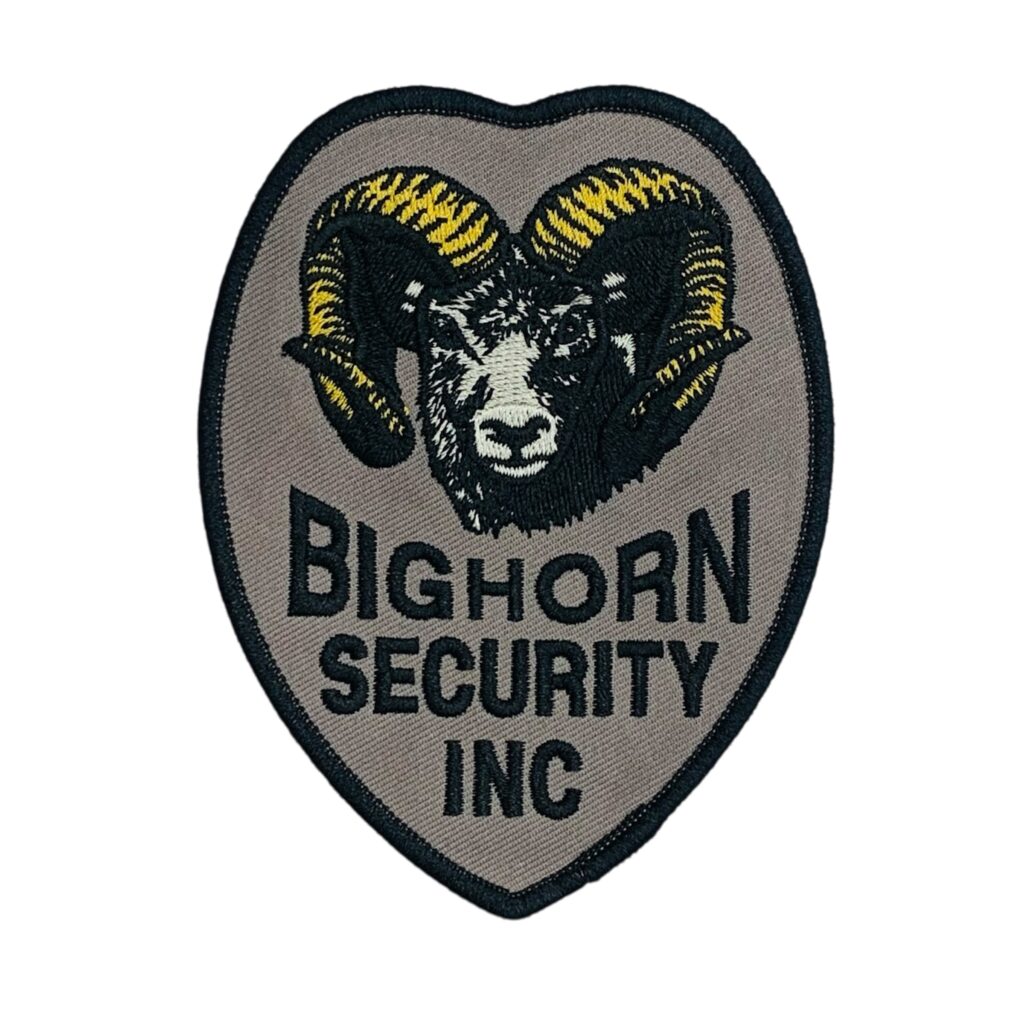
Preface: Why Security Embroidered Patches Are Essential for Modern Uniform Systems
In today’s highly structured security and facility management environment, security embroidered patches are no longer just decorative elements—they are critical components of a standardized identification system. From corporate office buildings and residential complexes to large-scale events and government facilities, security personnel must be instantly recognizable. This is where custom security embroidered patches play a vital role in enhancing both operational efficiency and brand credibility.
Unlike printed alternatives, embroidered security patches offer superior durability, texture, and a premium appearance that reflects professionalism. For companies managing multiple teams, locations, or departments, these patches function as a visual hierarchy system, helping distinguish roles, ranks, and responsibilities. This is particularly important in high-security environments where misidentification can lead to operational risks.
From a procurement perspective, investing in security embroidered patch OEM manufacturing is not just about sourcing a product—it is about building a consistent and scalable uniform solution. A well-designed patch ensures brand alignment across all personnel while also reinforcing trust among clients, visitors, and stakeholders. For example, a clearly visible security uniform patch with a company logo and role designation can immediately signal authority and reliability.
Additionally, with the rise of custom embroidered badge manufacturing, companies now have more flexibility than ever in terms of size, shape, backing options (such as Velcro or iron-on), and embroidery techniques. This allows organizations to tailor their patches to specific operational needs while maintaining a unified visual identity.
This guide is designed to provide a comprehensive understanding of security embroidered patches, covering everything from application scenarios and design standards to OEM manufacturing processes and procurement strategies. Whether you are a facility manager, procurement specialist, or brand decision-maker, this article will help you make informed decisions when sourcing high-quality security embroidered patches for uniforms.
What Are Security Embroidered Patches? From Identification Function to Brand Value
Before diving into manufacturing and procurement, it is essential to clearly understand what security embroidered patches are and why they are widely adopted across industries. These patches are specially designed textile badges, typically produced using high-density embroidery techniques, and are applied to uniforms to provide clear visual identification for security personnel. However, their role extends far beyond simple labeling—they are a key component of a company’s operational system and brand identity.
From a structural perspective, a security embroidered patch usually consists of three main elements: the base fabric (commonly polyester or twill), the embroidered thread layer that forms the design, and the backing system (such as Velcro, iron-on adhesive, or sew-on). Each of these elements contributes to the durability, appearance, and usability of the final product. Compared to printed badges, embroidered security patches offer a three-dimensional texture and higher resistance to wear, making them ideal for long-term uniform use.
Basic Structure of Security Embroidered Patches
Understanding the construction of custom security embroidered patches is crucial for making informed procurement decisions. The base fabric determines the patch’s stability and shape retention, while the embroidery density directly affects the clarity of logos, text, and insignia. High-density stitching is often used for corporate logos or rank indicators, ensuring that the patch maintains a professional look even after repeated washing and exposure to outdoor conditions.
Another important factor is the edge finishing technique. Options such as merrowed borders (overlocked edges) or laser-cut edges influence both aesthetics and durability. For example, merrow borders are commonly used for traditional uniform patches, while laser-cut edges are preferred for complex shapes and modern designs.
📊 Table: Key Components of Security Embroidered Patches
| Component | Description | Impact on Quality |
|---|---|---|
| Base Fabric | Twill or polyester backing | Determines structure and durability |
| Embroidery Thread | High-density stitching | Affects detail clarity and texture |
| Edge Finishing | Merrow border or laser cut | Impacts appearance and lifespan |
| Backing Type | Velcro / Iron-on / Sew-on | Defines application flexibility |
The Role of Security Uniform Patches in Corporate Management
In modern organizations, security uniform patches are not only used for identification but also serve as a tool for internal management and operational efficiency. By integrating role-based designs—such as “Supervisor,” “Security,” or department-specific insignia—companies can quickly distinguish personnel in different roles. This becomes particularly valuable in large facilities or multi-site operations where clear visual communication is critical.
Moreover, standardized security embroidered patches help enforce uniform compliance. When every team member wears a consistent patch design, it reinforces discipline and creates a cohesive corporate image. This is especially important for companies that prioritize brand presentation, as uniforms often represent the first point of contact between staff and clients.
How Embroidered Patches Enhance Professional Image and Trust
One of the most overlooked advantages of security embroidered patches is their impact on perception. A well-crafted patch immediately communicates authority, professionalism, and reliability. Compared to printed alternatives, embroidered patches convey a higher level of quality, which can positively influence how clients and the public perceive your organization.
From a branding perspective, incorporating company logos into custom security patches ensures visual consistency across all personnel. This not only strengthens brand recognition but also builds trust over time. In environments such as commercial buildings, hotels, or event venues, a clearly identifiable and professionally designed security patch for uniforms reassures visitors that safety measures are in place.
🔗 Extended Reading
Key Application Scenarios of Security Embroidered Patches Across Industries
To fully understand the value of security embroidered patches, it is important to examine how they are applied across different industries and operational environments. While many people associate these patches only with basic identification, in reality, custom security embroidered patches serve multiple functions, including role differentiation, brand visibility, access control, and operational efficiency. For corporate procurement teams, selecting the right patch design and specification depends heavily on the specific use case.
In industries where security personnel operate in dynamic and high-visibility environments, the need for durable, recognizable, and standardized security uniform patches becomes even more critical. Whether for long-term uniform systems or temporary deployments, embroidered patches provide a scalable solution that balances professionalism with practicality.
Property Management and Residential Security Uniform Systems
In residential communities, office buildings, and mixed-use developments, security embroidered patches are a core component of the uniform system. Security staff are often the first point of contact for residents and visitors, making visual identification essential. A clearly designed security patch for uniforms helps residents quickly recognize authorized personnel, improving both trust and response efficiency.
Additionally, property management companies often operate across multiple sites, each requiring consistent branding. By using standardized custom security embroidered patches, organizations can ensure uniform identity across all locations while still allowing for minor customization, such as site names or zone identifiers.
Corporate Security and Commercial Facility Deployment
For corporate offices, shopping malls, and industrial facilities, security embroidered patches play a critical role in internal operations. In these environments, security teams are often divided into different roles, such as access control, patrol, and supervisory positions. Using differentiated embroidered security patches allows quick visual recognition of authority levels and responsibilities.
From a procurement standpoint, companies often require bulk production of security embroidered patches OEM, ensuring consistency across large teams. Durability is also a key factor, as patches must withstand daily wear, frequent washing, and exposure to various environmental conditions.
Event Security and Temporary Personnel Identification
Large-scale events such as exhibitions, concerts, and conferences require temporary security teams. In these scenarios, custom security embroidered patches provide a flexible and professional identification solution. Compared to printed badges, embroidered patches offer a more durable and premium appearance, which is particularly important for high-profile events.
Moreover, removable backing options such as Velcro make it easy to attach and detach patches, allowing organizations to reuse uniforms while updating identification for different events. This reduces long-term costs and increases operational flexibility.
Government, Institutional, and Specialized Security Units
In government facilities, transportation hubs, and specialized security units, security embroidered patches are often used to indicate rank, department, or authority level. These patches must meet strict design and durability standards, as they are used in high-responsibility environments.
High-density embroidery, precise detailing, and robust backing systems are essential for maintaining a professional appearance over time. In such applications, investing in high-quality OEM security embroidered patches ensures long-term performance and compliance with uniform regulations.
📊 Table: Security Embroidered Patch Application Scenarios Overview
| Application Scenario | Patch Placement | Primary Function | Key Design Focus |
|---|---|---|---|
| Property Management | Chest / Sleeve | Staff identification | Clear logo, readable text |
| Corporate Security | Chest / Arm | Role differentiation | Rank indicators, color coding |
| Event Security | Removable area | Temporary identification | Velcro backing, bold design |
| Government / Institutions | Arm / Shoulder | Authority and classification | Precision embroidery, durability |
🔗 Extended Reading
- Embroidered Patches for the Uniform Industry
- Military, Police & Firefighter Embroidered Patches Guide
Security Embroidered Patches vs Printed Patches: Which Is Better for Your Business?
When selecting the most suitable identification solution for uniforms, many procurement teams face a common question: should they choose security embroidered patches or printed patches? While both options serve the purpose of identification, they differ significantly in terms of durability, visual impact, cost structure, and long-term value. Understanding these differences is essential for making the right investment, especially for organizations that require consistent and professional uniform systems.
From a strategic procurement perspective, security embroidered patches OEM manufacturing is often favored for long-term use due to its superior durability and premium appearance. On the other hand, printed patches may be more suitable for short-term or budget-sensitive applications. The decision ultimately depends on how the patches will be used, how often uniforms are worn and washed, and the level of brand image the company wants to project.
Key Differences Between Embroidered and Printed Security Patches
The most noticeable difference between embroidered security patches and printed patches lies in their construction. Embroidered patches are created by stitching threads onto a fabric base, resulting in a textured, three-dimensional surface. This gives them a premium, tactile feel that is highly valued in professional environments.
In contrast, printed patches rely on ink or dye-sublimation techniques to apply designs onto fabric. While this allows for more complex color gradients and photographic detail, it lacks the depth and durability of embroidery. Over time, printed designs may fade or wear out, especially in high-usage conditions such as security uniforms.
Durability, Cost, and Visual Impact Comparison
For companies prioritizing long-term performance, custom security embroidered patches offer clear advantages. They are resistant to washing, abrasion, and environmental exposure, making them ideal for daily use. Although the initial cost per unit may be slightly higher than printed patches, the extended lifespan often results in lower overall replacement costs.
Printed patches, however, may have a lower upfront cost and are suitable for temporary use cases such as events or promotional campaigns. Visually, they can reproduce intricate designs more easily, but they may not convey the same level of professionalism as embroidered patches.
📊 Table: Embroidered vs Printed Security Patches Comparison
| Criteria | Embroidered Patches | Printed Patches |
|---|---|---|
| Appearance | 3D texture, premium look | Flat surface, high color detail |
| Durability | High (resistant to wear & washing) | Medium to low (may fade over time) |
| Cost | Medium (better long-term value) | Low (short-term use) |
| Best Use Case | Long-term uniforms | Temporary events or promotions |
| Brand Perception | Professional and authoritative | Casual or promotional |
Choosing the Right Option Based on Application Needs
The choice between security embroidered patches and printed patches should be based on specific operational needs. For organizations managing permanent security teams, investing in embroidered patches ensures consistency, durability, and a strong professional image. This is especially important for companies that interact frequently with clients or the public, where first impressions matter.
For short-term deployments, such as exhibitions or temporary staffing, printed patches may provide a cost-effective alternative. However, even in these cases, many organizations still prefer embroidered security patches with Velcro backing for their reusability and enhanced appearance.
Ultimately, for businesses aiming to establish a reliable and professional uniform system, OEM embroidered security patches remain the preferred choice. They not only meet functional requirements but also reinforce brand identity and trust—two critical factors in the security industry.
🔗 Extended Reading
Design Standards and Size Guidelines for Security Embroidered Patches
Before moving into production, establishing clear design standards is one of the most critical steps in security embroidered patches OEM manufacturing. A well-designed patch not only enhances visual appeal but also ensures functionality, readability, and long-term usability. For corporate procurement teams, understanding the fundamentals of custom security embroidered patch design helps reduce revisions, control costs, and accelerate production timelines.
Unlike decorative patches, security uniform patches must balance branding, identification, and practicality. This means every design element—from size and shape to color contrast and text clarity—must be carefully considered. Poor design decisions can lead to unreadable text, inconsistent branding, or even the need for costly rework during sampling stages.
Common Sizes and Shapes for Security Uniform Patches
The size and shape of security embroidered patches are typically determined by their placement on the uniform and their intended function. For chest patches, smaller rectangular or oval shapes are commonly used to display company names or titles. Arm or shoulder patches, on the other hand, are usually larger and may include more detailed information such as logos, department names, or rank indicators.
Standard sizing helps maintain consistency across uniforms, especially for companies managing multiple teams. While customization is always possible, sticking to industry-standard dimensions can improve production efficiency and reduce tooling costs in OEM security patch manufacturing.
📊 Table: Recommended Sizes for Security Embroidered Patches
| Patch Type | Suggested Size (cm) | Typical Placement | Design Purpose |
|---|---|---|---|
| Chest Patch | 8–10 cm | Left/Right chest | Name or company identification |
| Arm Patch | 10–12 cm | Upper sleeve | Logo, department, rank |
| Shoulder Patch | 8–10 cm | Shoulder area | Authority or unit distinction |
Color Selection and Logo Visibility Optimization
Color plays a crucial role in the effectiveness of custom security embroidered patches. High contrast between the background fabric and embroidery threads ensures that text and symbols remain clearly visible from a distance. This is especially important in low-light environments or high-traffic areas where quick identification is required.
Corporate branding should also be considered. While it is important to stay consistent with brand colors, slight adjustments may be necessary to ensure optimal visibility in embroidery form. For example, gradients and very fine color transitions are difficult to reproduce with thread, so simplifying the design often results in a cleaner and more professional patch.
From a production standpoint, limiting the number of thread colors can also reduce costs and improve manufacturing efficiency in security embroidered patch OEM production.
Designing for Rank, Department, and Role Identification
One of the primary functions of security embroidered patches is to differentiate roles within an organization. This can be achieved through a combination of text labels, color coding, and symbolic elements. For example, supervisors may use a different border color, while specific departments can be identified through unique icons or abbreviations.
Consistency is key when designing a hierarchical system. A standardized approach ensures that all personnel can be easily recognized, reducing confusion and improving operational coordination. For large organizations, implementing a structured design system for security uniform embroidered patches can significantly enhance workflow efficiency.
📊 Table: Security Patch Design System Example
| Role/Department | Color Code | Text Label | Visual Element |
|---|---|---|---|
| Supervisor | Gold | SUPERVISOR | Star or stripe |
| Security Staff | Blue | SECURITY | Shield icon |
| Access Control | Green | ACCESS | Key symbol |
🔗 Extended Reading
Security Embroidered Patch Manufacturing Techniques: Key Factors for OEM Quality
After defining design standards, the next critical step is understanding the manufacturing techniques behind security embroidered patches. For corporate buyers, the quality of a patch is not only determined by its appearance but also by the precision of its production process. In security embroidered patches OEM manufacturing, factors such as stitch density, machinery, edge finishing, and material selection directly impact durability, consistency, and brand perception.
Unlike low-cost alternatives, high-quality custom security embroidered patches are produced using advanced industrial embroidery systems and carefully selected materials. This ensures that every patch maintains a consistent standard across large production runs—an essential requirement for organizations managing uniform systems at scale.
High-Density Embroidery and Industrial Precision
One of the defining characteristics of premium embroidered security patches is high-density stitching. This technique involves increasing the number of stitches per unit area, resulting in sharper details, smoother edges, and a more refined texture. For logos, text, and insignia commonly used in security uniform patches, high-density embroidery ensures clarity even when viewed from a distance.
Industrial embroidery machines, such as those developed by Tajima Group, play a crucial role in achieving this level of precision. These machines allow for consistent stitching patterns, accurate color transitions, and efficient large-scale production. For OEM buyers, working with manufacturers that utilize advanced embroidery technology significantly reduces defects and ensures uniformity across all units.
Edge Finishing Techniques: Merrow Border vs Laser Cut
Edge finishing is another key factor in security embroidered patch production. Two of the most commonly used methods are merrow borders and laser-cut edges, each offering distinct advantages depending on the application.
Merrow borders, also known as overlocked edges, provide a classic, rounded finish that enhances durability and prevents fraying. They are widely used for traditional security embroidered patches, especially in uniforms that require long-term use. On the other hand, laser-cut edges allow for more complex shapes and modern designs, making them ideal for customized or irregular patch outlines.
Choosing the right edge finishing method is essential for balancing aesthetics and functionality in OEM security patch manufacturing.
📊 Table: Edge Finishing Comparison
| Edge Type | Characteristics | Best Use Case |
|---|---|---|
| Merrow Border | Rounded, thick edge, very durable | Standard uniform patches |
| Laser Cut Edge | Clean, sharp, flexible shapes | Custom shapes and modern designs |
Thread and Material Selection: The Foundation of Durability
The durability and color retention of security embroidered patches heavily depend on the quality of threads and base materials used. High-performance embroidery threads ensure that patches remain vibrant and resistant to fading, even after repeated washing and exposure to harsh environments.
Professional thread suppliers such as FuFu’s Thread provide colorfast and durable threads specifically designed for industrial embroidery applications. Using high-quality threads not only enhances visual consistency but also extends the lifespan of the patches—an important consideration for companies aiming to reduce replacement costs.
In addition, selecting the right base fabric, such as twill or polyester, contributes to structural stability and wear resistance. Combined with proper backing options, these materials ensure that custom security embroidered patches perform reliably in demanding conditions.
📊 Table: Material Selection Impact on Patch Quality
| Material Component | Quality Impact | Key Benefit |
|---|---|---|
| Embroidery Thread | Color retention & durability | Long-lasting appearance |
| Base Fabric | Structural stability | Shape retention over time |
| Backing Material | Application flexibility | Ease of use and attachment |
🔗 Extended Reading
- FuFu’s Thread – Professional Embroidery Threads for Durable and Colorfast Badges
- Tajima Group – Industrial Embroidery Technology
Backing Options for Security Embroidered Patches: Choosing the Right Attachment Method
When procuring security embroidered patches, one of the most important yet often overlooked decisions is selecting the appropriate backing type. The backing not only determines how the patch is attached to the uniform but also directly affects usability, durability, and long-term flexibility. For organizations managing different operational scenarios, choosing the right backing solution is essential to maximize efficiency and cost-effectiveness in security embroidered patches OEM production.
Different applications—such as permanent uniforms, temporary assignments, or multi-role usage—require different attachment methods. A well-informed decision on backing options ensures that custom security embroidered patches meet both functional and operational needs without compromising appearance or performance.
Velcro (Hook & Loop) Backing for Flexible and Reusable Applications
Velcro backing is one of the most popular options for security embroidered patches, especially in environments that require flexibility. This system consists of a hook side (attached to the patch) and a loop side (attached to the uniform), allowing patches to be easily removed and replaced.
For companies managing multiple teams or rotating roles, Velcro security patches offer a highly practical solution. Personnel can switch patches depending on assignments, reducing the need for multiple uniforms. This is particularly useful in event security or multi-site operations where roles frequently change.
Additionally, Velcro-backed embroidered security patches support easy maintenance. Uniforms can be washed without the patch attached, preserving the quality and lifespan of both the garment and the patch itself.
Iron-On Backing vs Sew-On: Permanent vs Semi-Permanent Solutions
For organizations seeking a more permanent attachment, iron-on and sew-on backings are common choices in security embroidered patch manufacturing. Iron-on backing uses heat-activated adhesive to bond the patch to the fabric, offering a quick and convenient installation method. However, it may not be as durable as sewing in high-stress environments.
Sew-on patches, on the other hand, provide the highest level of durability. Once stitched onto the uniform, the patch remains securely attached even under heavy use and frequent washing. This makes sew-on the preferred option for long-term uniforms in industries where reliability is critical.
From a procurement perspective, companies often choose sew-on for permanent staff uniforms and iron-on for simpler or lower-cost implementations of custom security embroidered patches.
📊 Table: Backing Type Comparison
| Backing Type | Attachment Method | Durability | Flexibility | Best Use Case |
|---|---|---|---|---|
| Velcro | Hook & loop system | Medium–High | Very High | Multi-role / reusable uniforms |
| Iron-On | Heat-activated adhesive | Medium | Low | Quick application / light use |
| Sew-On | Stitching | Very High | None | Permanent uniforms |
Selecting the Right Backing Based on Operational Needs
Choosing the correct backing for security embroidered patches should always be based on operational requirements rather than cost alone. For example, organizations that frequently reassign roles or operate across multiple locations will benefit from Velcro-backed patches due to their adaptability. In contrast, companies prioritizing durability and uniform consistency may prefer sew-on solutions.
Another important consideration is maintenance and lifecycle cost. While Velcro may have a slightly higher initial cost, its reusability can reduce long-term expenses. Similarly, investing in durable backing options can minimize replacement frequency, improving overall cost efficiency in OEM security embroidered patch procurement.
Ultimately, selecting the right backing system ensures that custom security uniform patches not only look professional but also function effectively in real-world conditions. This decision plays a crucial role in optimizing both performance and return on investment.
📊 Table: Recommended Backing by Application Scenario
| Application Scenario | Recommended Backing | Reason |
|---|---|---|
| Property Management | Sew-On | Long-term durability |
| Corporate Security | Velcro | Role flexibility |
| Event Security | Velcro | Easy removal and reuse |
| Government / Institutions | Sew-On | High reliability requirement |
🔗 Extended Reading
Security Embroidered Patch OEM Process and Procurement Essentials
For companies planning to source security embroidered patches, understanding the OEM process is essential to ensure smooth production, accurate costing, and consistent quality. Unlike off-the-shelf products, custom security embroidered patches OEM manufacturing involves multiple stages—from design confirmation to mass production—each of which plays a critical role in the final outcome. For procurement teams, having a clear overview of this process helps minimize delays, avoid miscommunication, and optimize overall purchasing efficiency.
In addition, factors such as minimum order quantity (MOQ), lead time, and pricing structure are closely tied to production methods and material choices. By understanding these key variables, businesses can make informed decisions and establish long-term partnerships with reliable security embroidered patch suppliers.
OEM Production Workflow: From Sampling to Mass Production
The production of security embroidered patches typically follows a structured workflow designed to ensure quality and consistency. The process begins with artwork submission, where the client provides a logo or design file. This is followed by digitization, where the design is converted into an embroidery file that guides the stitching process.
Once digitization is complete, a physical sample is produced for approval. This stage is critical, as it allows the client to evaluate color accuracy, stitching quality, size, and overall appearance. After approval, the order moves into bulk production, where consistency across all units becomes the primary focus.
Finally, quality control and packaging are carried out before shipment. For OEM security embroidered patches, maintaining strict quality standards at each stage ensures that the final product meets both functional and branding requirements.
📊 Table: OEM Production Workflow Overview
| Stage | Description | Key Focus |
|---|---|---|
| Artwork Submission | Provide logo/design | File clarity & accuracy |
| Digitization | Convert design to stitch file | Stitch precision |
| Sampling | Create sample patch | Visual and structural review |
| Mass Production | Bulk manufacturing | Consistency & efficiency |
| Quality Control | Inspection before shipment | Defect prevention |
MOQ, Lead Time, and Pricing Factors Explained
When sourcing custom security embroidered patches, three of the most important procurement considerations are MOQ, lead time, and pricing. These factors are interconnected and can vary depending on design complexity, size, and production volume.
MOQ (Minimum Order Quantity) is typically set to ensure production efficiency. For most security embroidered patch OEM manufacturers, MOQ ranges from 50 to 100 pieces, although this may vary based on customization requirements.
Lead time usually includes both sampling and mass production phases. Sampling may take 5–7 days, while bulk production can take 10–20 days depending on order size. For urgent projects, some manufacturers offer expedited production at an additional cost.
Pricing is influenced by several variables, including stitch count, number of colors, patch size, backing type, and order quantity. Understanding these cost drivers allows procurement teams to optimize their budget without compromising quality.
📊 Table: Key Cost Factors in Security Embroidered Patch OEM
| Factor | Impact on Cost | Optimization Tip |
|---|---|---|
| Stitch Count | Higher = higher cost | Simplify design where possible |
| Colors | More colors increase cost | Limit to essential brand colors |
| Size | Larger patches cost more | Use standard sizes when possible |
| Quantity | Higher volume reduces unit cost | Plan bulk orders |
| Backing Type | Velcro > Iron-on > Sew-on | Choose based on actual usage |
How to Choose a Reliable Security Embroidered Patch Supplier
Selecting the right partner for security embroidered patches OEM manufacturing is one of the most important decisions in the procurement process. A reliable supplier should not only offer competitive pricing but also demonstrate strong capabilities in quality control, communication, and production consistency.
Key factors to evaluate include manufacturing experience, sample quality, production capacity, and the ability to handle large-scale orders. It is also important to assess whether the supplier uses advanced embroidery equipment and high-quality materials, as these directly impact the final product.
For long-term partnerships, companies should prioritize suppliers that can provide stable quality, transparent communication, and flexible customization options. A professional security embroidered patch manufacturer will also guide clients through the design and production process, helping them avoid common pitfalls and achieve the best possible results.
🔗 Extended Reading
How Security Embroidered Patches Enhance Brand Image and Operational Efficiency
Beyond identification and functionality, security embroidered patches play a strategic role in strengthening corporate branding and improving operational efficiency. For many organizations, especially those managing large teams or multiple locations, a well-structured uniform system is essential. Within this system, custom security embroidered patches act as visual anchors that unify personnel under a consistent identity while also supporting day-to-day operations.
From a business perspective, investing in security embroidered patches OEM manufacturing is not merely a uniform expense—it is a long-term asset that contributes to brand recognition, internal discipline, and customer trust. When designed and implemented correctly, these patches can significantly elevate how a company is perceived both internally and externally.
Building a Standardized Uniform Identification System
A standardized uniform system is fundamental for organizations that require clear and immediate identification of personnel. Security embroidered patches provide a scalable solution that allows companies to maintain consistency across different teams, locations, and operational scenarios.
By integrating consistent design elements—such as logos, typography, and color schemes—security uniform patches ensure that all personnel present a unified appearance. This not only improves internal coordination but also reduces confusion in high-traffic environments where quick recognition is critical.
For companies expanding their operations, standardized custom security embroidered patches also simplify onboarding processes, as new personnel can be easily integrated into the existing uniform system without requiring major design adjustments.
Strengthening Brand Consistency and Professional Perception
Brand image is a key factor in industries where trust and professionalism are essential. Embroidered security patches contribute directly to this perception by providing a high-quality, durable, and visually consistent representation of the company’s identity.
Compared to lower-quality alternatives, security embroidered patches communicate authority and reliability. A well-crafted patch featuring a company logo reinforces brand recognition every time personnel interact with clients or the public. Over time, this consistent exposure builds familiarity and trust, which are crucial for service-oriented industries such as security and facility management.
In addition, maintaining consistent patch quality across all uniforms ensures that the company’s image remains professional, regardless of location or team size. This is particularly important for businesses operating across multiple regions.
Reducing Management Costs and Minimizing Identification Errors
Operational efficiency is another major advantage of using security embroidered patches. By clearly differentiating roles, departments, and authority levels, these patches reduce the likelihood of miscommunication and identification errors. This is especially important in environments where quick decision-making and accurate recognition are critical.
From a cost perspective, investing in durable custom security embroidered patches can significantly reduce long-term expenses. High-quality patches require less frequent replacement, lowering maintenance costs over time. Additionally, features such as Velcro backing allow patches to be reused across different uniforms or assignments, further improving cost efficiency.
📊 Table: Operational Benefits of Security Embroidered Patches
| Benefit | Impact on Business | Result |
|---|---|---|
| Clear Identification | Reduces confusion | Faster response & coordination |
| Brand Consistency | Strengthens corporate image | Increased trust & recognition |
| Durable Materials | Longer lifespan | Lower replacement costs |
| Flexible Backing Options | Reusable across uniforms | Improved cost efficiency |
🔗 Extended Reading
FAQ: Common Questions About Security Embroidered Patches for Corporate Buyers
Before finalizing an order, many corporate buyers have specific concerns regarding security embroidered patches, especially when it comes to customization, durability, and OEM production. This FAQ section addresses the most frequently asked questions related to custom security embroidered patches, helping procurement teams make confident and informed decisions. By understanding these key considerations, businesses can avoid common mistakes and ensure a smoother purchasing process.
Q1. What is the difference between security embroidered patches and regular patches?
Security embroidered patches are specifically designed for professional identification and uniform systems. Unlike general decorative patches, they emphasize clarity, durability, and functionality. These patches often include role identifiers, company logos, and standardized formats to support operational efficiency in security environments.
Q2. Are embroidered patches better than printed patches for security uniforms?
In most cases, embroidered security patches are preferred due to their durability and premium appearance. They can withstand frequent washing and daily wear, making them ideal for long-term use. Printed patches may be suitable for temporary applications but generally offer lower durability.
Q3. What is the minimum order quantity (MOQ) for custom security embroidered patches?
The MOQ for security embroidered patches OEM manufacturing typically ranges from 50 to 100 pieces, depending on design complexity and production requirements. Larger quantities usually result in lower unit costs.
Q4. How long does it take to produce security embroidered patches?
Production time includes both sampling and mass production. Sampling usually takes 5–7 days, while bulk production may take 10–20 days depending on order size and customization level.
Q5. Are security embroidered patches durable and washable?
Yes, high-quality custom security embroidered patches are designed to be highly durable. They are resistant to washing, abrasion, and environmental exposure, making them suitable for daily use in demanding conditions.
Q6. Can security patches be made with Velcro backing?
Yes, Velcro-backed security embroidered patches are widely used, especially in applications that require flexibility and reusability. They allow patches to be easily removed and replaced.
Q7. How can different roles or departments be identified using patches?
Different roles can be distinguished through text labels, color coding, and design elements such as symbols or borders. A structured design system for security uniform patches helps improve operational clarity and efficiency.
Q8. How is the price of security embroidered patches calculated?
Pricing is based on factors such as patch size, stitch count, number of colors, backing type, and order quantity. Understanding these variables helps optimize cost in security embroidered patch OEM procurement.
Q9. Do I need to provide a design, or can the manufacturer assist?
Most manufacturers can assist with design adjustments or digitization. However, providing a clear logo or concept will speed up the process and ensure accuracy in custom security embroidered patch production.
Q10. How can I ensure consistent quality in OEM orders?
To ensure consistent quality, it is important to work with an experienced security embroidered patch manufacturer, review samples carefully, and confirm all specifications before mass production. Choosing a supplier with advanced equipment and reliable quality control processes is essential.
CTA: Choose a Professional Security Embroidered Patch OEM Manufacturer
After understanding the full scope of security embroidered patches—from design standards and application scenarios to manufacturing techniques and procurement strategies—the next step is choosing a reliable OEM partner. For businesses aiming to build a consistent and professional uniform system, working with an experienced security embroidered patch manufacturer ensures not only product quality but also long-term operational efficiency.
A trusted supplier will guide you through every stage of custom security embroidered patch production, including design optimization, material selection, sampling, and mass production. This reduces errors, shortens lead times, and ensures that every patch aligns with your brand identity and functional requirements. Whether your organization requires durable sew-on patches for long-term use or flexible Velcro-backed solutions for dynamic operations, selecting the right partner is critical.
At the same time, professional OEM manufacturers understand the importance of scalability. As your organization grows, your supplier should be able to maintain consistent quality across larger production volumes while offering competitive pricing and reliable delivery schedules. This is especially important for companies managing multiple locations or expanding their workforce.
Ultimately, investing in high-quality security embroidered patches OEM manufacturing is not just about uniforms—it is about building a strong, recognizable, and trustworthy brand presence. By choosing a partner with proven expertise and advanced production capabilities, your business can ensure long-term success in both operational management and brand positioning.
📞 Contact Information
Artist Embroidery Corporation
📞 Phone: +886-2-8245-8989
📧 Email: service@artistembroidery.com
🏢 Office: 7 F., No. 21, Qiao’an St., Zhonghe Dist., New Taipei City 235026, Taiwan
🏭 Factory: No. 12, Zhiwa 2nd Rd., Shetou Township, Changhua County 511006, Taiwan
We specialize in OEM manufacturing of high-quality security embroidered patches, helping businesses create durable, professional, and fully customized uniform identification solutions.
 English
  Japanese
  Chinese
  Korean
  Spanish
  French
  Russian
  Portuguese
  German