
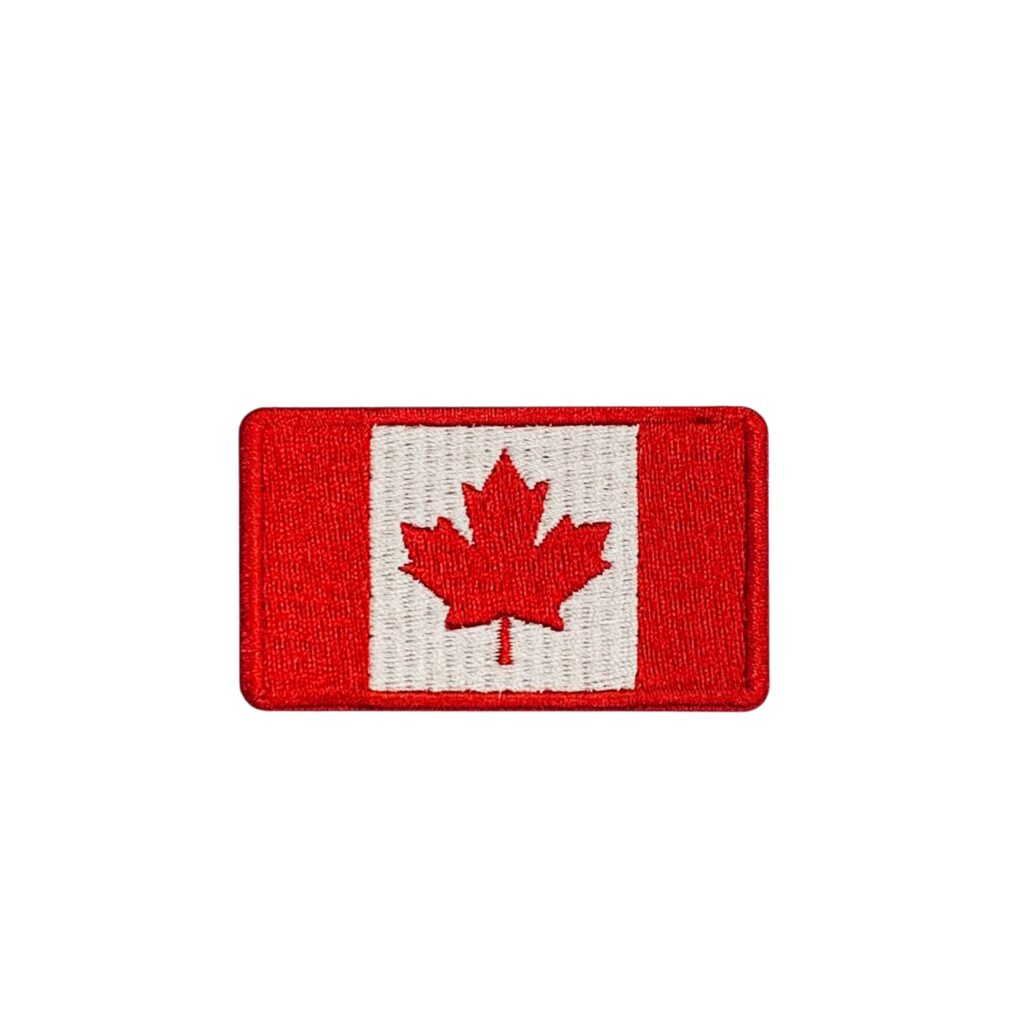
Introduction: Why Businesses Need Flag Embroidered Patches
In today’s globalized and brand-driven market, flag embroidered patches have become more than just decorative elements—they are powerful tools for identity, recognition, and brand communication. Whether used in military uniforms, corporate apparel, outdoor gear, or promotional campaigns, flag embroidered patches OEM production plays a crucial role in helping organizations maintain consistency, professionalism, and symbolic value across their products.
For companies that are new to this category, understanding the value of custom flag embroidered patches can significantly improve procurement decisions. Unlike printed alternatives, embroidered patches offer superior durability, texture, and perceived quality. This makes them particularly suitable for industries where long-term use and visual impact are essential, such as law enforcement, tactical gear, and sports branding.
From a B2B perspective, working with a professional flag embroidered patches manufacturer ensures not only consistent quality but also scalability. OEM production allows businesses to control specifications such as size, backing type, embroidery density, and color accuracy—especially important for national flags where precision matters.
En outre, bulk ordering flag patches provides cost advantages and production efficiency, making it ideal for enterprises, government units, and global brands. By leveraging OEM services, companies can streamline their supply chain while maintaining high standards in both design and functionality.
As we move forward in this guide, we will break down everything you need to know about flag embroidered patches OEM manufacturing, from applications and design limitations to production processes, pricing, and supplier selection strategies.
What Are Flag Embroidered Patches? Applications and Use Cases
Before entering the OEM manufacturing process of flag embroidered patches, it is essential to clearly understand what these products are and why they are widely used across different industries. A flag embroidered patch is a textile-based badge created through high-density stitching techniques to replicate a national flag or symbolic design. Compared to printed patches, embroidered flag patches offer a three-dimensional texture, higher durability, and a more premium appearance—making them the preferred choice for professional and long-term applications.
Definition of Flag Embroidered Patches
A flag embroidered patch is typically produced using polyester threads stitched onto a fabric backing such as twill. The design is digitized into embroidery files, allowing machines to precisely recreate flag patterns with consistent color accuracy and stitch density. This process is particularly important for national flags, where proportions, color tones, and layout must meet strict standards.
In OEM production, businesses can customize multiple specifications, including size, border type (merrow or laser-cut), backing options (Velcro, iron-on, sew-on), and thread quality. These customization capabilities make custom flag embroidered patches highly adaptable for both functional and branding purposes.
Common Applications Across Industries
The demand for flag embroidered patches OEM services is driven by a wide range of industries. Each sector uses these patches for different functional and symbolic purposes:
📊 Table: Flag Embroidered Patches Application Overview
| Industry قطاع | Application Purpose | Common Features |
|---|---|---|
| Militaire et tactique | National identification | Velcro backing, durable stitching |
| Law Enforcement & Security | Uniform recognition | High-contrast colors |
| Outdoor & Travel | Backpack / gear decoration | Compact size, lightweight |
| Sports Teams | National pride representation | Custom sizing |
| L'image de marque de l'entreprise | Promotional identity | Logo + flag combination |
These diverse applications demonstrate how flag patches for uniforms, tactical gear, and branding campaigns have become essential elements in both operational and marketing environments.
Why Choose Embroidered Over Printed Flag Patches
Lorsque l'on compare les embroidered vs printed flag patches, businesses often choose embroidery due to its long-term value. Embroidery provides:
- Superior durability for outdoor and repeated use
- A premium, textured appearance that enhances brand perception
- Resistance to fading and wear
- Strong stitching integrity for tactical or uniform applications
While printed patches may offer lower initial costs, they lack the structural strength and high-end finish of embroidery. For organizations prioritizing quality and longevity, embroidered flag patches OEM production remains the optimal solution.
🔗 Lecture approfondie
Flag Embroidered Patches OEM Manufacturing Process Explained
Understanding the flag embroidered patches OEM manufacturing process is essential for businesses aiming to ensure quality, efficiency, and cost control in bulk production. Unlike simple retail purchases, OEM production involves multiple technical steps—from artwork preparation to final delivery. Each stage directly impacts the final outcome, including stitch precision, color consistency, durability, and overall production lead time. For enterprise buyers, having a clear view of this process helps reduce communication gaps with manufacturers and ensures that custom flag embroidered patches meet exact specifications.
In this section, we break down the full OEM production workflow, allowing procurement teams to better plan timelines, manage expectations, and optimize order efficiency.
Artwork Preparation and File Setup
The first step in flag embroidered patches manufacturing is preparing the design file. Clients typically provide artwork in formats such as AI, PDF, or high-resolution JPG. This artwork is then converted into a stitch file through a process called digitizing. During this stage, technical parameters such as stitch type, density, direction, and layering are defined to ensure the flag design is accurately reproduced.
For national flags, precision is critical. Factors such as color matching (Pantone references), proportions, and alignment must be strictly controlled. Any error at this stage can lead to inconsistencies during mass production, making it one of the most important steps in the OEM workflow.
Sample Development (Sampling Stage)
Once the digitized file is completed, the manufacturer produces a physical sample. This sample allows clients to verify all aspects of the custom flag embroidered patch, including:
- Précision des couleurs
- Stitch density and clarity
- Border finishing (merrow edge or laser-cut)
- Overall size and proportions
Sampling is crucial because it acts as the final checkpoint before mass production. Businesses can request adjustments at this stage to ensure the product meets their expectations. For bulk orders, approving a correct sample significantly reduces the risk of costly production errors.
Production de masse et contrôle de la qualité
After sample approval, the process moves into mass production of flag embroidered patches. Industrial embroidery machines—often from leading manufacturers such as Tajima Group—are used to ensure consistency across large quantities. High-speed machines combined with standardized stitch programs allow manufacturers to produce thousands of identical patches efficiently.
Quality control is implemented at multiple stages, including:
- Thread tension consistency
- Color matching verification
- Edge finishing inspection
- Backing attachment durability
These checks ensure that every patch meets industrial standards, especially for applications such as military or law enforcement uniforms where reliability is critical.
Final Inspection, Packaging, and Delivery
The final stage of the flag embroidered patches OEM process involves inspection, packaging, and shipment. Finished products are reviewed for defects, counted, and packed according to client requirements—such as bulk packaging or individual poly bags.
Lead time depends on order size and complexity, but most bulk flag embroidered patches orders follow a predictable timeline, making it easier for businesses to align production with project deadlines.
📊 Table: Flag Embroidered Patches OEM Production Timeline
| Stade | Processus | Temps estimé |
|---|---|---|
| Artwork Confirmation | Design & digitizing | 1-2 jours |
| Échantillonnage | Sample production & approval | 3-7 jours |
| Production de masse | Fabrication en vrac | 7-14 jours |
| Final Delivery | QC, packing, shipping | 3-5 jours |
🔗 Lecture approfondie
Design Considerations for Flag Embroidered Patches: Size, Proportion, and Color Accuracy
When planning flag embroidered patches OEM production, design considerations play a critical role in determining the final product quality. Unlike general custom patches, flag embroidered patches require strict adherence to proportions, color standards, and visual clarity. Even small deviations can affect recognition, especially when the patch represents national identity. For businesses, understanding these design limitations is essential—not from a creative perspective, but from a production feasibility and quality control standpoint.
This section highlights the most important factors that influence the success of custom flag embroidered patches, helping procurement teams avoid common issues during manufacturing.
Size Impact on Embroidery Detail and Readability
The size of a flag embroidered patch directly affects how much detail can be accurately reproduced. Smaller patches, typically used for uniforms or tactical gear, often require simplified stitching to maintain clarity. Fine elements such as stars, emblems, or thin lines may need to be adjusted to ensure they remain visible after embroidery.
For example, a 5 cm patch may not support the same level of detail as a 9 cm version. High-density stitching can improve clarity, but excessive density may lead to thread overlapping or distortion. Therefore, selecting the appropriate size is a balance between application needs and production capability.
Flag Proportion and Color Accuracy Standards
L'une des caractéristiques de la flag patches for uniforms and official use is strict adherence to correct proportions and colors. National flags are highly standardized, and deviations can lead to incorrect representation.
Manufacturers typically follow:
- Official flag ratio specifications (e.g., 2:3 or 3:5)
- Pantone color matching for accurate thread selection
- Consistent color contrast for visibility
Maintaining these standards is particularly important in military, law enforcement, and international branding applications, where accuracy reflects professionalism and credibility. During OEM production, clear communication of these specifications ensures consistent results across bulk orders.
Balancing High-Density Embroidery and Production Efficiency
High-density stitching is often used to enhance the premium feel of embroidered flag patches, but it also affects production efficiency and cost. Denser stitching increases thread usage and machine time, which can impact unit pricing in bulk manufacturing.
From an OEM perspective, businesses should consider:
- Optimal stitch density for durability and clarity
- Avoiding unnecessary over-stitching
- Ensuring smooth thread transitions to prevent bulkiness
A well-balanced design not only improves the visual outcome but also ensures stable production performance, especially in large-scale flag embroidered patches manufacturing.
📊 Table: Key Design Factors for Flag Embroidered Patches
| Facteur | Impact sur la qualité | OEM Recommendation |
|---|---|---|
| Taille | Determines detail level | Adjust based on application |
| Proportion | Affects accuracy | Follow official flag ratios |
| Couleur | Influences recognition | Use Pantone references |
| Densité du point | Impacts texture & cost | Balance quality & efficiency |
🔗 Lecture approfondie
Backing Options for Flag Embroidered Patches: Choosing the Right Attachment Method
Lors de l'approvisionnement flag embroidered patches OEM, one of the most critical decisions for businesses is selecting the right backing or attachment method. The backing type not only affects how the patch is applied but also determines its durability, usability, and suitability for different environments. Whether used in military uniforms, tactical gear, corporate apparel, or promotional items, choosing the correct backing ensures that custom flag embroidered patches perform reliably under real-world conditions.
For procurement teams, understanding the strengths and limitations of each backing option can significantly reduce product issues, improve user experience, and enhance long-term value.
Velcro Backing (Hook & Loop) for Tactical and Uniform Applications
Velcro backing is one of the most popular choices for flag patches for uniforms and tactical gear. It allows patches to be easily attached, removed, and replaced without damaging the garment. This flexibility makes it ideal for military units, law enforcement agencies, and outdoor professionals who frequently switch gear.
Key advantages include:
- Reusability and quick replacement
- Strong attachment under movement
- Compatibility with tactical systems
Because of these features, Velcro flag embroidered patches are widely used in environments that demand both durability and adaptability.
Iron-On Backing for Convenience and Mass Distribution
Iron-on backing (heat seal) is designed for ease of application. Users can attach the patch using heat, making it a convenient option for promotional events, corporate giveaways, and retail products.
However, while iron-on flag patches offer quick installation, they may not provide the same long-term durability as sewn or Velcro options—especially in high-wash or outdoor conditions. For better performance, many businesses combine heat seal with stitching for added security.
Sew-On Backing for Maximum Durability
Sew-on patches remain the most reliable option for permanent attachment. Without relying on adhesives or Velcro, sew-on flag embroidered patches are directly stitched onto garments, ensuring long-lasting performance even under heavy use.
This method is commonly used in:
- Military and police uniforms
- Workwear and industrial clothing
- Long-term branded apparel
For businesses prioritizing durability over flexibility, sew-on remains the preferred choice.
Other Backing Options (Adhesive & Special Applications)
In addition to the main types, there are other backing options available for specific use cases:
- Adhesive backing (self-stick): Temporary use, ideal for events
- Plastic backing: Adds structure and rigidity
- No backing: Used when direct stitching is required
These variations provide flexibility for different industries, especially in marketing campaigns where ease of use is a priority.
📊 Table: Comparison of Flag Embroidered Patch Backing Options
| Type de support | Durabilité | Flexibilité | Meilleur cas d'utilisation |
|---|---|---|---|
| Velcro | Haut | Haut | Tactical, military |
| Thermocollant | Moyen | Moyen | Events, promotions |
| A coudre | Très élevé | Faible | Uniformes, vêtements de travail |
| Adhesive | Faible | Haut | Utilisation temporaire |
🔗 Lecture approfondie
Manufacturing Technology and Quality Factors for Flag Embroidered Patches
For businesses sourcing flag embroidered patches OEM, manufacturing technology and material quality are the core factors that determine product performance. While design and backing choices are important, the actual production process—including machinery, stitching precision, and raw materials—directly affects durability, color retention, and overall consistency. In large-scale flag embroidered patches manufacturing, even small variations can lead to noticeable quality differences across batches.
Understanding these technical aspects helps procurement teams choose the right flag embroidered patches manufacturer and ensures that bulk orders meet professional standards—especially in industries such as military, law enforcement, and corporate branding where reliability is non-negotiable.
Industrial Embroidery Machines and Production Precision
Modern embroidered flag patches are produced using high-speed industrial embroidery machines. Leading manufacturers such as Tajima Group are widely recognized for their precision, stability, and efficiency in mass production.
These machines enable:
- Consistent stitch accuracy across thousands of units
- High-speed output without compromising detail
- Advanced control of thread tension and stitch direction
For OEM buyers, this means that selecting a factory equipped with advanced machinery ensures uniform quality—particularly important for bulk flag embroidered patches orders where consistency is critical.
Techniques de finition des bords : Bordure Merrow et découpe au laser
The finishing of a flag embroidered patch plays a key role in both aesthetics and durability. Two common edge types are:
- Merrow border (overlock edge): Provides a traditional, rounded finish with strong edge protection
- Laser cut (heat cut): Allows for precise shapes and modern, clean edges
Merrow borders are typically used for standard rectangular flags, while laser cutting is preferred for custom shapes or detailed designs. Choosing the right edge method depends on the intended application and visual preference.
Thread Quality and Durability Performance
Thread quality is often overlooked, but it is one of the most important factors in custom flag embroidered patches. High-quality polyester threads offer better resistance to:
- UV exposure (prevents fading)
- Moisture and humidity
- Friction and wear
Reliable suppliers such as FuFu’s Thread provide industrial-grade threads that ensure long-lasting color vibrancy and structural integrity. For applications such as outdoor gear and uniforms, thread durability directly impacts product lifespan.
📊 Table: Key Manufacturing Factors for Flag Embroidered Patches Quality
| Facteur | Impact on Product | OEM Recommendation |
|---|---|---|
| Machine Precision | Stitch consistency | Use industrial-grade machines |
| Finition des bords | Durability & aesthetics | Choose based on application |
| Qualité du fil | Color & lifespan | Use high-grade polyester threads |
| QC Process | Cohérence | Multi-stage inspection required |
🔗 Extended Reading (Supply Chain & Technology)
- Tajima Group - Technologie de la broderie industrielle
- FuFu's Thread - Fils à broder professionnels
- Pourquoi choisir les machines à broder Tajima
Pricing, MOQ, and Procurement Strategy for Flag Embroidered Patches
When evaluating flag embroidered patches OEM, pricing and procurement strategy are often the deciding factors for businesses. While many buyers initially focus on unit cost, experienced procurement teams understand that the total value includes quality consistency, production efficiency, and long-term durability. A well-planned sourcing strategy can significantly reduce costs while ensuring that custom flag embroidered patches meet performance expectations across different applications.
In this section, we break down the key pricing factors, explain MOQ (Minimum Order Quantity) considerations, and provide practical strategies for optimizing bulk orders of flag embroidered patches.
Key Pricing Factors in Flag Embroidered Patches OEM
The cost of flag embroidered patches manufacturing is influenced by multiple variables. Understanding these factors helps businesses make informed decisions and avoid unexpected cost increases.
Key pricing factors include:
- Order Quantity: Higher quantities significantly reduce unit price due to economies of scale
- Patch Size: Larger patches require more thread and production time
- Stitch Density: High-density embroidery increases machine time and thread usage
- Backing Type: Velcro and special backings add to production cost
- Edge Finishing: Laser cutting may cost more than standard merrow borders
For enterprise buyers, balancing these factors is essential to achieving cost efficiency without compromising quality.
MOQ (Minimum Order Quantity) and Its Impact
La plupart des flag embroidered patches manufacturers set an MOQ to maintain production efficiency. MOQ varies depending on factory capabilities, but it typically ranges from 100 to 500 pieces per design.
Understanding MOQ helps businesses:
- Plan inventory more effectively
- Optimize production cost per unit
- Reduce waste from over-ordering
For companies with multiple designs (e.g., different national flags), consolidating orders or using mixed production strategies can help meet MOQ requirements while maintaining flexibility.
Procurement Strategies to Reduce Cost and Improve Efficiency
To maximize value when ordering bulk flag embroidered patches, businesses should consider the following strategies:
- Standardize Sizes: Using common sizes reduces setup time and cost
- Simplify Design Details: Avoid overly complex elements that increase stitch density
- Batch Orders: Combine multiple orders into a single production run
- Plan Ahead: Avoid rush orders, which often incur additional fees
- Choose the Right Backing: Select based on actual use case to avoid unnecessary cost
By applying these strategies, companies can achieve better pricing while ensuring consistent quality across large-scale OEM production.
📊 Table: Pricing Factors for Flag Embroidered Patches
| Facteur | Cost Impact | Conseil d'optimisation |
|---|---|---|
| Quantité | Haut | Increase order volume |
| Taille | Moyen | Use standard dimensions |
| Densité du point | Haut | Avoid over-complication |
| Type de support | Moyen | Choose based on usage |
| Type de bord | Faible-Moyen | Use standard when possible |
🔗 Lecture approfondie
Flag Embroidered Patches vs Printed Patches: Which One Should You Choose?
When sourcing patches for business use, one of the most common questions is whether to choose flag embroidered patches or printed patches. Both options have their advantages, but the right choice depends on application, durability requirements, and brand positioning. For companies investing in flag embroidered patches OEM, understanding this comparison is essential to making the right procurement decision.
In general, embroidered flag patches are associated with premium quality and long-term durability, while printed patches are often chosen for cost efficiency and high-detail designs. However, the difference goes beyond appearance—it directly impacts product lifespan, user experience, and brand perception.
Visual Appearance and Brand Perception
One of the most noticeable differences between embroidered vs printed flag patches is their visual texture. Embroidered patches use stitched threads to create a raised, three-dimensional surface, giving them a premium and professional look. This makes them ideal for uniforms, tactical gear, and corporate branding where image matters.
Printed patches, on the other hand, offer smooth surfaces and can reproduce highly detailed graphics or gradients. While visually flexible, they lack the tactile depth and craftsmanship associated with embroidery.
For brands aiming to convey durability, authority, and quality, custom flag embroidered patches are generally the preferred option.
Durability and Performance in Real-World Use
Durability is a key factor in deciding between flag patches for uniforms and other applications. Embroidered patches are known for:
- Strong resistance to wear and tear
- Better performance in outdoor environments
- Longer lifespan under frequent washing
Printed patches may fade, crack, or peel over time, especially when exposed to harsh conditions. For industries such as military, law enforcement, and outdoor activities, embroidered flag patches OEM production provides significantly better long-term performance.
Cost Considerations and Application Fit
From a cost perspective, printed patches are generally more affordable, particularly for low-volume orders or designs with complex gradients. However, for bulk production and long-term use, flag embroidered patches manufacturing offers better value due to durability and reduced replacement frequency.
Businesses should consider:
- Use case (temporary vs long-term use)
- Required durability
- Brand positioning
- Budget constraints
Ultimately, choosing between embroidery and printing depends on balancing cost with performance and brand expectations.
📊 Table: Embroidered vs Printed Flag Patches Comparison
| Fonctionnalité | Écussons brodés | Écussons imprimés |
|---|---|---|
| Texture | 3D, premium | Plat, lisse |
| Durabilité | Haut | Moyenne-Faible |
| Capacité de détail | Moyen | Haut |
| Coût | Moyen | Faible |
| Meilleur cas d'utilisation | Uniforms, tactical, branding | Promotions, complex designs |
🔗 Lecture approfondie
FAQ: Common Questions About Flag Embroidered Patches
When businesses explore flag embroidered patches OEM, many practical questions arise regarding customization, production timelines, durability, and order requirements. Addressing these concerns not only helps procurement teams make informed decisions but also improves efficiency when working with a flag embroidered patches manufacturer. Below are the most frequently asked questions about custom flag embroidered patches, covering key aspects from design to bulk ordering.
Q1. Can flag embroidered patches be customized in size and design?
Oui, custom flag embroidered patches can be fully customized in terms of size, shape, and specifications. While national flag proportions must be maintained for accuracy, businesses can adjust dimensions to fit uniforms, tactical gear, or promotional products.
Q2. What is the MOQ for flag embroidered patches OEM orders?
MOQ (Minimum Order Quantity) typically ranges from 100 to 500 pieces per design, depending on the manufacturer. Higher quantities generally result in lower unit costs for bulk flag embroidered patches.
Q3. How long does sampling and production take?
The standard timeline for flag embroidered patches manufacturing includes 3–7 days for sampling and 7–14 days for mass production. Lead time may vary based on order complexity and quantity.
Q4. Are Velcro backing options available for flag patches?
Oui, Velcro (hook & loop) backing is one of the most popular options for flag patches for uniforms and tactical use, allowing easy attachment and replacement.
Q5. Will the colors of embroidered flag patches fade over time?
Haute qualité embroidered flag patches made with premium polyester threads are resistant to UV exposure and washing, ensuring long-lasting color retention.
Q6. Can I order small quantities of flag embroidered patches?
While some manufacturers may offer low-MOQ options, most flag embroidered patches OEM suppliers focus on bulk production for cost efficiency.
Q7. Are flag embroidered patches suitable for outdoor use?
Oui, flag embroidered patches are highly durable and suitable for outdoor environments, especially when using high-quality threads and proper backing methods.
Q8. Can multiple flag designs be combined in one order?
Yes, some manufacturers allow mixed designs within a bulk order. However, each design may still need to meet MOQ requirements individually.
Q9. What is the difference between merrow border and laser cut edges?
Merrow borders provide a rounded, traditional finish with strong durability, while laser-cut edges allow for precise shapes and modern aesthetics in custom flag embroidered patches.
Q10. What file format should be provided for production?
Most manufacturers accept AI, PDF, or high-resolution JPG files. These are converted into embroidery stitch files during the digitizing process.
🔗 Lecture approfondie
CTA: Custom Flag Embroidered Patches OEM – Work with a Professional Manufacturer
Après avoir compris toute la portée de la flag embroidered patches OEM manufacturing, from applications and design considerations to production processes and pricing strategies, the next step is choosing the right partner. For businesses, working with an experienced flag embroidered patches manufacturer ensures not only consistent product quality but also efficient communication, stable lead times, and scalable production capacity.
Whether you are sourcing custom flag embroidered patches for military uniforms, corporate branding, outdoor gear, or promotional campaigns, a professional OEM supplier can help you achieve precise specifications while optimizing cost and production efficiency. With the right manufacturing partner, your organization can confidently manage bulk orders, maintain high standards, and strengthen brand identity through durable, high-quality embroidered patches.
Why Choose a Professional Flag Embroidered Patches OEM Manufacturer?
- Consistent quality across large production volumes
- Advanced embroidery technology for precision and durability
- Flexible customization options (size, backing, edge finishing)
- Reliable lead times and global shipping capability
- Cost-effective solutions for bulk orders
Choosing a trusted OEM supplier is the key to long-term success when integrating flag embroidered patches into your business operations.
📞Informations sur le contact
Artist Embroidery Corporation
📞 Phone : +886-2-8245-8989
📧 Courriel : service@artistembroidery.com
🏢 Bureau : 7 F., No. 21, Qiao'an St., Zhonghe Dist., New Taipei City 235026, Taiwan
🏭 Factory : No. 12, Zhiwa 2nd Rd., Shetou Township, Changhua County 511006, Taiwan
A reliable OEM partner makes all the difference in delivering high-quality flag embroidered patches that meet professional standards and business expectations.
 English
  Japanese
  Chinese
  Korean
  Spanish
  French
  Russian
  Portuguese
  German