
Introduction: Why Embroidered Patch Backing Matters More Than You Think
When most people plan a custom embroidered patch, their attention naturally goes to artwork, colors, and stitch quality. However, one of the most critical yet frequently overlooked elements is embroidered patch backing. For beginners especially, backing choices often feel secondary or purely technical—but in reality, backing determines how a patch is applied, how long it lasts, and whether it performs well in real-world use.
Embroidered patch backing refers to the treatment applied to the back side of a patch after embroidery is completed. This backing influences attachment methods such as sewing, ironing, or hook-and-loop fastening, and directly affects durability, wash resistance, and flexibility. Choosing the wrong embroidered patch backing can result in patches peeling off, curling at the edges, damaging garments, or failing to meet the intended purpose altogether.
Another reason embroidered patch backing is so important lies in application context. A patch designed for military uniforms, for example, has very different functional requirements than one used for promotional giveaways or fashion branding. Without understanding embroidered patch backing types and their applications, beginners often rely on assumptions or default options that may not suit their actual needs.
This article is designed specifically for those who are new to embroidered patch backing. Through clear comparisons, practical advice, and real-world usage scenarios, we aim to demystify embroidered patch backing options and help you make informed decisions. Whether you are designing patches for uniforms, brands, events, or collectibles, understanding backing is a foundational step toward producing patches that look professional and perform reliably.
In the following sections, we will systematically compare embroidered patch backing types, explain their advantages and limitations, and provide guidance based on usage scenarios, cost considerations, and production realities. By starting with a strong conceptual understanding, you will be better equipped to select the most appropriate embroidered patch backing for your project.
🔗 Extended Reading
Embroidered Patch Backing Types Overview: Understanding the Most Common Options
Before comparing performance or cost, beginners must first understand what types of embroidered patch backing are available. Each backing type is designed to serve a specific application scenario, and misunderstanding these differences often leads to functional issues after production. Among all options, self-adhesive backing is one of the most frequently misunderstood embroidered patch backing types, especially by first-time buyers.
This section provides a comprehensive overview of commonly used embroidered patch backing options, including permanent, semi-permanent, removable, and production-only backings. Understanding these categories will help beginners avoid choosing a backing type that looks convenient on paper but fails in real-world use.
Sew-On Backing (No Backing)
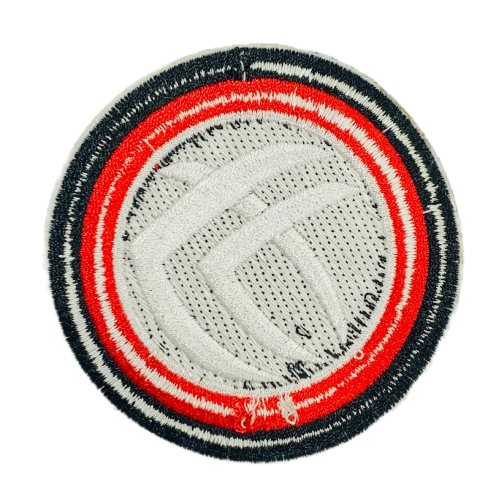
(No Backing)
Sew-on backing is the most traditional and widely used form of embroidered patch backing. As the name suggests, this type of backing does not include any adhesive layer. The patch is attached to garments or accessories entirely by stitching, either by hand or machine. For beginners, sew-on backing may seem less convenient, but it offers unmatched reliability and long-term durability.
One of the main advantages of sew-on embroidered patch backing is its strong resistance to washing, friction, and repeated wear. Because the patch is physically stitched into the fabric, it is far less likely to detach over time. This makes sew-on backing particularly suitable for uniforms, workwear, backpacks, and items that undergo frequent laundering. From a production standpoint, sew-on backing is also stable and compatible with almost all fabric types.
However, sew-on backing requires additional labor during application, which can increase time and cost at the user end. It is also not ideal for temporary use or for customers who want a quick attachment method. Despite these limitations, sew-on backing remains a preferred choice for professional and long-term embroidered patch applications.
Iron-On Backing (Heat-Seal Backing)
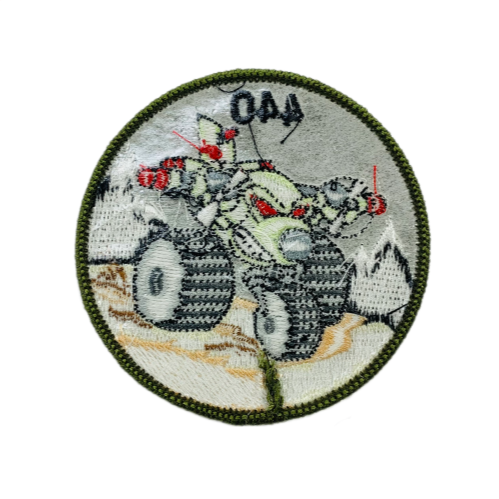
(Heat-Seal Backing)
Iron-on backing, also known as heat-seal backing, is one of the most popular embroidered patch backing options for beginners. This type of backing uses a heat-activated adhesive layer that melts when exposed to high temperature, allowing the patch to bond to fabric using an iron or heat press.
The primary appeal of iron-on embroidered patch backing is convenience. It allows patches to be applied quickly without sewing, making it ideal for promotional items, fashion garments, and short-term applications. For brands and event organizers, iron-on backing provides an efficient way to distribute patches that end users can easily apply themselves.
That said, iron-on backing has limitations. Adhesive strength can weaken after repeated washing, especially on stretch fabrics or textured materials. Incorrect heat settings or uneven pressure may also result in partial bonding. For these reasons, iron-on backing is best viewed as a semi-permanent solution rather than a heavy-duty one. In some cases, manufacturers recommend reinforcing iron-on patches with a few stitches for added security.
Hook-and-Loop Backing (Velcro Backing)
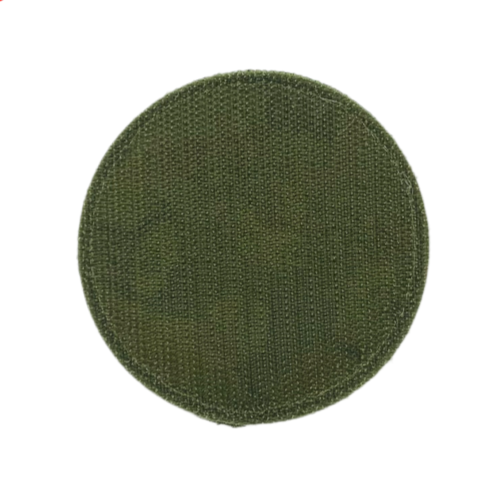
(Velcro Backing)
Hook-and-loop backing, commonly referred to as Velcro backing, is designed for patches that need to be attached and removed repeatedly. This embroidered patch backing system consists of two parts: a hook side attached to the patch and a loop side sewn onto the garment or gear.
This type of backing is widely used in military, police, tactical, and outdoor applications where flexibility and interchangeability are essential. Name tags, unit identifiers, and morale patches often rely on hook-and-loop backing to allow quick changes without damaging the base garment.
From a beginner’s perspective, hook-and-loop embroidered patch backing may appear more complex and slightly more expensive. However, it offers exceptional practicality when patch rotation is required. The trade-off lies in thickness and weight, as Velcro backing adds bulk compared to sew-on or iron-on options.
Paper or Fabric Backing (Woven Backing)
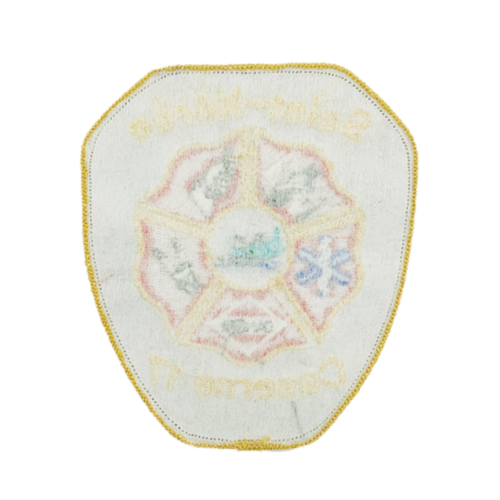
(Woven Backing)
Paper or fabric backing is primarily a structural backing used during the embroidery process rather than an attachment method. It helps stabilize the patch during stitching, ensuring clean edges and consistent stitch density. While it is not usually visible or functional after application, it still plays a role in the overall quality of embroidered patch backing.
For beginners, it is important to understand that stabilizer backing does not replace sew-on, iron-on, or hook-and-loop backing. Instead, it supports embroidery integrity and may be combined with other backing types depending on production requirements.
Self-Adhesive Backing (Peel-and-Stick Backing)
(Peel-and-Stick Backing)
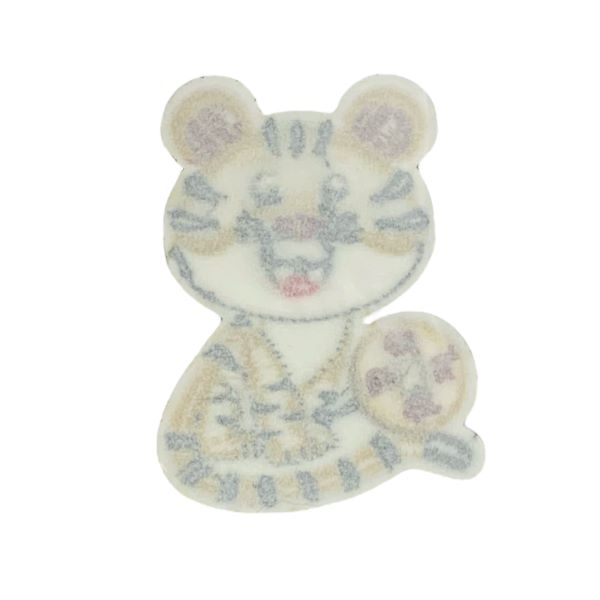
Self-adhesive backing, often referred to as peel-and-stick backing, is a temporary embroidered patch backing option designed primarily for positioning, display, or short-term use. This type of backing features a pressure-sensitive adhesive layer that allows the patch to be attached without heat, sewing, or additional tools.
For beginners, self-adhesive embroidered patch backing is often attractive due to its simplicity. The patch can be easily peeled from its liner and applied directly to fabric, paper, plastic, or packaging surfaces. This makes it suitable for mock-ups, exhibitions, retail displays, photography samples, or pre-placement testing before final sewing.
However, it is crucial to understand the limitations of self-adhesive backing. The adhesive is not designed for long-term wear, laundering, or high-friction environments. On garments, the patch may detach quickly, leave adhesive residue, or lose bonding strength after limited use. For this reason, self-adhesive backing should never be considered a substitute for sew-on or iron-on embroidered patch backing in functional applications.
In professional production, self-adhesive backing is often used as an auxiliary solution rather than a final attachment method. Manufacturers may apply it temporarily to help end users position patches accurately before sewing. Understanding this distinction is essential for beginners who want to avoid costly reorders or customer complaints.
📊 Table: Embroidered Patch Backing Types at a Glance
| Embroidered Patch Backing Type | Attachment Method | Permanence Level | Durability | Typical Use Cases |
|---|---|---|---|---|
| Sew-On Backing | Stitching | Permanent | High | Uniforms, workwear |
| Iron-On Backing | Heat adhesive | Semi-permanent | Medium | Promotions, fashion |
| Hook-and-Loop Backing | Velcro | Removable | High | Military, tactical |
| Self-Adhesive Backing | Pressure adhesive | Temporary | Low | Displays, positioning |
| Paper/Fabric Backing | Structural support | N/A | N/A | Embroidery production |
🔗 Extended Reading
Embroidered Patch Backing Comparison: Function, Durability, and Real-World Performance
Now that beginners understand the basic embroidered patch backing types, the next critical step is comparing how these options perform in real-world use. While product descriptions often highlight convenience or cost, actual performance depends on factors such as washing frequency, fabric type, movement, and expected lifespan. This is where many first-time buyers experience disappointment—because the chosen embroidered patch backing does not match the intended application.
In this section, we compare embroidered patch backing options from a functional and practical perspective. Rather than focusing solely on definitions, we analyze how each backing behaves over time, how it reacts to stress and washing, and where it performs best or fails most often. This comparison helps beginners move beyond surface-level understanding and make decisions based on usage reality rather than assumptions.
Durability and Wash Resistance Comparison
Durability is one of the most important evaluation criteria when comparing embroidered patch backing options. Sew-on backing consistently ranks highest in long-term performance because the patch is physically integrated into the garment. It withstands repeated washing, drying, and daily wear without relying on adhesives that may degrade over time. For uniforms, workwear, and school apparel, sew-on backing remains the most reliable solution.
Iron-on backing offers moderate durability, but performance varies significantly depending on fabric type and application method. On cotton or denim, heat-seal embroidered patch backing can perform adequately for casual use. However, frequent washing, high heat, or stretch fabrics often weaken the adhesive layer, leading to edge lifting or full detachment. Beginners often overestimate the permanence of iron-on backing, assuming it behaves like stitching.
Hook-and-loop backing provides excellent structural durability, but durability must be evaluated differently. While the patch itself lasts a long time, the fastening system depends on proper sewing of the loop base to the garment. Over time, lint accumulation or worn hooks may reduce grip strength, especially in dusty or outdoor environments.
Self-adhesive backing ranks lowest in durability. It is not designed to survive laundering or friction and should only be used for temporary display or positioning. Treating self-adhesive embroidered patch backing as a permanent solution is one of the most common beginner mistakes.
Application Convenience vs. Long-Term Performance
Another key comparison point is the trade-off between ease of application and long-term reliability. Iron-on and self-adhesive embroidered patch backing score high for convenience, requiring minimal tools or skills. This makes them attractive for events, retail packaging, or short-term campaigns.
In contrast, sew-on backing requires time, labor, and sometimes professional equipment. However, this upfront effort translates into superior longevity and resistance to environmental stress. Hook-and-loop backing sits between these extremes, offering removability at the cost of additional components and thickness.
Understanding this balance helps beginners choose backing based on lifecycle expectations rather than initial convenience alone.
📊 Table: Embroidered Patch Backing Performance Comparison
| Backing Type | Wash Resistance | Long-Term Stability | Ease of Application | Best Use Scenario |
|---|---|---|---|---|
| Sew-On Backing | Excellent | Excellent | Low | Uniforms, heavy use |
| Iron-On Backing | Moderate | Medium | High | Fashion, promotions |
| Hook-and-Loop Backing | High | High | Medium | Tactical, interchangeable |
| Self-Adhesive Backing | Very Low | Low | Very High | Temporary display |
🔗 Extended Reading (Suggested)
Choosing the Right Patch Backing for Different Applications
After understanding the functional differences between embroidered patch backing types, the next step for beginners is learning how to match backing options with real application scenarios. Many backing-related issues do not come from poor manufacturing, but from a mismatch between usage context and backing choice. A backing that performs well in one environment may fail quickly in another.
This section focuses on practical, scenario-based decision-making. Instead of asking “Which embroidered patch backing is the best?”, beginners should ask “Which embroidered patch backing is best for this specific use?”. By evaluating how the patch will be worn, washed, removed, or replaced, you can significantly reduce failure rates and improve user satisfaction.
Embroidered Patch Backing for Uniforms and Workwear
Uniforms and workwear place the highest demands on embroidered patch backing. These garments are worn frequently, exposed to friction, and washed repeatedly under industrial or household conditions. In such scenarios, durability and wash resistance take priority over convenience.
Sew-on embroidered patch backing is the most reliable option for uniforms. Stitching physically integrates the patch into the garment, ensuring it remains secure even after extensive laundering. This is why sew-on backing is widely used for school uniforms, factory uniforms, security apparel, and corporate workwear. Iron-on backing, while sometimes used as a supplement, should not be relied upon alone in heavy-duty uniform applications.
Hook-and-loop backing is also common in uniforms that require role changes or identification updates, such as military or security personnel. In these cases, the loop base is permanently sewn onto the uniform, while the patch itself remains interchangeable.
Embroidered Patch Backing for Fashion and Brand Merchandise
Fashion garments and brand merchandise prioritize aesthetic flexibility and ease of application. Jackets, hats, tote bags, and lifestyle apparel often use embroidered patches as decorative elements rather than permanent identifiers.
Iron-on embroidered patch backing is popular in fashion because it allows clean application without visible stitching. It works well for denim, canvas, and thicker cotton fabrics. However, designers should still consider wash instructions and fabric compatibility to prevent adhesive failure.
For limited-edition collections or retail displays, self-adhesive embroidered patch backing may be used for presentation or mock-ups. However, it should never be marketed as a permanent attachment solution for wearable items.
Embroidered Patch Backing for Events, Promotions, and Temporary Use
For short-term campaigns, exhibitions, and promotional giveaways, convenience often outweighs longevity. In these cases, iron-on or self-adhesive embroidered patch backing can be appropriate depending on expected usage duration.
Self-adhesive backing is particularly useful for display boards, packaging inserts, or pre-placement during live events. Iron-on backing works better when the patch is intended to be worn temporarily on clothing but not subjected to frequent washing.
Understanding the temporary nature of these backings helps set correct expectations and avoids post-event complaints.
📊 Table: Recommended Embroidered Patch Backing by Application
| Application Scenario | Recommended Backing | Key Reason |
|---|---|---|
| Uniforms & Workwear | Sew-On Backing | Maximum durability |
| Military / Tactical | Hook-and-Loop Backing | Interchangeability |
| Fashion Apparel | Iron-On Backing | Clean appearance |
| Promotions & Events | Iron-On / Self-Adhesive | Fast application |
| Displays & Samples | Self-Adhesive Backing | Temporary positioning |
🔗 Extended Reading
How Embroidered Patch Backing Affects Cost, Production, and Lead Time
Beyond functionality and application, embroidered patch backing has a significant impact on cost structure, production workflow, and delivery timelines. One of the most common misconceptions among beginners is assuming that convenience-based backings—especially self-adhesive backing—are automatically low-cost solutions. In reality, this assumption often leads to unexpected pricing differences during quotation.
In this section, we clarify how backing choices influence manufacturing costs and explain why some seemingly simple options, such as self-adhesive backing, may actually fall into the higher-cost category depending on material specifications and quality requirements.
Cost Implications of Different Embroidered Patch Backing Types
Cost variations in embroidered patch backing are driven by material grade, processing steps, and quality control requirements, not just attachment method.
Sew-on backing remains the most cost-efficient option in terms of manufacturing. It requires no additional adhesive layers or lamination processes, making it ideal for large-volume production with stable pricing.
Iron-on backing introduces moderate additional cost due to the heat-seal adhesive film and lamination process. While not the cheapest option, it offers a balanced cost-to-convenience ratio, especially for retail and promotional applications.
Hook-and-loop backing continues to rank among the higher-cost options. The cost reflects dual materials (hook + loop), alignment precision, and extra sewing labor. However, its functional value justifies the price in applications requiring interchangeability.
Self-adhesive backing, contrary to common belief, is also a high-cost backing option when produced to professional standards. High-quality pressure-sensitive adhesives must meet strict requirements: strong initial tack, clean removal, minimal residue, and stability during shipping and storage. These adhesive materials are significantly more expensive than standard heat-seal films. Additionally, lamination accuracy and surface preparation add further production costs.
As a result, self-adhesive embroidered patch backing is often priced at a similar level to, or even higher than, hook-and-loop backing, despite its temporary nature.
Production Workflow and Quality Control Considerations
Each embroidered patch backing type introduces unique production requirements. Sew-on backing integrates smoothly into standard embroidery workflows with minimal post-processing. Iron-on backing requires precise temperature control during lamination to avoid adhesive failure or fabric warping.
Hook-and-loop backing adds complexity, as alignment and stitching quality must be carefully monitored. Self-adhesive backing, while simple to apply, demands strict surface preparation to ensure consistent adhesion.
For beginners, these differences explain why lead times and minimum order quantities may vary depending on backing choice.
📊 Table: Cost and Production Impact by Embroidered Patch Backing
| Embroidered Patch Backing Type | Material Cost | Production Complexity | Lead Time Impact | Cost Reality |
|---|---|---|---|---|
| Sew-On Backing | Low | Low | Minimal | Most cost-efficient |
| Iron-On Backing | Medium | Medium | Moderate | Balanced option |
| Hook-and-Loop Backing | High | High | Longer | Function-driven cost |
| Self-Adhesive Backing | High | Medium–High | Moderate | Often underestimated |
| Paper/Fabric Backing | Low | Low | Minimal | Production-only |
🔍 Key Takeaway for Beginners
Self-adhesive embroidered patch backing is convenient—but convenience does not equal low cost.
It should be chosen for functional reasons (temporary placement or presentation), not as a budget-saving solution.
🔗 Extended Reading
- Why Choose Tajima Embroidery Machines
- High-Density Embroidery Stitch Count Explained
- Tajima Group – Industrial Embroidery Technology
Common Mistakes Beginners Make When Choosing Embroidered Patch Backing
Even with basic knowledge of embroidered patch backing types, beginners often make avoidable mistakes during the decision-making process. These mistakes usually stem from focusing too heavily on convenience, price assumptions, or visual appearance—while overlooking real-world usage conditions. As a result, patches may fail prematurely, cost more than expected, or generate customer complaints after delivery.
This section highlights the most common beginner mistakes when selecting embroidered patch backing, explains why they occur, and provides practical guidance to avoid them. Understanding these pitfalls is essential for anyone aiming to produce professional-quality embroidered patches that perform as expected.
Assuming Convenience Equals Durability
One of the most frequent mistakes beginners make is assuming that easy-to-apply backing options automatically offer reliable performance. Iron-on and self-adhesive embroidered patch backing types are often selected because they appear simple and user-friendly. However, convenience at the application stage does not translate into long-term durability.
Iron-on backing relies entirely on adhesive strength, which can degrade under repeated washing, heat, or fabric movement. Self-adhesive backing is even more limited, as it is designed for temporary attachment rather than wearable use. Beginners who select these options for uniforms or daily-wear garments often experience peeling edges, complete detachment, or adhesive residue issues.
The correct approach is to evaluate how long the patch needs to remain attached and under what conditions it will be used, rather than how fast it can be applied.
Choosing Embroidered Patch Backing Without Considering Fabric Type
Another common error is ignoring the compatibility between embroidered patch backing and the base material. Different fabrics—such as cotton, polyester blends, nylon, or stretch materials—react differently to heat, adhesives, and stitching.
Iron-on backing may bond well to thick cotton but perform poorly on waterproof or textured fabrics. Sew-on backing works universally but may cause puckering on very thin materials if not handled correctly. Hook-and-loop backing adds weight and stiffness, which can distort lightweight garments.
Professional backing selection always considers fabric structure, thickness, and flexibility as part of the decision-making process.
Underestimating Cost Implications of Backing Choices
Many beginners assume that certain embroidered patch backing types—especially self-adhesive backing—are budget options. As discussed earlier, this assumption is incorrect. High-quality pressure-sensitive adhesives require premium materials and strict quality control, which significantly increase cost.
Failing to understand this can lead to budget overruns or last-minute backing changes that disrupt production schedules. Accurate cost planning requires viewing backing as a functional component, not just an add-on.
📊 Table: Beginner Mistakes vs. Correct Embroidered Patch Backing Choices
| Beginner Mistake | Common Result | Recommended Correction |
|---|---|---|
| Choosing by convenience | Poor durability | Evaluate usage conditions |
| Ignoring fabric type | Adhesion failure | Match backing to fabric |
| Assuming low cost | Budget overruns | Confirm backing cost early |
| No lifespan planning | Early replacement | Define usage duration |
🔗 Extended Reading
FAQ: Embroidered Patch Backing – Frequently Asked Questions
When researching embroidered patch backing, beginners often encounter fragmented or contradictory information online. To help clarify common uncertainties, this FAQ section addresses the most frequently asked questions related to embroidered patch backing types, applications, durability, and cost. These answers are based on real production scenarios and practical usage considerations, rather than marketing assumptions.
Q1: What is embroidered patch backing?
Embroidered patch backing refers to the material or treatment applied to the back of an embroidered patch after stitching is completed. It determines how the patch is attached—by sewing, heat bonding, hook-and-loop fastening, or temporary adhesion—and directly affects durability, wash resistance, and usability.
Q2: How many embroidered patch backing types are there?
The most common embroidered patch backing types include sew-on backing, iron-on (heat-seal) backing, hook-and-loop (Velcro) backing, self-adhesive backing, and paper or fabric stabilizer backing used during production.
Q3: Which embroidered patch backing is best for beginners?
There is no single “best” embroidered patch backing for beginners. Sew-on backing is the safest and most durable choice, while iron-on backing is easier to apply. The correct option depends on the intended use, fabric type, and expected lifespan.
Q4: Is iron-on backing permanent?
Iron-on embroidered patch backing is considered semi-permanent. While it can bond securely when applied correctly, adhesive strength may weaken after repeated washing, high heat, or heavy movement. Reinforcing with stitching is often recommended.
Q5: Can self-adhesive backing be used on clothing?
Self-adhesive embroidered patch backing is not recommended for wearable applications. It is designed for temporary positioning, display, or mock-ups and does not withstand washing or friction.
Q6: Why is self-adhesive embroidered patch backing expensive?
High-quality self-adhesive backing uses premium pressure-sensitive adhesives that provide clean removal, stable adhesion, and resistance to temperature changes during shipping. These materials and processing requirements make it a high-cost option despite its temporary nature.
Q7: Is hook-and-loop backing suitable for daily wear?
Hook-and-loop embroidered patch backing is suitable for daily wear only when the loop base is securely sewn onto the garment. It is ideal for applications requiring frequent patch changes, such as uniforms or tactical gear.
Q8: Does embroidered patch backing affect washing instructions?
Yes. Different embroidered patch backing types respond differently to washing. Sew-on backing offers the highest wash resistance, while iron-on and adhesive backings require gentle washing and lower temperatures.
Q9: Can I change the backing after the patch is made?
Changing embroidered patch backing after production is possible in limited cases but often increases cost and risk. It is always best to confirm backing requirements before production begins.
Q10: Does embroidered patch backing affect pricing and lead time?
Absolutely. Embroidered patch backing impacts material cost, production steps, quality control, and delivery schedules. Backing should be treated as a core specification, not an afterthought.
Q11: Can multiple backing types be combined?
Yes. For example, iron-on backing may be combined with light stitching for added security, or self-adhesive backing may be used temporarily before final sewing. However, combinations should be planned carefully.
Q12: How do I choose the right embroidered patch backing?
Start by defining usage conditions: garment type, wash frequency, duration of use, and whether removability is required. Then select the embroidered patch backing that aligns with those needs rather than convenience alone.
CTA: Professional Embroidered Patch Backing Solutions & Custom Consultation
Choosing the right embroidered patch backing is not just a technical detail—it is a strategic decision that affects durability, appearance, cost control, and long-term satisfaction. For beginners especially, working with an experienced manufacturer can significantly reduce risk, prevent costly mistakes, and ensure that every backing choice aligns with real-world usage.
At Artist Embroidery, we specialize in custom embroidered patch production with a strong focus on backing design, material compatibility, and application performance. From sew-on and iron-on backing to hook-and-loop and high-grade self-adhesive solutions, our team provides professional recommendations based on your specific application—whether for uniforms, branding, promotional campaigns, or collectible patches.
Rather than offering one-size-fits-all solutions, we guide our clients through backing selection by evaluating fabric type, usage environment, wash requirements, budget expectations, and production timelines. This consultative approach allows us to deliver embroidered patches that not only look great but also perform reliably throughout their intended lifespan.
If you are planning a new embroidered patch project or unsure which embroidered patch backing is right for your needs, we welcome you to contact us for expert advice.
Artist Embroidery Corporation
📞 Phone: +886-2-8245-8989
📧 Email: service@artistembroidery.com
🏢 Office Address: 7 F., No. 21, Qiao’an St., Zhonghe Dist., New Taipei City 235026, Taiwan
🏭 Factory Address: No. 12, Zhiwa 2nd Rd., Shetou Township, Changhua County 511006, Taiwan
✅ Final Note
Whether you are a first-time buyer or an experienced brand looking to refine your specifications, our team is ready to help you select the most suitable embroidered patch backing for your project—clearly, accurately, and efficiently.
 English
  Japanese
  Chinese
  Korean
  Spanish
  French
  Russian
  Portuguese
  German